Published 04/13/2026 14:28 | Edited 04/14/2026 11:54
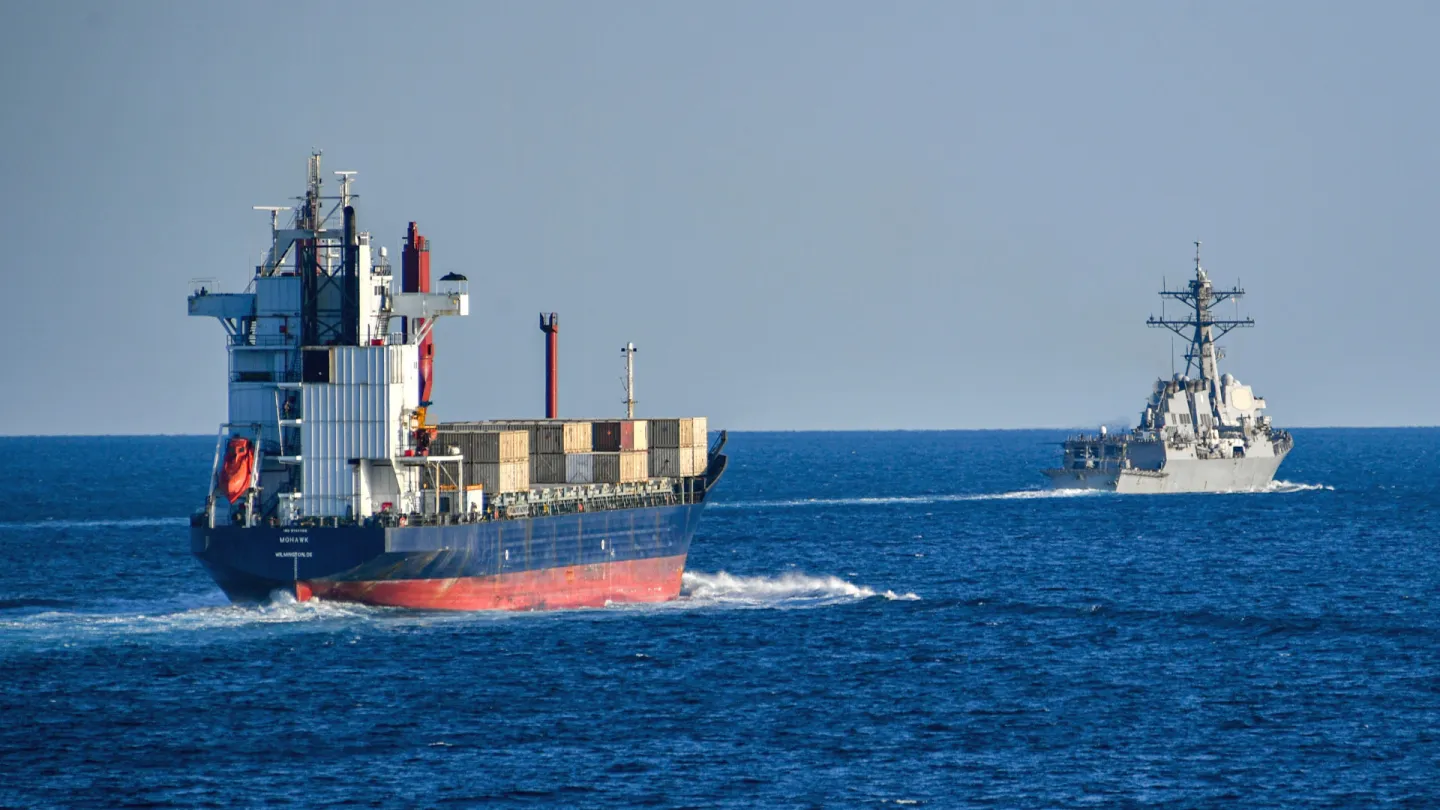
US President Donald Trump dealt a blow to international confidence, while the world awaited a diplomatic outcome at the tables in Islamabad. Under the pretext of guaranteeing “freedom of navigation”, the United States carried out, at 11 am (Brasília time) this Monday (13), the promise to militarily control the Strait of Hormuz. The action, which occurs immediately after the collapse of negotiations in Pakistan, reveals a “fait accompli” strategy: Washington used the period of talks to position naval vectors that are now trying to remove any military initiative in the region from Iran.
The “dagger on the table” tactic: war started during negotiations
Military sources and statements from US Central Command (Centcom) confirm that the blockade is not just a rhetorical threat, but a tactical siege operation. The most critical point denounced by international analysts is that the military preparation was launched while the delegations were still sitting at the table in Pakistan. Washington took advantage of the tactical ceasefire and the diplomatic détente to clandestinely move destroyers and demining assets to chokepoints.
This stance of “diplomatic betrayal” aims to neutralize the Iranian Revolutionary Guard’s missile and drone batteries even before any formal declaration of hostilities. Experts point out that this strategy destroys any trace of trust in future meetings: if diplomacy only serves as a smokescreen for the deployment of troops, dialogue becomes irrelevant and the UN is once again run over. The use of the diplomatic table to lower the enemy’s guard was manifested in January, when Maduro and his wife were kidnapped in the middle of a conversation with Venezuela, and again in Marchwith the start of bombings on Iran, while negotiators were at the table, reaffirming Trump’s USA as a nation devoid of any commitment to diplomacy.
The Awakening of Revolt: World Takes to the Streets Against Trump’s Action
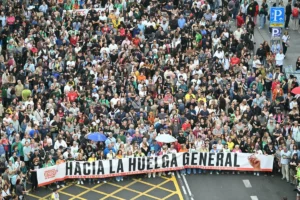
The popular reaction was immediate and coordinated. As soon as Centcom confirmed the start of naval interceptions, a wave of protests took to the streets of the world’s main capitals, condemning what protesters call “energy blackmail” and “naval imperialism”.
- In the Middle East: Em Tehran, Isfahan e Tabrizcrowds burned American flags and denounced American piracy. In Baghdadthe atmosphere is tense with protests near the Green Zone.
- To Europe: Em Paris e Berlinsocial organizations and anti-war movements occupied central squares, demanding that their governments maintain the boycott of Trump’s mission. In LondonDespite the Starmer government’s caution, protesters gathered in front of Downing Street against British logistical involvement.
- In Türkiye: Em Istanbulthousands of people protested the use of regional bases to support the blockade, reinforcing pressure on the local government not to give in to NATO pressure.
Washington’s isolation
The most striking fact of this crisis is the profound geopolitical isolation of the United States. Unlike past coalitions, this time the European powers disembarked from the adventure. Node United Kingdom, the British government was explicit in declaring that will not participate in the naval blockadearguing that the solution must be multilateral. London, although it maintains vital economic interests, refuses to be drawn into a war of aggression in the midst of negotiations. In Europe, the Germany and France refused to send troops, classifying the action as a unilateral escalation that puts the European economy and global security at risk. THE Türkiye warned Ministry of Commerce that NATO has no automatic obligation to reopen the strait under conditions imposed by the US.
China and Russia seek to mediate the conflict
While the US acts unilaterally, China and Russia consolidate their influence as mediators. Beijing, which sponsored the meeting in Pakistan and has vital interests in the energy flow, classified the American move as “illegal and destabilizing”. Moscow reinforces that Washington’s action is a violation of international navigation law, positioning itself on the side of regional sovereignty and criticizing the use of oil as a weapon of war. Beijing has already announced that it has business with Iran that it expects to be respected by any nation.
Reconomic repercussion places the horizon at US$ 150 per barrel
The impact on the markets was instantaneous. With the effective start of naval interception operations, the price of Brent oil shot up more than 7% in the first few hours, surpassing the US$100 mark and with projections indicating that it could reach US$ 150. The global inflationary shock is the price that the planet begins to pay for Washington’s decision to transform a logistical node into a war board.
At 12:40 pm Brasília, the US Navy maintains a physical presence in the strait, but total control is a dangerous illusion. What we see in Hormuz today is not the imposition of order, but the seed of a major war, fueled by a country that chose confrontation instead of building a stable international system. The question that remains is: how long will global diplomacy take to recover from a betrayal of this magnitude?
Source: vermelho.org.br