Published 06/12/2025 11:54
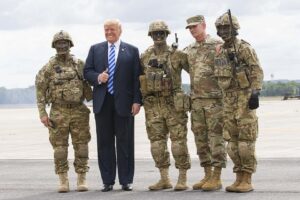
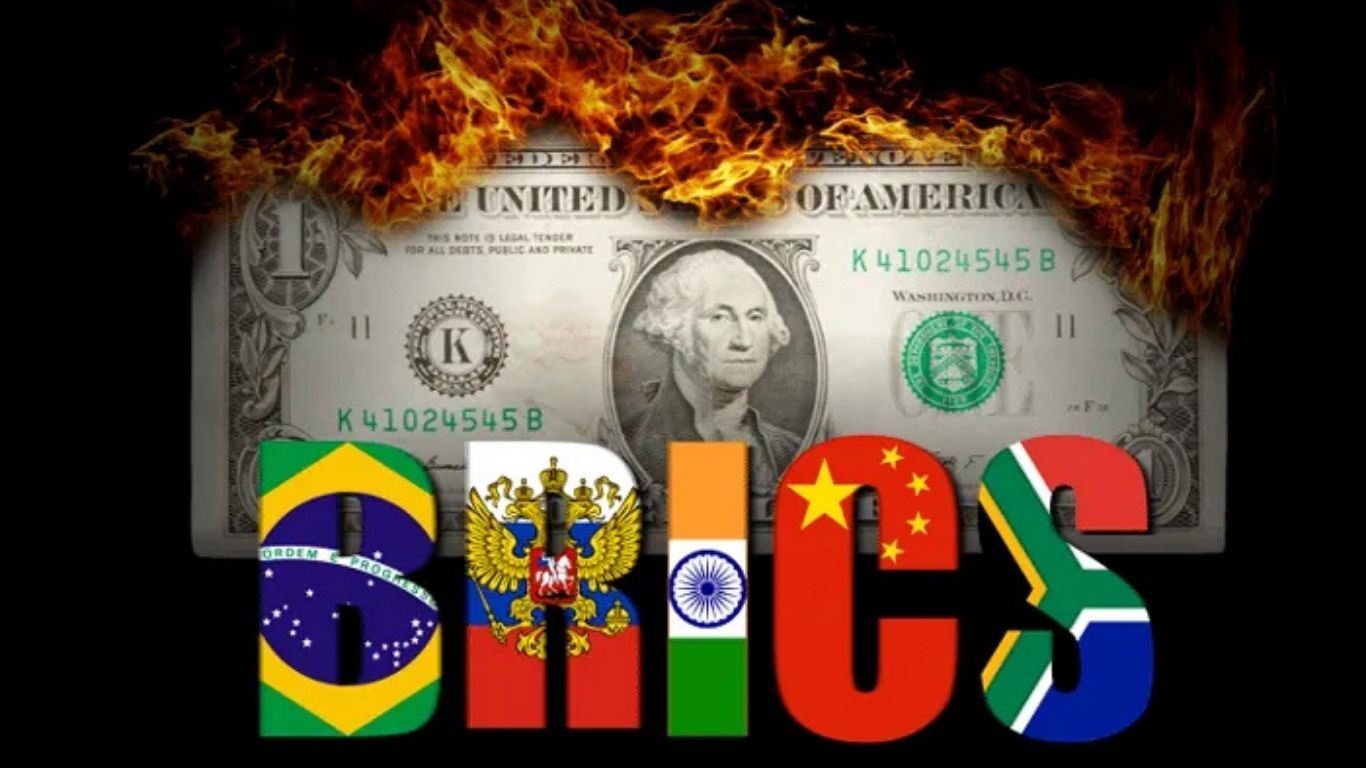
“Brics was created to harm us, Brics was created to degenerate our dollar and take away our dollar… as the standard.”
President Donald Trump, July 2025
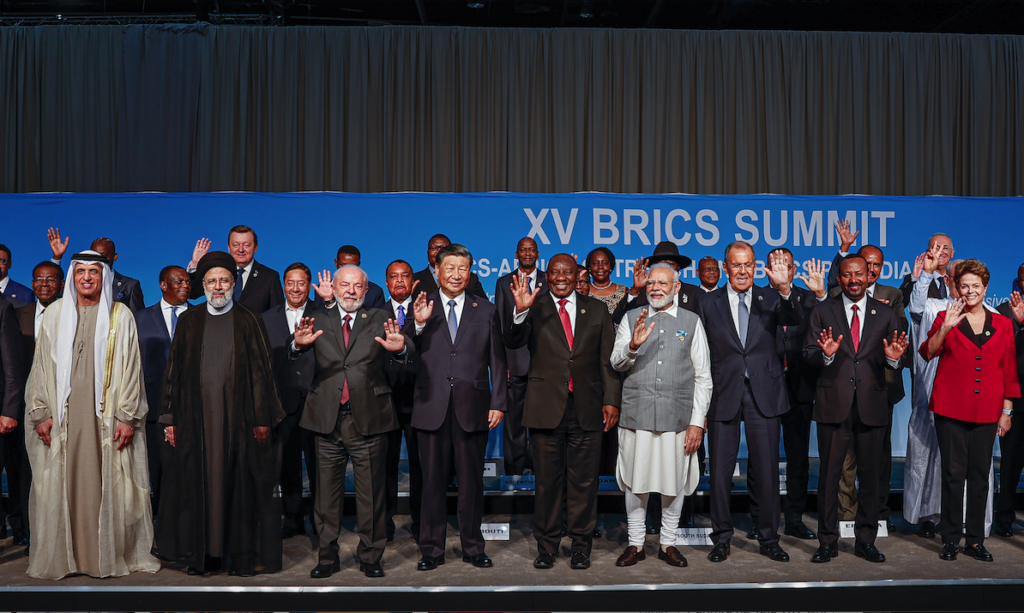
“How to Counter Brics and Preserve Global Dollar Dominance” is the title of a Hudson Institute policy memo – think tank linked to the Republican Party (USA) – dated October 2025. In it, author Zineb Riboua, associate researcher at the Center for Peace and Security in the Middle East, examines the role of Brics, concluding that the group represents a growing challenge to the financial predominance of the United States.
According to her, the main reason for concern is that this bloc — made up of Brazil, Russia, India, China and South Africa — stopped being just an association of emerging markets and began to act incisively, seeking to confront institutions under Western leadership and weaken the dominance of the US dollar.
Still, the bloc harks back to the ideals of the Cold War Non-Aligned Movement, with China and Russia now leading an effort to turn that sentiment into a material threat to U.S. interests.
Below I focus on some points of the memo and at the end I give my opinion on its content.
Origins and Evolution of the Brics Threat
The memo argues that the rise of the BRICS represents the institutionalization of long-standing sentiment against the Western-led global financial order. This trend is not a recent phenomenon, but rather the accumulation of feelings arising from the Cold War and post-colonial struggles.
The historical roots echo the principles of the Non-Aligned Movement, launched in Belgrade in 1961, which sought to offer newly independent states an alternative to alliance with the United States or the Soviet Union.
Read more: Brics x Chicago: the commodity war and the challenge to dollar hegemony
Obeying the historical logic of the Duality of Neutrality, non-alignment took two distinct forms:
i. Neutrality in favor: It sought genuine independence and freedom of maneuver, exemplified by Jawaharlal Nehru’s India and Josip Broz Tito’s Yugoslavia. ii. Neutrality against: Represented indirect opposition to the United States, with many governments declaring themselves non-aligned while dependent on Soviet sponsorship in the 1970s.
It was up to China to revitalize this movement in the early 2000s, positioning itself as the champion of the developing world and promoting multipolarity as an alternative to Western financial dominance. The persistent centrality of the dollar and the unequal distribution of influence in global institutions have given this narrative broader appeal.
Key Member Motivations and Strategies
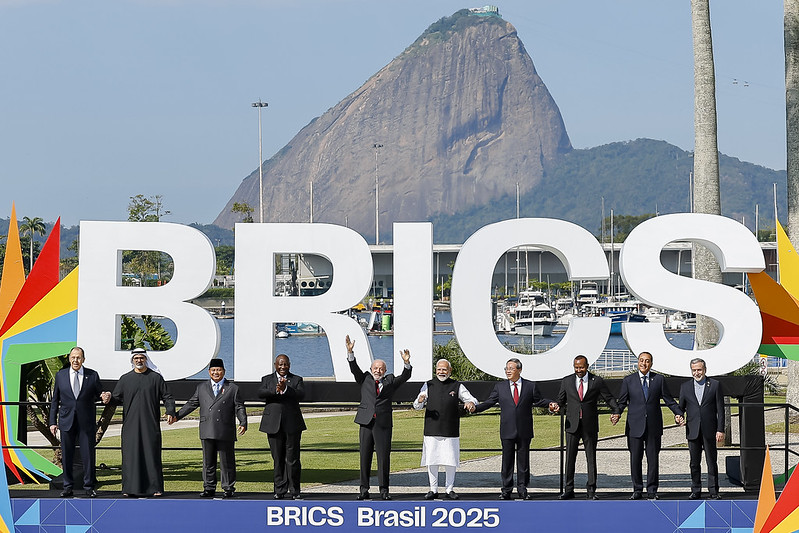
Although united by a common discontent, the main members of the BRICS approach the bloc with varying motivations and levels of commitment, reflecting their distinct geopolitical positions.
Russia (Neutrality against) – sees the Brics as a framework of resistance to the USA, especially after the sanctions of 2014 and 2022. Uses the bloc to promote alternatives to the dollar and SWIFT.
China (Leader of multipolarity) – actively promotes the use of the yuan, develops its own payment system (CIPS) and uses the BRICS to expand its influence in Asia, Africa and Latin America.
Brazil (Neutrality in favor) – uses diplomacy to gain leverage in the international system without breaking ties with Washington or Brussels, adopting a flexible approach.
India (Seeks autonomy) – as a founding member of the Non-Aligned Movement, values autonomy. Its rivalry with China, intensified by clashes in Ladakh in 2020, limits its willingness to accept structures that expand Beijing’s influence.
The Brics Financial Agenda: An Institutional Challenge
The Brics’ main threat lies in their coordinated financial agenda, which aims to undermine the two pillars of American global economic power: i. the centrality of the dollar and ii. the domain of the SWIFT network.
Since the Bretton Woods system in 1944, the primacy of the dollar has been the basis of American global power. SWIFT, a secure messaging system, gives Washington visibility into global financial flows, enabling it to enforce sanctions, combat money laundering and disrupt terrorist financing.
Read more: A change will come: Blues, Brics and the multipolar transition
The BRICS initiatives are compared to the old hawala system — an informal, trust-based network to transfer value without centralized oversight. The BRICS seek to replicate this resistance to external monitoring, but through official coordination between large economies, which represents a shift in the challenge from the periphery to the center of global finance.
The memorandum sets out the key initiatives:
- New Development Bank (NBD): Created in 2014 as an alternative to the World Bank and the IMF.
- Bilateral Currency Swap Agreements: Promote trade in local currencies.
- Alternative Payment Systems: Such as China’s Cross-Border Interbank Payment System (CIPS) and Russia’s System for Transfer of Financial Messages (SPFS).
Proposed Alternatives to the Dollar
The memo continues:
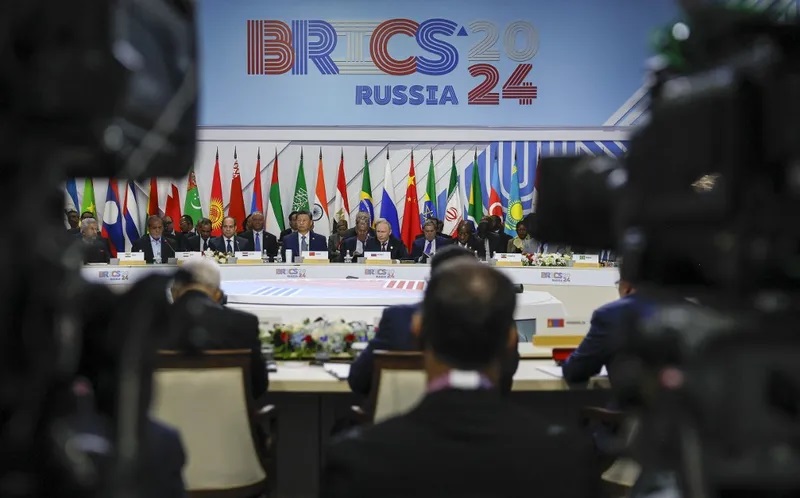
BRICS members are actively exploring several options to reduce dependence on the dollar, although each faces significant challenges.
1. Alternative National Currencies:
Strategy: China is leading the effort to increase yuan-denominated trade using currency swaps and CIPS.
Limitations: The yuan accounts for just 2-3% of global transactions, according to SWIFT data. Beijing’s capital controls and the Chinese central bank’s convertibility restrictions continue to be obstacles to its adoption as a reserve currency.
2. Barter and Clearing Agreements:
Strategy: Used by countries under sanctions, such as Iran, and in bilateral agreements such as rupee-ruble trade between India and Russia.
Limitations: These systems are difficult to scale and balance in multilateral exchanges, serving more as palliative solutions than lasting alternatives.
3. Digital Currencies:
Most Disruptive Scenario: Cryptocurrency-based exchange systems.
Stablecoins (USDT, USDC): Already function as a shadow banking system in financially fragile or sanctioned states (Venezuela, Iran). While they bypass US oversight, they simultaneously reinforce the dollar’s primacy by extending its digital reach.
Brics Initiatives: The objective is to create a system independent of the dollar. China tested its digital yuan, and Russia promoted cryptocurrency-friendly policies. The Brics Pay project, a platform for cross-border transactions in local currencies, remains in its embryonic stage.
The Gulf: A Strategic Front for Dedollarization
According to the memo, the Gulf region has become a key battleground where the BRICS, led by China, seek to challenge US monetary dominance.
This is due to:
China’s offensive
- Beijing is pressuring Gulf oil producers to settle sales in yuan, encouraging sovereign wealth funds to invest in yuan-denominated platforms and using Huawei to shape telecommunications standards that could create alternative payment pathways.
The actions of Russia and Iran
- These countries conduct arms and energy transactions in their local currencies, demonstrating to potential partners that trade outside the dollar system is viable, even under strong US pressure.
The Erosion of Legitimacy
- The UAE’s accession to the BRICS in 2023 and Saudi Arabia’s continued engagement (participating in summits and discussing oil sales in yuan) give the bloc legitimacy.
- This makes it more difficult for Washington to frame the BRICS as a marginal or hostile group. The involvement of US allies in the Gulf undermines the narrative that the current US-led system offers the greatest benefits.
Policy Recommendations for the United States
The memo points out that to preserve the centrality of the dollar and the capacity for global financial supervision, the US needs to adopt a proactive and decisive approach, as domestic regulation alone is insufficient.
1. Prohibit Dual Participation: Financial institutions that choose to operate in a clearing system designed to bypass SWIFT should lose access to both SWIFT and dollar-denominated transactions. The calculation for banks would be clear, as losing access to the American system would be much more harmful than the benefits of any parallel BRICS network.
2. Strengthen Stablecoin Supervision: Existing legislation such as the GENIUS Act has laid a foundation, but additional measures are needed to ensure that stablecoins do not become tools for sanctions evasion as technology evolves and BRICS states experiment with new digital assets.
3. Apply Sustained Diplomatic and Economic Pressure: Washington must warn countries about the costs of aligning themselves with a project that seeks to weaken the US. Simultaneously, it must offer attractive alternatives, such as investments, infrastructure assistance, and financing arrangements that ensure that partnership with the US remains the most beneficial option.
Read more: The twilight of the West – Anatomy of an announced crisis
The memo ends by highlighting that the dollar’s supremacy is one of the United States’ most important strategic resources, essential for monitoring financial operations around the world and imposing rules in the face of transnational threats.
In this way, the BRICS can weaken this supremacy by creating non-transparent and unregulated financial channels, positioning themselves as supporters of non-aligned neutrality and multipolarity.
It is essential that Washington adopt strategic measures to protect the SWIFT system, regulate digital currencies and strengthen the credibility of global financial supervision led by the United States, aiming to avoid the establishment of a financial order contrary to North American interests.
Given this reading, I conclude:
First: By proposing more control, more sanctions and more financial blackmail, the Hudson Institute memo clearly and unequivocally demonstrates the fear of the new multipolar order, as it greatly reduces the US’s capacity for unilateral command and, contrary to what it advocates, it will not bring “chaos” in itself.
Second: Each new blackmail, threat, imposition of tariffs reinforces the BRICS “financial security” logic – the more the dollar is used as a weapon, the stronger the impulse to create alternative routes becomes – such as: transactions in local currencies, new development banks and payment systems not subordinated to the West.
Third and final: For the Global South, the real challenge is to build a plural monetary and financial order, regulated and focused on national development in which no country can unilaterally confiscate the future of other nations through sanctions and exchange rate instability.
De-dollarization is not a crusade against a country, but an instrument of collective sovereignty and an indicator that the twilight of unipolar hegemony is opening space for a world in which the Brics is less of a “threat” and more of a symptom of an ongoing historical rebalancing.
Source: vermelho.org.br