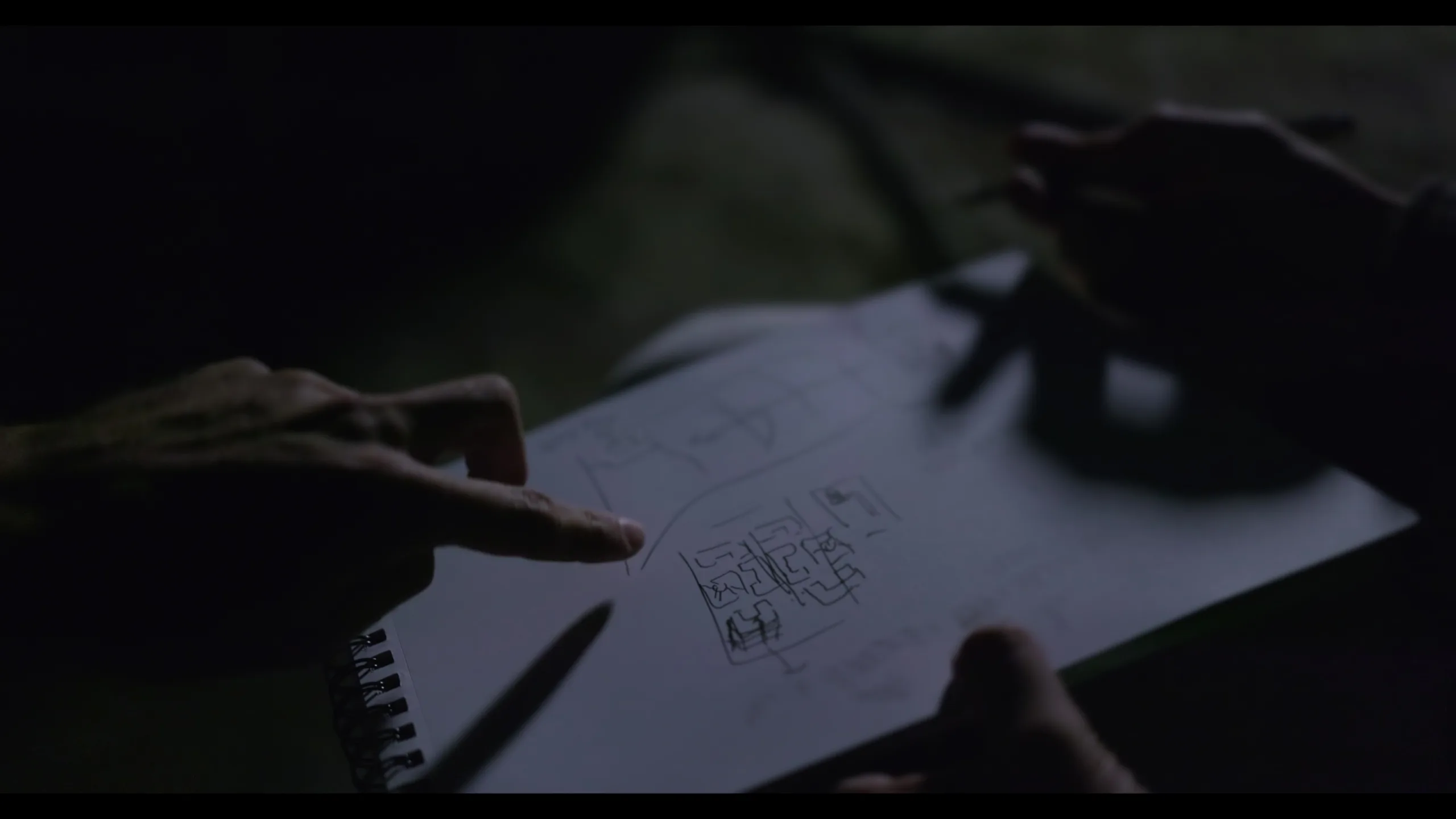
The film “Naza”, by Israeli directors Yuval Abraham and Rachel Szor, hits Brazilian cinemas next Thursday (8), in the week that marks three years since the Israeli government began responding to a Hamas attack with a series of bombings and genocidal practices against the Palestinian people.
Recorded over more than two years, the film makes it possible to see behind the scenes of what journalists and even the United Nations (UN) have already denounced: the Israeli army used and continues to execute tactics that aim to kill civilian targets, including children. The actions also seek to destroy civil infrastructure and make it impossible for families to return to their land.
The film broke a record for applause time at its premiere at the Venice Film Festival and received a swift reaction from the Israeli government. Prime Minister Benjamin Netanyahu is even threatening to strip the directors, Jews born in Israel, of their citizenship.
AI to kill
“Naza” brings together interviews with 24 members of the Israeli military and intelligence, who spoke on condition of anonymity. It shows, among other technologies, an artificial intelligence called “Lavender”, used to detect targets suspected of links to Hamas. The system uses cell phone calls and geolocation — interviewees claim that all phones in Gaza are tapped — to determine possible members of the armed group.
Despite counting on a chance of error of at least 10%, the operation’s command decided that it was a number of innocent people that would be worth exterminating in the name of reaching as many members of the armed resistance group as possible. One interviewee exemplifies a possible error: if someone owned a bakery close to a Hamas training center, they could be marked as a likely member due to frequent contact with its real members.
Another interviewee reported that there was a decision to hit the identified targets in their homes, where they would be most unprepared. The bombs would end up killing their entire families as well. Civilian deaths were counted as “collateral damage”, or, in the Hebrew language, “Nezek Agavi”. The term was abbreviated to the acronym “Naza”, which gives the film its title.
Bombs were not thrown automatically. There was a human command responsible for ending the attack. Another of those interviewed reports having received permission to kill 500 civilian targets, targeting only one alleged member of Hamas.
Where is daddy?
Another technology described was given the morbid name “Where’s Daddy?” (“Where’s Daddy?”). To find out when the target was home, the military listened to phones and messages in the house. The system got its name because the alert was often triggered when one of the children celebrated that their father had arrived.
The cruel “Where’s Daddy?” I also made mistakes. In one passage, one of the soldiers says he blew up a house with 13 members of the same family. Later, when analyzing the location, they realized that they had fallen into a false alarm and that the alleged Hamas member was not even there.
The number of targets was impressive. Around 37,000 people were considered members of Hamas. In an interview with NPRdirector Yuval Abraham recounts a conversation he had with one of the soldiers:
“There’s a moment in the film where I’m talking to one of the officers, and he explains how they could kill up to 20 civilians per target, and there are tens of thousands of targets. I say to him, ‘But, you know, if you can kill up to 20, and there are tens of thousands of them, the result is…’ — and he says, ‘Oh, that’s all of Gaza.'”
Erased memories and point-blank murders
As the genocide progressed, tactics changed. At one point, Israel ordered Palestinians to abandon their homes and head south, through the Rashid Corridor.
Interviews continue during this period. The bomb operators explain that the objective was, in fact, to destroy civil infrastructure, so that the Palestinians would have nowhere to return. Asked by Abraham about the risk of killing people who did not move, due to mobility difficulties or fear of falling into an ambush, one of the interviewees said that these people would have to “find a way”. It is implied that they would be killed.
Another of the interviewees was part of a ground team responsible for setting fire to the remains of the houses. He explains that, over time, he developed the ability to completely incinerate a property in eight minutes. He also reports that he saw wedding photos, school notebooks and other objects of probable sentimental value. The job was to leave nothing behind.
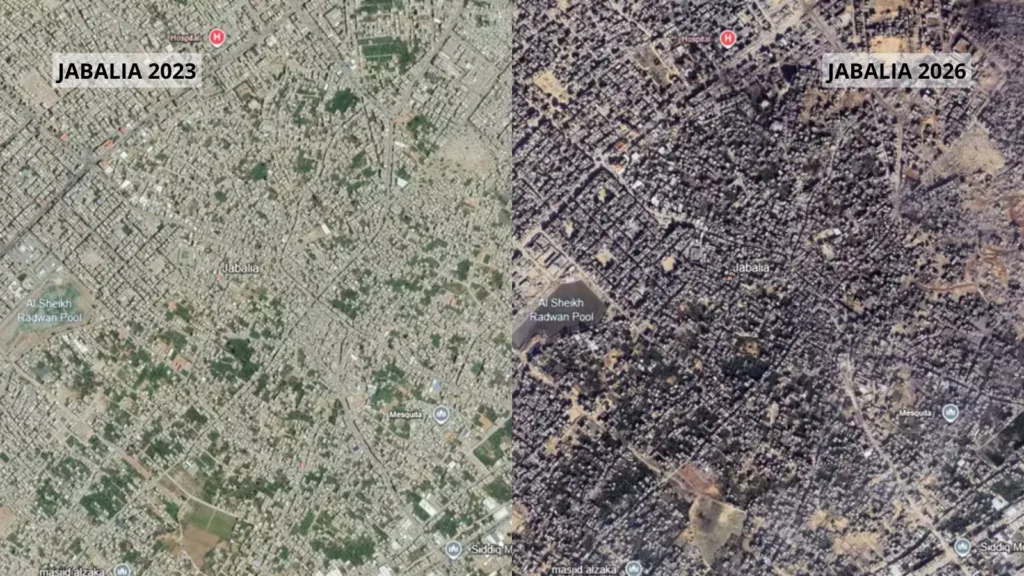
Recently updated images from the Google Earth platform show the extent of the damage. Gaza was reduced to ruins. UN data shows that there are 61 million tons of rubble in the region and at least 10,000 buried bodies. Complete removal can take between seven and ten years.
Families that obeyed the rule of going to the South were not safe either. A sniper says that they were supposed to follow the Rashid Corridor, and that his job was to shoot at point-blank range anyone, including children, who strayed from this path.
Genocide awareness
Yuval Abraham reported, in interviews, that the film’s interviewees agreed to speak for different reasons. Some of them regret being part of the genocidal machine; others are proud of it. More than one of the soldiers, when justifying their actions, says that they were only following orders, that they were performing a purely operational job, that they would only be replaced if they refused.
Near the end, one of the combatants shows remorse. He recalls that, born and raised in Israel, he went to Poland with his school and learned about Nazism. He states that he imagined the Nazis as bloodthirsty people, and today he understands how someone could kill and then go home to be with their family. “I still think the Nazis are bad, but I don’t really know what to say about myself,” he reflects.
In contrast, another soldier defends his actions. He recalls that Israeli politicians are constantly speaking in speeches about “crush Gaza”. “What is crushing Gaza? It’s exactly that, hurting them in a way that they can never recover from,” he says.
In closing, Benjamin Netanyahu himself appears, younger, in an old interview in English. He was promoting his book “Fighting Terrorism: How Democracies Can Defeat Domestic and International Terrorism”. The interviewee asks, and he gives his own definition of terrorism: killing and threatening civilian targets for the purpose of achieving political objectives.
Source: www.brasildefato.com.br