Published 12/09/2025 17:48 | Edited 12/09/2025 17:57
The hundreds of thousands of Ukrainian men living in the shadows of desertion reflect an entire country worn down by a protracted war marked by forced conscription, desperation and mass flight. The desertion crisis has become an unavoidable symptom of a State that has lost the capacity to sustain its own military mobilization and guarantee basic rights to those mobilized.
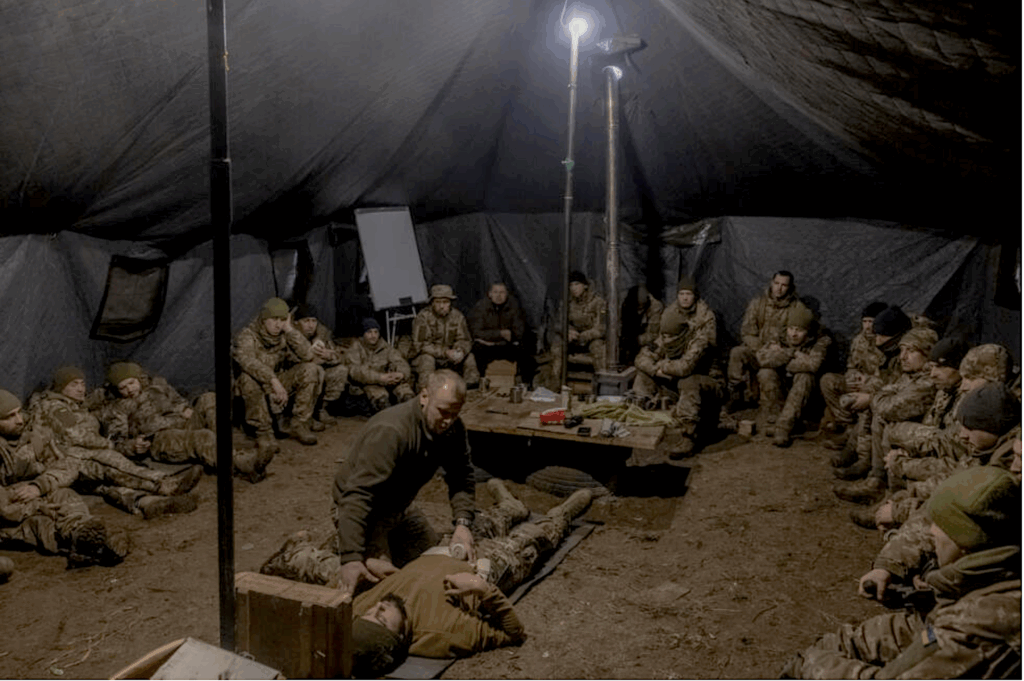
The precariousness of training, described as superficial and merely bureaucratic, fuels the widespread fear that new recruits are sent straight to their deaths — without preparation, without support and without perspective.
Mass desertion: numbers that reveal the collapse
The official numbers, according to the investigation of the Algeriathey show the wear and tear:
- 235,000 soldiers have deserted since the start of the war;
- 54 thousand left the service;
- Between 2024 and 2025 alone, there were 176 thousand cases of desertion and 25 thousand of abandonment.
Evasion far exceeds the State’s ability to track, detain or punish defectors. The crisis is so deep that, according to reports from important military personnel and deserters, “half the country is on the run”, and even the military police admit they are unable to process the volume of cases.
“Even in Russia, there are not so many soldiers deserting,” Valentyn Manko, commander of the storm troops, told the Ukrainian newspaper Pravda on Saturday (6).
If the objective was to maintain a force capable of sustaining the conflict, the effect was the opposite: chronic shortages of personnel, low motivation and deserters preferring prison to combat. A soldier can be charged with desertion within 24 hours of leaving his military unit and could face five to 12 years in prison, according to wartime regulations.
Poor training and unstructured command
A recurring pattern emerges from the reports:
- training reduced to formalities,
- instructors more concerned with preventing escapes than with preparing soldiers,
- degrading physical conditions and lack of basic structure.
The protracted war exposed the disconnect between frontline reality and official discourse.
Commanders ignore personal problems, deny licenses and create an environment of neglect that encourages even more escapes.
For many, desertion becomes the only way to regain autonomy over their own lives. There are many young people just out of adolescence living out movie scenes, on dangerous escapes through kilometers of hostile areas. Many are left with physical and psychological consequences, in addition to not caring about losing the respect of friends and family.
State unable to control its own crisis
The institutional architecture itself collapses with understaffed military police, overloaded courts and supervision limited to improvised patrols in public places.
Meanwhile, defectors circumvent the system with simple tricks — using family cars to avoid identification, avoiding inspection zones or paying bribes. The exhausted Ukrainian state has lost the ability to operate basic controls.
Paradoxically, thousands were amnestied and reintegrated without punishment, an emergency attempt to contain the exodus, but which further exposes the inability of a structural response. Flexibility with deserters angers former combatants who are dealing with serious consequences of war.
The normalization of fear and social disruption
The social price is immense. Friendships and families fall apart, deserters are labeled traitors, and former combatants demand severe punishments, including loss of civil rights.
The war imposed a climate of permanent surveillance, where leaving home already meant the risk of being approached by recruitment patrols. The border between State and citizen has become a conflict zone.
The fear of dying on the front line coexists with the fear of prison — but, for many, the cell seems less terrifying than war.
A mobilization that reached its limit
Ukraine is experiencing an unsustainable contradiction: it needs to mobilize 70,000 soldiers per month to rebuild units, but can only muster around 30,000 — and this at the cost of increasingly coercive measures.
The recruitment machine is already operating at its limit, while civil society, exhausted, tries to survive a war that seems endless.
Mass desertion is not just a military phenomenon.
It is a clear sign that the State’s ability to maintain its own cohesion has eroded.
Ukraine faces a crisis not seen on the frontlines — a silent implosion, where fear, wear and tear and disillusionment erode what remains of social stability.
With information from Aljazira
Source: vermelho.org.br