Published 11/24/2025 10:22
President Luiz Inácio Lula da Silva stated this Sunday (23), in Johannesburg, that he intends to sign the trade agreement between Mercosur and the European Union on December 20, during the bloc’s Leaders’ Summit in Foz do Iguaçu (PR).
“I intend not to travel again this year, except to Brasília or Foz do Iguaçu to sign the Mercosur-European Union agreement, which I think will be signed on December 20th”, stated the president.
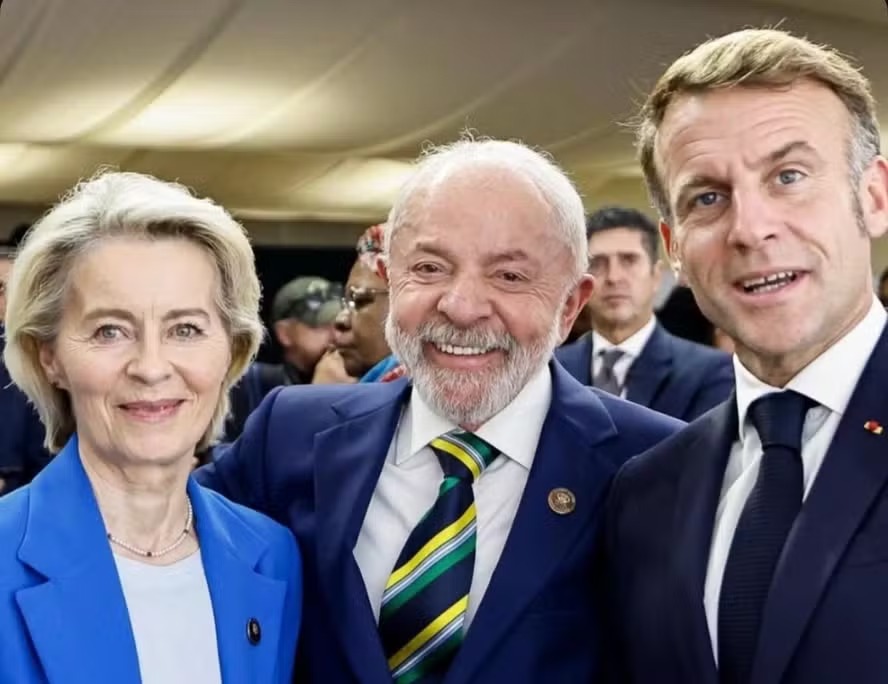
The announcement was made after conversations with the president of the European Commission, Ursula von der Leyen, and French president, Emmanuel Macron, during the G20 in South Africa.
The decision could mark the end of a negotiation that began in 1999 and had its technical text completed in December 2024, after 25 years of negotiations.
The formalization in December meets the Brazilian government’s desire to end 2025 with a clear gesture of strengthening regional integration and expanding the country’s international projection.
Brazil holds the rotating presidency of Mercosur this semester and chose the Foz do Iguaçu summit as the decisive moment for the signing. The event will bring together the four countries of the bloc and will discuss the legislative implementation phase.
According to Lula, the agreement creates one of the largest free trade zones in the world, involving around 722 million inhabitants and a combined GDP of US$22 trillion.
“It’s an extremely important thing, it’s possibly the biggest trade agreement in the world,” said the president.
The speech reinforces the Brazilian government’s commitment to repositioning Mercosur as a relevant actor in the global economy, amid a scenario marked by trade disputes and protectionist pressures, coming from the United States.
The signature on the 20th should end the diplomatic phase of the process, but does not yet guarantee its entry into force. Both the EU and Mercosur countries need to submit the text to their respective parliaments. The Brazilian government plans to send the agreement to the National Congress shortly after the end of the summit.
Europe enters ratification phase after formal presentation of the text by the European Commission
The European Commission officially presented the free trade agreement between the blocs in September 2025, starting the internal approval process in the European Union.
The next step will be analysis by the European Parliament, followed by ratification by the 27 Member States, a step considered complex as it involves sensitive issues such as environmental standards, government purchases and gradual trade opening rules.
Each European country will have autonomy to define the voting calendar, which could extend the process for the next few years.
In addition to the legislative process, the agreement faces legal questions about its compatibility with European Union treaties.
Parties and civil organizations are asking the EU Court of Justice to assess whether the text should be classified as a strict commercial agreement or as an association agreement, which could determine different approval requirements.
This debate remains open and could influence the pace of implementation of the pact.
Despite internal disputes, progress in the EU coincides with the European Commission’s strategy of strengthening ties with South America amid Donald Trump’s tariff crisis.
The presentation of the agreement was accompanied by the approval of agricultural safeguard instruments, aimed at protecting sectors considered sensitive within the European bloc. The measure was announced as a transition mechanism to facilitate the political processing of the pact.
The consolidation of the internal European process also depends on the political conditions of each national government. Countries with strong agribusiness representation, such as France and Ireland, maintain a cautious position in relation to the agreement.
Partners such as Spain, Germany and Portugal defend its approval and argue that the partnership with Mercosur strengthens the EU’s international insertion.
France pushes for safeguards and EU adopts automatic mechanisms for agricultural products
The French government declared, in November, that the agreement still needs adjustments to be considered acceptable. The position reflects pressure from rural producers and parties that defend stricter rules for agricultural imports from Mercosur.
In response to concerns, the Council of the European Union approved a safeguards regulation that establishes automatic triggers if the volume of imports of certain products exceeds pre-defined limits or causes significant drops in domestic prices.
The mechanism includes permanent monitoring of trade flows and authorizes the EU to open investigations and apply temporary protective measures when necessary.
The adoption of safeguards represents an attempt to accommodate the European agricultural sector without reopening the main text of the agreement negotiated with Mercosur. The measure was received as a sign that the European Commission seeks to preserve the pact without increasing internal tensions.
The French position is accompanied by political sectors in Austria and Ireland, which also demand guarantees for their producers.
These countries argue that trade openness must be accompanied by environmental and health commitments equivalent to those practiced in the EU. Although they do not formally block the agreement, these positions put pressure on the European debate and could influence the pace of ratification.
For the Brazilian government, the safeguards are part of the EU’s natural adaptation process and do not change the terms negotiated by Mercosur. Brazilian diplomacy argues that the pact expands the South American bloc’s commercial autonomy and creates opportunities for industry, agribusiness and the services sector.
Celac prepares the ground and strengthens South American diplomatic coordination
The signing of the agreement in December is also the result of Lula’s prior articulation in regional forums. In early November, during the Summit of the Community of Latin American and Caribbean States (Celac), the president stated that Mercosur and the European Union should move forward in concluding the agreement at their respective summits.
The speech was interpreted as a message to the EU and as a demonstration of Brazil’s interest in consolidating a foreign policy of regional integration.
Coordination at Celac contributed to reinforcing Brazil’s role in mediating between different regional interests. Countries such as Paraguay and Uruguay defended agility in negotiations and demanded clear commitments from the EU.
The Brazilian government acted to ensure that Mercosur’s demands were presented in a cohesive manner in the final phase of talks with the Europeans. This alignment strengthened the bloc’s position when the technical text was finalized in December 2024.
The diplomatic reactivation of Mercosur is also expressed in the choice of Foz do Iguaçu as the venue for the decisive summit. The Lula government intends to end the year with an agenda that symbolizes regional integration and reaffirms Brazil’s leading role in multilateral forums. The signing of the agreement with the EU, after two decades of impasse, is seen by members of the government as a milestone in the mandate’s foreign policy.
The ratification stage, however, depends on national decisions by each member of Mercosur. The Brazilian government’s expectation is that the agreement will be forwarded to the National Congress shortly after the end of the summit and that the legislative debate will progress throughout 2026.
Internal differences remain and Milei maintains a critical stance towards Mercosur
Despite positive signals from most of the bloc’s members, tensions with Javier Milei’s government remain. Until this Sunday (23), the Argentine president had not yet confirmed his presence at the Foz do Iguaçu summit.
In July, Milei stated that Mercosur “harmed the majority of Argentine citizens”, a statement that generated diplomatic noise and raised doubts about the country’s interest in participating in the signing.
The relationship between Brazil and Argentina is considered strategic within Mercosur, and Milei’s absence could change the political dimension of the summit.
Even so, the Brazilian government states that the signing will be carried out with the countries present and that the formalization of the agreement does not depend on the presence of individual heads of state.
Itamaraty maintains technical dialogue with Buenos Aires to ensure that Argentina follows the implementation process.
The Argentine internal debate also weighs on the decision on legislative ratification. Recent changes in the country’s economic and commercial policy influence export and industrial sectors that closely monitor the effects of the agreement.
The Brazilian government seeks to preserve regional unity, regardless of political differences between governments.
In the other countries of the bloc, the expectation is that the signature represents progress in national strategies for international insertion. Paraguay and Uruguay argue that the agreement strengthens the bloc’s autonomy and expands trade opportunities with Europe.
Impacts for Brazil: industry, agro and government purchases
The Mercosur–EU agreement establishes rules for trade in industrial goods, agricultural products, services, geographical indications, government purchases and technical barriers.
For Brazilian industry, sensitive topics include tariff reduction deadlines and the gradual opening of sectors considered strategic.
Machinery, chemical, auto parts and pharmaceutical companies believe that the opening of the European market can expand opportunities, as long as it is accompanied by industrial policies capable of sustaining competitiveness.
The agricultural sector, in turn, awaits definitions of quotas, entry deadlines and sanitary adjustments. The EU maintains interest in industrial and service sectors, while Mercosur seeks to expand access to agricultural products in European countries.
The adoption of safeguards by the EU indicates that the transition will be monitored, especially in sensitive products for the European bloc.
For the Brazilian government, the agreement expands the country’s commercial autonomy and strengthens its ability to negotiate in global value chains. The Lula government’s foreign policy focuses on market diversification as a strategy to reduce vulnerabilities in the face of international disputes. The signing of the pact with the EU integrates this strategy alongside ongoing agendas with China, Arab countries and Africa.
Internal implementation will require regulatory adaptation and dialogue with business sectors. The government’s expectation is that, once approved by Congress, the agreement will inaugurate a cycle of deeper integration between Mercosur and global partners.
Source: vermelho.org.br