Published 06/16/2026 10:29 | Edited 06/16/2026 11:11
In the decisive week to ratify the provisional memorandum signed last Sunday (14) by Iran and the United States, which marked the surrender of the White House in the new Gulf war, Israel opens a crisis with Washington and once again emerges as the main factor in destabilizing the understanding reached to end the conflict.
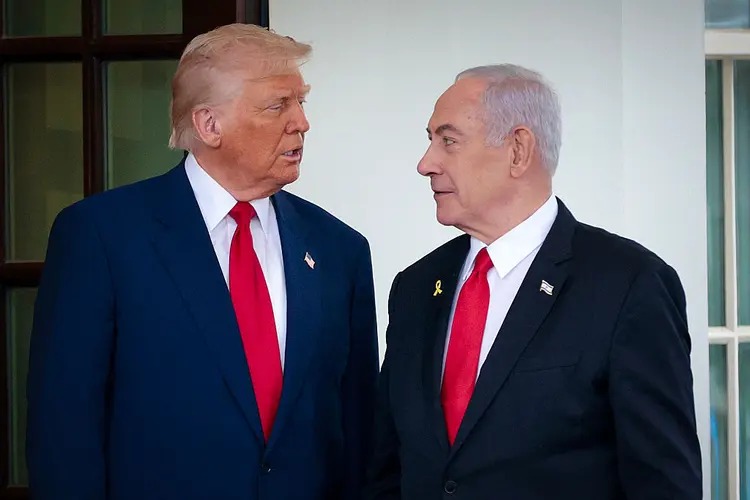
Defeated in the conflict and pressured to negotiate, Donald Trump is now trying to sustain an understanding that depends on something that the US no longer demonstrates full control over: the obedience of war criminal Benjamin Netanyahu and the Zionist state.
The Israeli Prime Minister stated this Monday (15) that Israel does not consider itself obliged to comply with the terms of the agreement between the United States and Iran and promised to keep troops in southern Lebanon “for as long as necessary”.
The position challenges one of the central conditions defended by Tehran, which considers the end of Israeli attacks on Lebanon an inseparable part of the memorandum announced by Trump.
“Any Israeli attack on Lebanon or Israeli stay on Lebanese territory constitutes a violation of the interim agreement,” Iranian Foreign Minister Abbas Araqchi said on Tuesday (16).
The crisis exposes an important political reversal. For years, Washington and Tel Aviv held Iran responsible for the actions of the so-called Axis of Resistance to Zionism — an alliance that brings together forces such as the Lebanese Hezbollah.
Now, Tehran maintains that it is up to the United States to control Israel and prevent further attacks against Lebanon.
“No one in our region believes that the Zionist regime acts without coordination with the United States,” said Iranian Foreign Ministry spokesman Esmail Baghaei. According to him, “the United States will be fully responsible for the consequences of any military adventure by the Zionist regime”
“Any Israeli attack on Lebanon or Israeli stay on Lebanese territory constitutes a violation of the interim agreement,” declared Foreign Minister Abbas Araqchi.
The statements put Trump facing an immediate test. The North American president announced that the agreement with Iran is “closed” and that a new stage of negotiations will open on Friday (19), in Switzerland. But Netanyahu insists that Israel will maintain freedom of action in Lebanon and will continue to occupy areas in the south of the country.
The Israeli press reports that Netanyahu was surprised by the progress of negotiations between the United States and Iran and that Israel had little ability to influence the terms of the agreement. Israeli authorities interviewed by Reuters classified the agreement as “terrible for Israel”, precisely because it does not meet Tel Aviv’s main demands.
Among the points that were left out of immediate negotiations are the Iranian missile program and Tehran’s support for regional allies. These themes had been used by Trump and Netanyahu as justification for war, but they should not be part of the next round of talks.
The agreement also keeps the debate on Iran’s nuclear program at a later stage. In practice, Washington ends the offensive without overthrowing the Iranian government, without eliminating Tehran’s strategic capacity and without imposing the immediate destruction of its nuclear program.
Netanyahu tried to sell the war as victory. In a press conference, he stated that Israel “saved” the country from annihilation and that it “removed” nuclear and military threats coming from Iran. But, at the same time, he admitted that Israel does not know all the details of the agreement signed by Trump and reinforced that it will not give up on acting militarily in Lebanon.
The contradiction reveals the Israeli prime minister’s growing isolation. Netanyahu bet that war alongside the United States could reshape the Middle East, weaken Iran and strengthen his domestic position before the elections.
The result, however, was an agreement led by Washington and Tehran, without direct Israeli participation and with clauses that could limit Israeli military action.
Trump also tries to present the agreement as a triumph, but celebrates the solution to a crisis that he himself helped create.
The reopening of the Strait of Hormuz, presented by the White House as a victory, only seeks to reestablish a pre-war situation. Iran, in turn, demonstrated the ability to paralyze a vital route for world oil and forced Washington to negotiate.
Lebanon became the first major test of this new correlation of forces. Israel launched new attacks against the country even after the announcement of the memorandum. Trump stated that he was not satisfied with the way Israel handled the situation in Lebanese territory, but has not yet managed to impose a clear change of stance on the ally.
The central question now is not just whether the agreement between the United States and Iran will be formalized in Switzerland. The question is whether Trump, after losing the war and signing an understanding under unfavorable conditions, still has the strength to contain Netanyahu.
If Israel continues to attack Lebanon, the fragility of the United States in the Middle East will become even more evident. Washington talks big, but it can no longer guarantee that its main ally will respect a negotiated agreement to end the war that the US itself helped start.
Source: vermelho.org.br