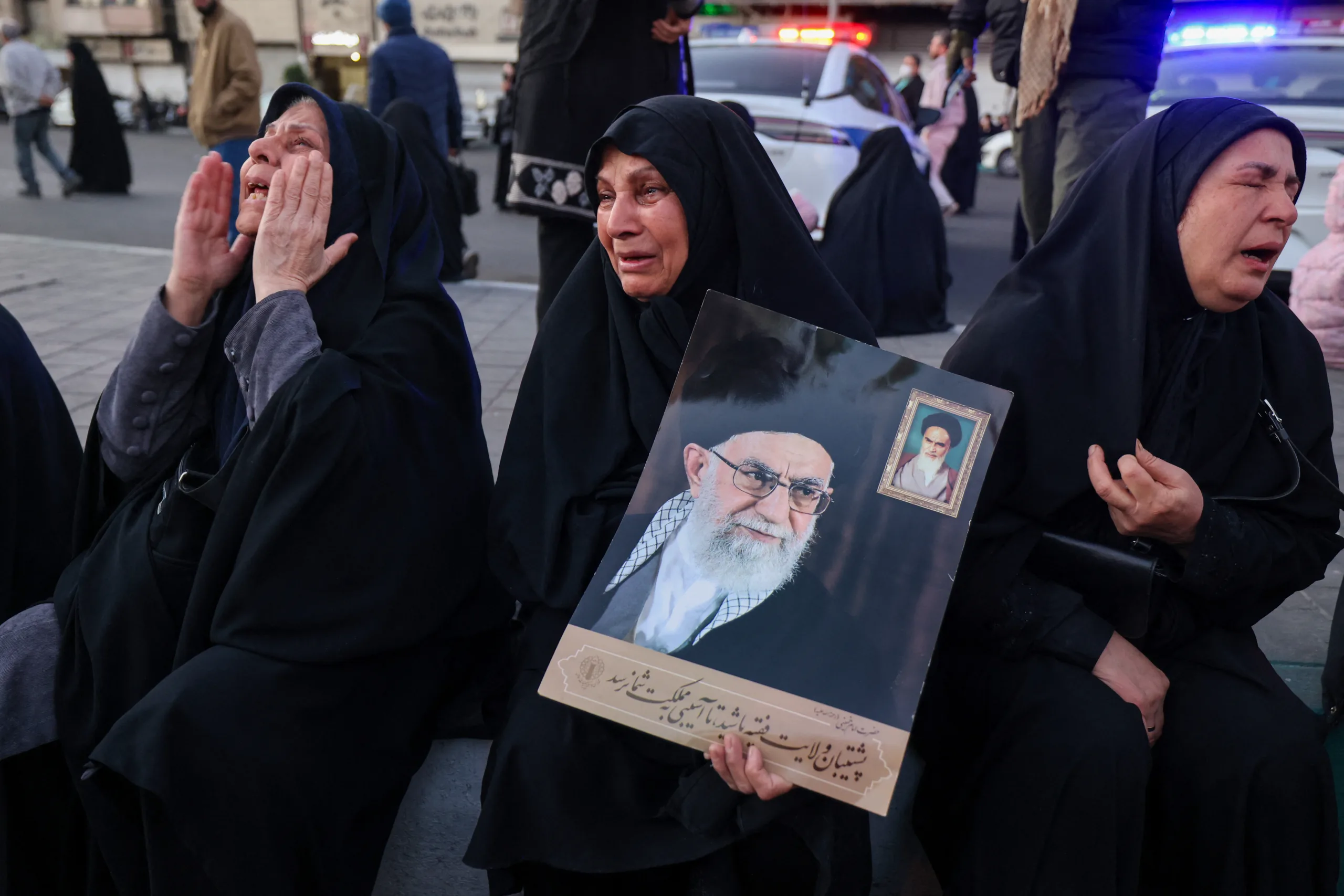
Iran began, this Friday (3), the funeral ceremonies of the supreme leader, Ayatollah Ali Khamenei, in Tehran. The funeral will feature heightened security measures until July 9 and comes amid new warnings from the Iranian government to the United States and Israel about possible attacks during the mourning period.
Khamenei’s body was taken to Tehran’s Grand Mosalla, one of the largest religious complexes in the world, on Friday morning and placed in the main prayer hall. The public wake will last two days and will continue until Sunday (5). On Monday (6), a procession will take place through the streets of Tehran. Afterwards, the body will go to the city of Qom. Ceremonies are also planned in Baghdad, Karbala and Najaf, Iraq, before the burial in Mashhad, scheduled for July 9.
The funeral takes place during the Islamic month of Muharram, a period linked to mourning in Shiite Islam in memory of Imam Hussein, considered the grandson of the Prophet Muhammad and revered by Shiite Muslims. The coffin was covered by the flag that was over Hussein’s shrine. According to an Iranian government publication, the flag is a “symbol of resistance, sacrifice and unwavering devotion to the truth”. Saturday’s public wake also coincides with the celebrations of the 250th anniversary of the independence of the United States.
Iranian authorities have reinforced security for all stages of the funeral. The Civil Aviation Organization said there will be temporary airspace restrictions over Tehran, Mashhad and other cities during the ceremonies. The objective is to expand the protection of events that must bring together crowds and foreign delegations.
The Islamic Revolutionary Guard Corps said the ceremonies represented a renewal of commitment to the Revolution and declared that the Armed Forces remain on maximum military and operational alert under the country’s new leadership. The ayatollah was assassinated in a terrorist attack at the start of the war waged against Iran by the United States and Israel, and his death will strengthen the country’s resolve.
The Guard also stated that any hostile action or strategic miscalculation by adversaries will receive a response that will be remembered throughout history. The body called on the population to participate in large numbers in the farewell, funeral and burial ceremonies to show support for the Iranian leadership and send a message to the country’s adversaries.
The commander of Iran’s Central General Headquarters, Ali Abdollahi, reinforced the warning to the United States and Israel. “We warn Iran’s enemies, especially the US and the Zionist regime (Israel), to avoid any miscalculation and reflect on the harsh retaliation that our armed forces would apply to any threat and aggression against our country,” he said.
On Wednesday (1st), Iran’s Foreign Minister, Abbas Araqchi, also stated that Tehran will respond immediately and forcefully to any threat against the Iranian people or the country’s leadership. The statement came after Israeli Defense Minister Israel Katz stated that Mojtaba Khamenei, Ali Khamenei’s son, was “marked for death”.
Who was Ali Khamenei?
Ali Khamenei was born in Mashhad in 1939 and has served as Iran’s supreme leader since 1989, following the death of Ayatollah Ruhollah Khomeini. Trained in the study of the Quran, he became a cleric and participated in the opposition to Shah Mohammad Reza Pahlavi before the Islamic Revolution of 1979. He was arrested six times, went underground and suffered internal exile. In 1981, he survived an attack that compromised the movements of his right arm.
During his leadership, he expanded his influence over the Judiciary, the Revolutionary Guard, Parliament, the police, the intelligence services and the media.
In his first speech as supreme leader, he stated that he was “a person with many faults and deficiencies, and truly a modest seminarian”. He also declared that he would use “all my abilities and all my faith in the Almighty to be able to assume this heavy responsibility”.
His government faced protests at different periods. Human rights organizations have accused, for example, security forces of using “lethal force” against protesters. Khamenei responded by stating that “those who are linked to Israel and the United States have caused enormous damage and killed several thousand.”
In foreign policy, he argued that the Iranian nuclear program had peaceful purposes, while Western governments accused the country of seeking the capacity to produce nuclear weapons. After the United States withdrew from the nuclear agreement in 2018, the relationship between the countries deteriorated again.
Khamenei was married to Mansoureh Khojasteh Baqerzadeh and had six children. The second of them, Mojtaba Khamenei, assumed supreme leadership of the country after his father’s death.
Source: www.brasildefato.com.br