Published 11/17/2025 19:54 | Edited 11/18/2025 11:42
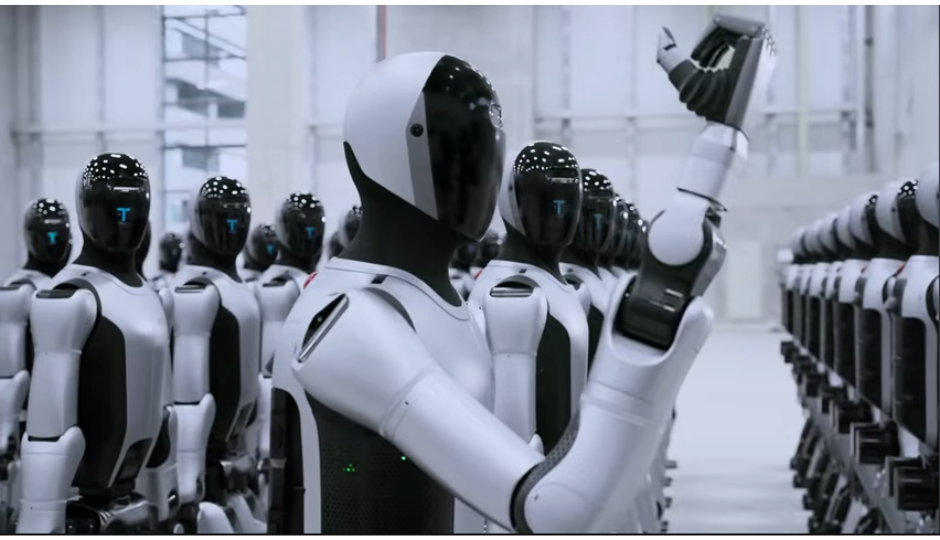
With the delivery of one hundred Walker S2 robots to companies such as BYD, FAW-Volkswagen and Foxconn in November 2025, UBTECH Robotics opens a new stage in the automated factory of the 21st century. The images released by the company, showing rows of humanoid robots marching in perfect synchronization, quickly went viral and sparked controversy: experts raised doubts about their veracity, suggesting the use of computer graphics. UBTECH itself, however, publicly defended the authenticity of the images and reinforced that all the material depicts real robots, reaffirming the milestone of its engineering. Watch the video:
These are machines designed to operate continuously, equipped with artificial intelligence and already involved in contracts worth more than US$100 million. The company’s plan envisages jumping from 100 units to 5,000 delivered in 2026 — a movement supported by a high degree of automation, plant expansion and pro-robotics industrial policies in Shenzhen.
Social and economic impacts of automation
The early adoption of this model in the largest industrial park in the world raises doubts about the consequences for employment, income and consumption. According to experts, however, the impact of the humanoid robot should be understood more as a process of reconfiguration than a mere replacement of the human worker.
In the Chinese case, innovation fits into a national strategy of coordinated modernization, as explained by Professor Elias Jabbour, economist at UERJ and president of the Pereira Passos Institute (IPP): automation is part of a policy of technological advancement, expansion of the digital economy and institutional strengthening, designed to free workers from repetitive tasks and transfer them to functions with greater added value. “In Chinese market socialism, the State plays a fundamental role in cushioning possible negative effects, offering qualifications and redesigning sectors capable of absorbing displaced labor.” Jabbour observes that, unlike countries with less institutional capacity, “China seeks to transform productivity gains into expansion of consumption and public services, maintaining the dynamism of the internal market”.
Technology in peripheral countries tends to replace workers
This logic, however, is not repeated uniformly. For professor Euzébio Jorge Silveira de Sousa, from UFRJ, it is necessary to view this progress with some skepticism. Peripheral countries like Brazil face structural restrictions to the intense adoption of advanced robotics. “The diffusion of new technologies in very unequal environments can increase well-known vulnerabilities”, highlights Euzébio. In Brazil, for example, the replacement of repetitive tasks by machines does not occur at the same speed as in central countries. “Low levels of supervision and high participation of underpaid work hinder the productive and social absorption of automation”, he explains.
The professor warns, however, that when entry difficulties are overcome, “technology tends to be used more to replace workers than to complement tasks”. Thus, the humanoid robots that today star in reports and viral videos signal both the advances in Chinese manufacturing and the ongoing global differences. Ultimately, the challenge will be to adapt public policies and economic structures so that robotization acts as a vector of development, and not as a threat to inclusion and social well-being.
Source: vermelho.org.br