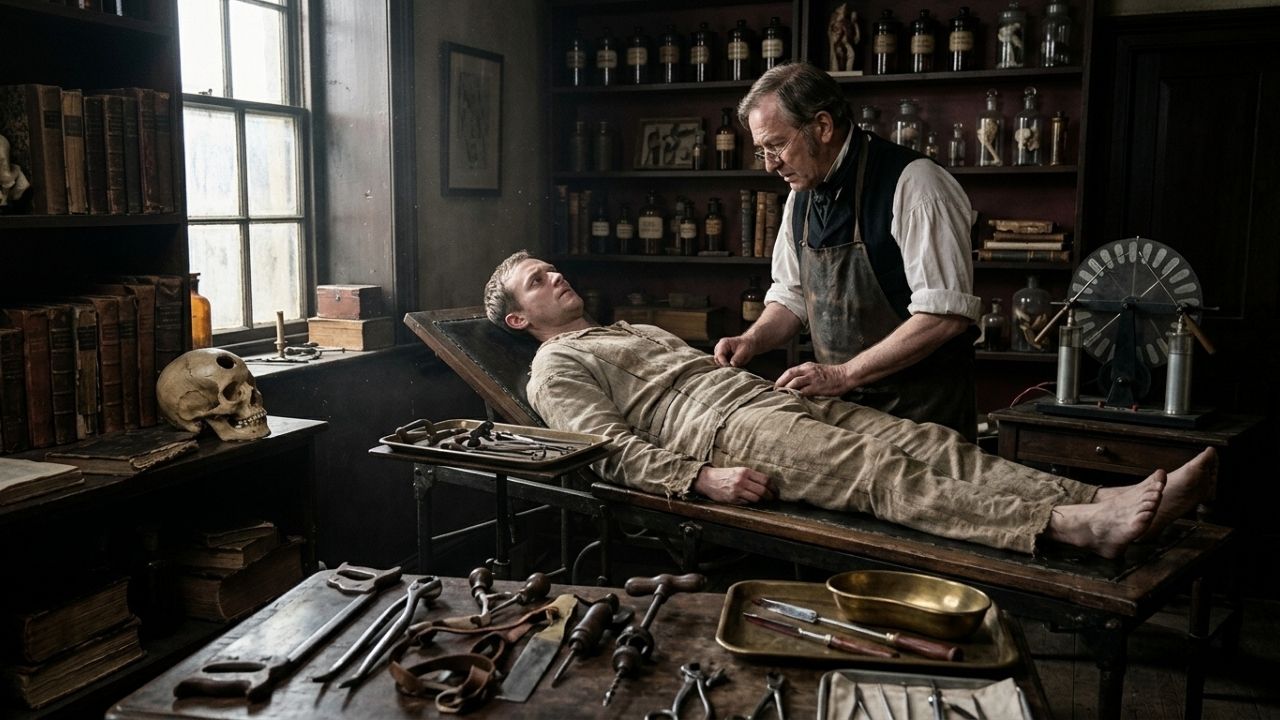
Modern medicine has transformed the way humanity understands disease, pain, infection, and the human body. Procedures that are now considered routine were once unimaginable, while many treatments that physicians confidently prescribed centuries ago are now remembered as grim examples of how little doctors sometimes understood about the illnesses they were trying to cure.
Before antibiotics, anesthesia, modern surgery, and evidence based medicine, physicians often worked with limited scientific knowledge. They relied on ancient theories, tradition, observation, and sometimes treatments that were based more on belief than on demonstrable results. In some cases, these practices caused severe pain or permanent injury. In others, they could be fatal.
The history of medicine is therefore not only a story of scientific progress. It is also a record of failed ideas, dangerous experiments, and desperate attempts to save lives.
Here are eight of the most disturbing medical treatments from the past.
🩸 1. Bloodletting: When Losing Blood Was Considered a Cure
For centuries, bloodletting was one of the most common medical treatments in Europe, the Middle East, and other parts of the world. The practice was based largely on the ancient theory of the four humors, which held that health depended on a proper balance of blood, phlegm, yellow bile, and black bile.
If a person became sick, physicians often assumed that one of these substances was present in excessive quantities. Blood was particularly important because it was believed to influence many aspects of physical and mental health.
Doctors therefore deliberately removed blood from patients using knives, lancets, or specially designed instruments. Leeches were also commonly used.
The treatment could be surprisingly extensive. A patient suffering from fever, inflammation, headaches, or other symptoms might be subjected to repeated bloodletting. In some circumstances, large amounts of blood were removed.
The logic seemed reasonable within the medical theories of the time, but the consequences could be disastrous. Excessive blood loss could cause weakness, fainting, anemia, shock, and even death.
One of the most famous historical examples involved George Washington, the first president of the United States. During his final illness in 1799, his physicians removed substantial amounts of blood as they attempted to treat him. He died shortly afterward.
Bloodletting survived for centuries partly because physicians believed they had witnessed patients improve after treatment. In reality, many illnesses naturally improve with time, making it difficult for doctors without modern clinical research to determine whether their interventions were actually helping.
Today, bloodletting has only a very limited role in medicine and is used for specific conditions under controlled circumstances. The idea that routinely removing blood could cure a wide range of diseases, however, has been abandoned.
🧠 2. Trepanation: Drilling Into the Human Skull
Few historical medical practices sound as frightening as trepanation.
The procedure involved creating a hole in the skull. Ancient surgeons used various tools to scrape, cut, or drill through the bone, sometimes exposing the membrane surrounding the brain.
Trepanation is extremely old. Archaeologists have discovered prehistoric skulls showing evidence that people survived the procedure because new bone grew around the edges of some openings.
Why did ancient people do this?
The answer is not completely clear. Some trepanations may have been performed to treat traumatic head injuries. If someone suffered a skull fracture, removing damaged bone could potentially have reduced pressure inside the skull.
Other procedures may have been connected to religious or supernatural beliefs. Some ancient societies believed that illness could be caused by evil spirits or other forces. Creating an opening in the skull may have been intended to allow those forces to escape.
Whatever the reason, the procedure carried enormous risks. Without modern anesthesia, antiseptic techniques, antibiotics, or knowledge of brain surgery, infection and serious injury were major dangers.
A skull is not an ordinary bone. Beneath it lies the brain, protected by delicate membranes and surrounded by blood vessels. A mistake during the procedure could result in catastrophic bleeding, brain damage, or death.
Yet trepanation should not simply be dismissed as primitive foolishness. Archaeological evidence suggests that some patients survived the procedure, and in certain cases it may have had a genuine medical purpose.
Modern neurosurgery still involves opening the skull when medically necessary. The difference is that contemporary surgeons have sophisticated imaging, anesthesia, sterile equipment, and detailed knowledge of human anatomy.
🪱 3. Mercury Treatments: The Toxic Medicine Doctors Trusted
Mercury is highly toxic, but for centuries it was used in medicine.
Physicians believed mercury compounds could treat a range of diseases. One of the most notorious examples was syphilis, a sexually transmitted infection that could cause severe neurological and cardiovascular complications if left untreated.
Before effective antibiotics became available, mercury was sometimes administered to patients through ointments, pills, vapors, or other preparations.
The treatment could be extremely unpleasant. Patients might experience excessive salivation, mouth ulcers, gastrointestinal problems, neurological symptoms, and other signs of mercury poisoning.
The phrase “a night with Venus and a lifetime with Mercury” became associated with the treatment of syphilis, reflecting the grim reputation of mercury therapy.
Mercury was also used for other medical purposes and appeared in various historical remedies. Its persistence demonstrates how difficult it can be for societies to recognize the dangers of a substance when it is believed to have therapeutic value.
The problem was not simply that physicians were unaware of toxicity. They often observed side effects but interpreted them differently from modern doctors. Some unpleasant reactions were regarded as evidence that the medicine was working.
The development of antibiotics in the 20th century transformed the treatment of bacterial infections such as syphilis. Mercury gradually disappeared from mainstream treatment for the disease.
Its medical history serves as a powerful reminder that a treatment can be widely accepted by professionals and still cause more harm than good.
🧊 4. Ice Water Treatments for Mental Illness
Long before modern psychiatric medicine, doctors struggled to understand severe mental illness.
One particularly disturbing approach involved exposing patients to extremely cold water.
Hydrotherapy became popular in psychiatric institutions during the 18th and 19th centuries and continued in various forms into the 20th century. Patients might be placed in cold baths, wrapped in wet sheets, or subjected to sudden changes in water temperature.
The theories behind these treatments varied. Some physicians believed that cold water could calm patients, stimulate the nervous system, or alter abnormal mental states.
In some institutions, hydrotherapy was used as a form of restraint or behavioral control rather than as a carefully tested medical intervention.
A patient considered agitated or difficult to manage might be placed in a bath and kept there for an extended period. Other techniques involved wrapping patients tightly in wet sheets, making movement difficult.
The treatment could be physically and psychologically distressing.
It is important to remember that psychiatric hospitals of the past often operated without many of the medications and therapeutic approaches available today. Staff members sometimes faced patients experiencing hallucinations, violent behavior, severe depression, or profound confusion without effective tools to help them.
The result was an environment where highly questionable treatments could become institutional routines.
Modern psychiatry has moved toward treatments based on clinical evidence, patient rights, medication, psychotherapy, and more humane approaches to crisis management.
⚡ 5. Electrotherapy and the Dangerous Promise of Electricity
Electricity fascinated physicians almost as soon as scientists began understanding how it could be generated and controlled.
During the 18th and 19th centuries, electrical treatments were promoted for an astonishing variety of illnesses. Some practitioners believed electricity could restore the body’s natural balance or stimulate damaged nerves.
Electrical devices were used for neurological conditions, pain, paralysis, and psychiatric disorders. Some applications were relatively mild, while others could be extremely uncomfortable or dangerous.
The problem was that enthusiasm for electricity often moved faster than scientific evidence.
Patients could be subjected to strong electrical currents in attempts to treat conditions that had little connection to electricity. In some cases, the treatment was closer to experimentation than established medicine.
This history should not be confused with every modern medical application of electricity. Contemporary medicine does use carefully controlled electrical stimulation in legitimate treatments, including certain neurological and cardiac procedures.
The difference is knowledge and precision.
Modern devices are designed around specific physiological mechanisms and are tested for safety and effectiveness. Historical practitioners frequently lacked both the technology and scientific understanding required to determine which applications were genuinely beneficial.
Electricity therefore became another example of a promising scientific discovery that was sometimes transformed into an overly broad medical cure.
🧠 6. Lobotomy: Surgery Intended to Change Personality
Few medical procedures became as controversial as the lobotomy.
Developed in the early 20th century, lobotomy involved disrupting connections between parts of the brain, particularly pathways associated with the frontal lobes. It was promoted as a possible treatment for severe psychiatric conditions.
At a time when psychiatric hospitals were struggling with large numbers of severely ill patients and had relatively few effective treatments, lobotomy appeared to offer hope.
Thousands of patients underwent variations of the procedure.
One of the most famous advocates was Portuguese neurologist António Egas Moniz, who received the Nobel Prize in Physiology or Medicine in 1949 for work related to prefrontal leucotomy.
But the procedure could produce devastating consequences.
Some patients experienced major changes in personality, motivation, emotional responses, or cognitive abilities. Others became profoundly impaired. There were also risks associated directly with brain surgery, including seizures, hemorrhage, infection, and death.
The most infamous period of lobotomy history involved procedures performed rapidly and on a large scale, sometimes with inadequate patient selection or limited follow-up.
The arrival of effective psychiatric medications in the 1950s helped dramatically reduce the use of lobotomy. Growing criticism of the procedure also exposed fundamental questions about consent, medical ethics, and the rights of people with mental illness.
Today, the lobotomy is widely remembered as a warning about what can happen when desperation, incomplete scientific knowledge, and medical authority combine.
☢️ 7. Radium as a Medical Miracle
When radioactivity was discovered, scientists and the public were fascinated by its mysterious properties.
Radium, in particular, became associated with modernity and scientific progress. During the early 20th century, radioactive substances were incorporated into various commercial products and experimental medical treatments.
Doctors did discover legitimate medical applications for radiation. Radiation can damage rapidly dividing cells, making it useful in cancer treatment when carefully controlled.
The danger came when radioactive materials were treated as inherently beneficial or insufficiently understood.
Radium was used in some treatments and was also incorporated into products marketed with claims that now appear astonishingly reckless.
People consumed or handled radioactive materials without understanding the long-term consequences of radiation exposure.
The infamous history of the “Radium Girls,” women who worked painting luminous watch dials with radium-containing paint, demonstrated the terrible health consequences of occupational exposure. Many suffered severe illnesses, including bone damage and cancer.
Medical science eventually developed a much more sophisticated understanding of radiation, including both its therapeutic potential and its dangers.
Modern radiation therapy is carefully calculated and delivered with extensive safety measures. The historical misuse of radioactive substances shows how a genuinely powerful scientific discovery can be dangerous when its risks are underestimated.
🩸 8. Blood Transfusions Before Doctors Understood Blood Types
Blood transfusion is now an essential medical procedure that can save lives after major bleeding, surgery, trauma, and certain diseases.
But early attempts at transfusion were extraordinarily risky.
Before scientists understood blood groups, physicians had little way of knowing whether one person’s blood was compatible with another person’s.
Early transfusion experiments sometimes involved transferring blood between animals and humans or between people under primitive conditions. Some patients survived, but others developed severe reactions.
The discovery of the ABO blood group system in the early 20th century fundamentally changed transfusion medicine.
Doctors finally had a scientific explanation for why some transfusions worked while others could cause catastrophic reactions.
Compatibility testing, sterile equipment, blood storage, anticoagulants, screening for infections, and improved transfusion protocols eventually transformed the procedure into one of modern medicine’s most valuable technologies.
The history is particularly striking because the basic idea was not necessarily wrong. Blood transfusion could genuinely save lives. The problem was that physicians attempted to perform it before they understood the biological mechanisms that made it safe.
That distinction appears repeatedly throughout medical history.
Sometimes the treatment itself is fundamentally misguided. In other cases, the underlying idea is correct, but the technology and scientific knowledge needed to perform it safely have not yet been developed.
🔬 What These Horrible Treatments Teach Us
The history of medicine can be uncomfortable to study because many of these treatments were not invented by obviously cruel people. They were often developed by physicians who genuinely believed they were helping their patients.
That is precisely what makes the history so important.
Bloodletting was based on a theory of human physiology that dominated medicine for centuries. Mercury was prescribed because doctors desperately needed something that might fight devastating infections. Lobotomy emerged during a period when severe mental illness had few effective treatments. Radiation offered extraordinary new possibilities at a time when its long-term risks were poorly understood.
Medicine advances by replacing assumptions with evidence.
The development of controlled clinical trials, laboratory science, medical imaging, microbiology, pharmacology, anesthesia, antisepsis, antibiotics, and modern ethics has radically changed healthcare. Treatments are now expected to demonstrate benefits and risks through systematic investigation rather than relying solely on tradition or individual experience.
Yet medical history also offers a warning for the present.
Future generations may look back at some treatments currently considered standard and ask why doctors believed they were appropriate. Medicine is not a finished achievement. It is a constantly evolving discipline.
The most important lesson from these eight horrifying practices is therefore not simply that doctors in the past made mistakes. It is that medical certainty must always remain open to evidence, criticism, and revision.
What seems obvious today may one day be replaced by a better explanation.
And that willingness to question established ideas is one of the reasons modern medicine continues to improve.