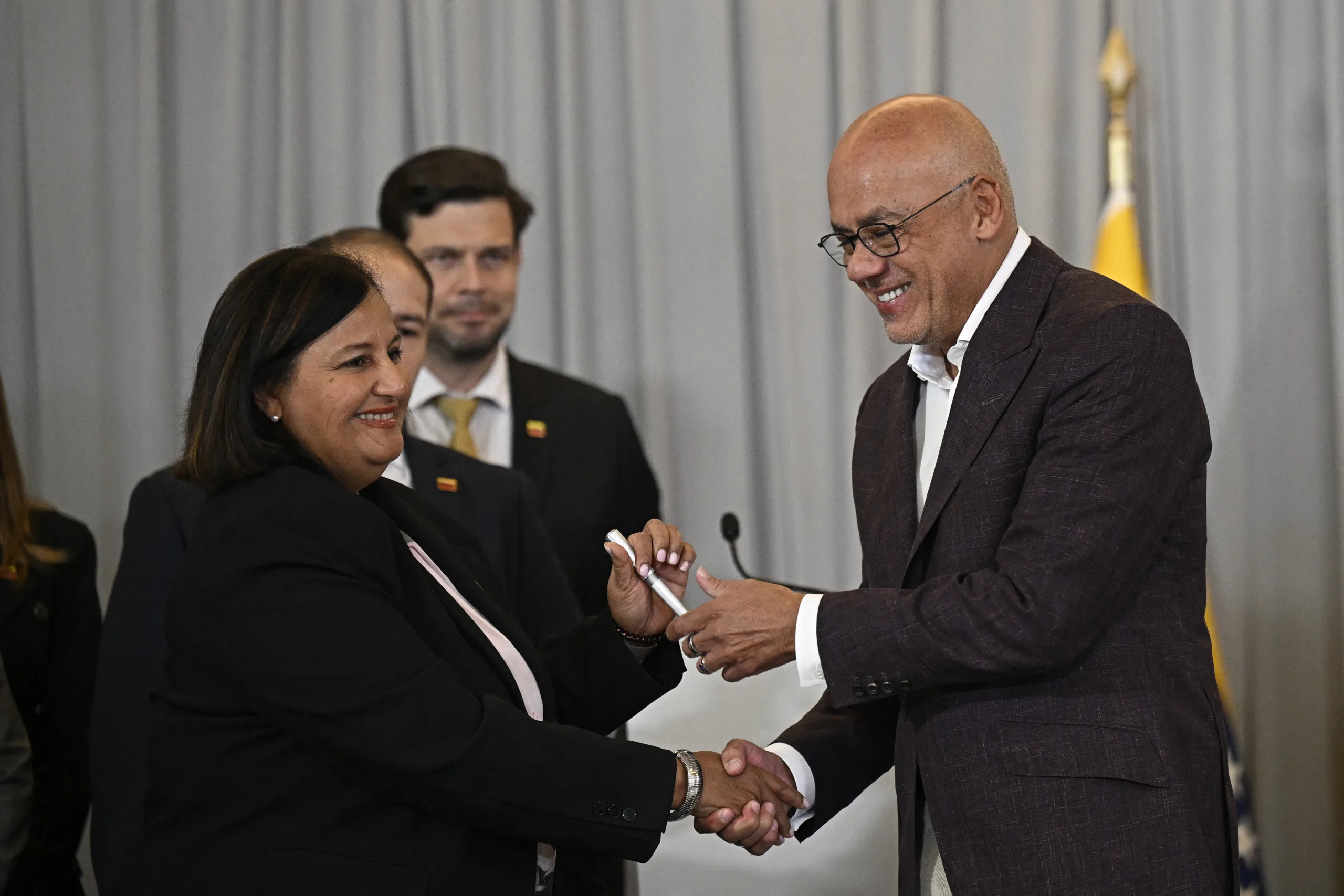
The second meeting between Venezuela’s government and opponents takes place within the framework of the democratic coexistence program in the country, promoted by the acting president, Delcy Rodríguez, after the bombing of the United States on January 3 of this year, and the kidnapping of President Nicolás Maduro and his wife, national deputy Cília Flores. Among the main advances of the meeting is the restructuring of the Judiciary.
The parties agreed to create the Credentials and Requirements Review Board for Supreme Court of Justice candidates, consisting of seven jurists. The measure is a development of what had been agreed in the first round of talks, when it was decided to renew all 32 magistrates of the country’s highest court.
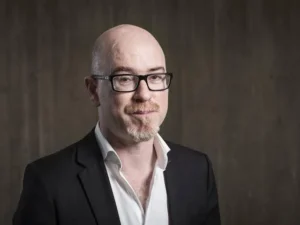
Venezuelan political scientist Walter Ortíz believes that the TSJ renewal process could extend until the first quarter of 2027, as it is a complex process, processed by the National Assembly, with the participation of broad social sectors.
“The Organic Law of the Supreme Court of Justice establishes the provisions for the election of magistrates of the Supreme Court of Justice. Basically, it is the National Assembly that has the prerogative to elect these positions. There is a judicial nominations committee that has an operating period, according to the law, of up to two years”, explains Ortíz.
“In its process, the National Assembly elects a preliminary committee, which is the committee that will design the roadmap for the review of all civil society factors and institutions that will be incorporated into the definitive judicial nominations committee”, he adds.
Legitimation of actors and rules
In turn, political scientist Colette Capriles points out that institutional renewal is essential so that it is possible to establish a political environment that generates trust in all actors. More than that, the Venezuelan researcher points out that both parties seek to assert themselves as legitimate interlocutors, although with divergent interests.
“It is becoming increasingly clear that what is at stake in this negotiation is, on the one hand, the institutional agenda, on which there is consensus among all political actors. Without the recovery of institutions in accordance with the Constitution, it will not be possible to advance the credibility of any political process, be it electoral or economic. The interests are not necessarily just about more or less democracy, but also extremely practical. Fundamentally, this is a process in which we seek to establish mutual political recognition, that is the truth”, points out the Venezuelan political scientist.
“There is a political strategy in which the part of the opposition willing to negotiate needs to be recognized by Chavismo and also by the United States as a political actor. The entire framework of action is pragmatic and part of a political and economic agreement between the United States government and the government of Delcy Rodríguez. This table appears as the foundation of a different political space, with new actors, although it does not include the entire opposition”, assesses Colette.
Release of prisoners and liberation of sites
Still as a result of the cycle of conversations, the government released 39 new prisoners over the weekend. Among those released are six being investigated in the case known as Operation Gedeón, when authorities managed to intercept and arrest a group of paramilitaries that tried to invade the country from the north coast.
According to the government, since the approval of the Amnesty Law in February this year, more than 8 thousand people who had committed politically motivated crimes at different moments of political confrontation in the country have benefited from release or review of precautionary measures since the law’s implementation.
The second round of dialogue also resulted in the government’s decision to expand the lifting of administrative restrictions on news portals and digital media that were blocked for having participated in coup actions and plans against the State.
“The media in Venezuela, unfortunately, were very protagonists, for the most part, in the political conflict. Leonardo, we cannot forget that an entire network of media outlets were co-participants in the conspiracy and the subsequent overthrow of President Hugo Chávez on April 11, 2002. Then they were also co-participants in the entire sabotage of Venezuela’s main industry, the PDVSA oil industry, in December of that same year. Both events had objectives insurrectionists to try to overthrow the government and change the political regime in Venezuela. There is a pending debate that the private media outlets must still carry out, as some intend to take this necessary debate about their responsibilities under the table”, analyzes Ortíz.
“Now, in a scenario like the one we have today, and warning again that these media have to reflect deeply on their conduct that led to the generation of these restrictive measures, something that, at least I, have not seen them doing, the situation requires evaluation. I see it as extremely positive that, despite this, there is a process of greater openness and breadth, so that people, based on their own criteria, can evaluate the action of these media and that this helps to strengthen a process of dialogue that generates positive results for the Venezuelans and Venezuelan women”, he adds.
Elections
The two delegations reaffirmed the maintenance of a permanent negotiation channel. A third cycle of talks is scheduled for mid-October 2026, when representatives intend to continue the social, economic agendas and the schedule for the next four constitutional elections scheduled in the country. Asked about the topic, Jorge Rodríguez, president of the National Assembly of Venezuela, confirmed that they will be held within the constitutional provisions.
“Of course there will be elections. There will be four elections. What we have ahead of us are parliamentary elections, mayoral elections, governor elections and presidential elections within the deadlines established by the Constitution”, said the parliamentarian.
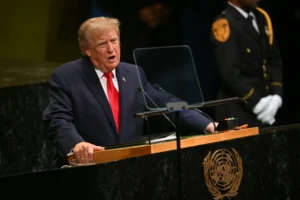
Days later, Donald Trump himself said in an interview that “it is still early” for elections to be held in the country.
The last presidential elections were held in 2024. Governors, mayors and deputies had their positions renewed in a single election held in 2025. According to the country’s Constitution, the mandate of the President of the Republic is six years, while for national deputies it is five years. Mayors and governors have four-year terms each.
Political scientist Walter Ortíz recalls that, although Venezuela had its sovereignty seriously violated in the military attack on January 3, the country’s Constitution remains intact.
“Thus, if there is no change in the constitutional text, which would require the calling of a referendum, the next regional elections would be in 2029, and the national ones, that is, president and deputies, in 2030”, argues the political scientist.
“If the internal dialogue process manages to generate a dynamic solution that modifies any of the dates set out in the Constitution, this will be evaluated at the time, but, for now, the dates defined in the Constitution are clear regarding the year set for electoral processes in Venezuela”, he adds.
For Colette Capriles, the defense of constitutional deadlines is the line that has been adopted by Delcy Rodríguez’s government and, on the other hand, it satisfies American interests, which need time to resolve their own internal contradictions.
“The Venezuelan government’s thesis of linking the elections to constitutional deadlines may seem safer to Washington than negotiating new dates, although there are internal pressures in the United States arising from the American electoral context. Therefore, Jorge Rodríguez’s claim about constitutional deadlines does not constitute the true fundamental argument”, assesses Colette.
“There is a distance between public narratives and the negotiations that take place behind the scenes, reflecting the growing separation between public opinion and State decisions”, he adds.
Source: www.brasildefato.com.br