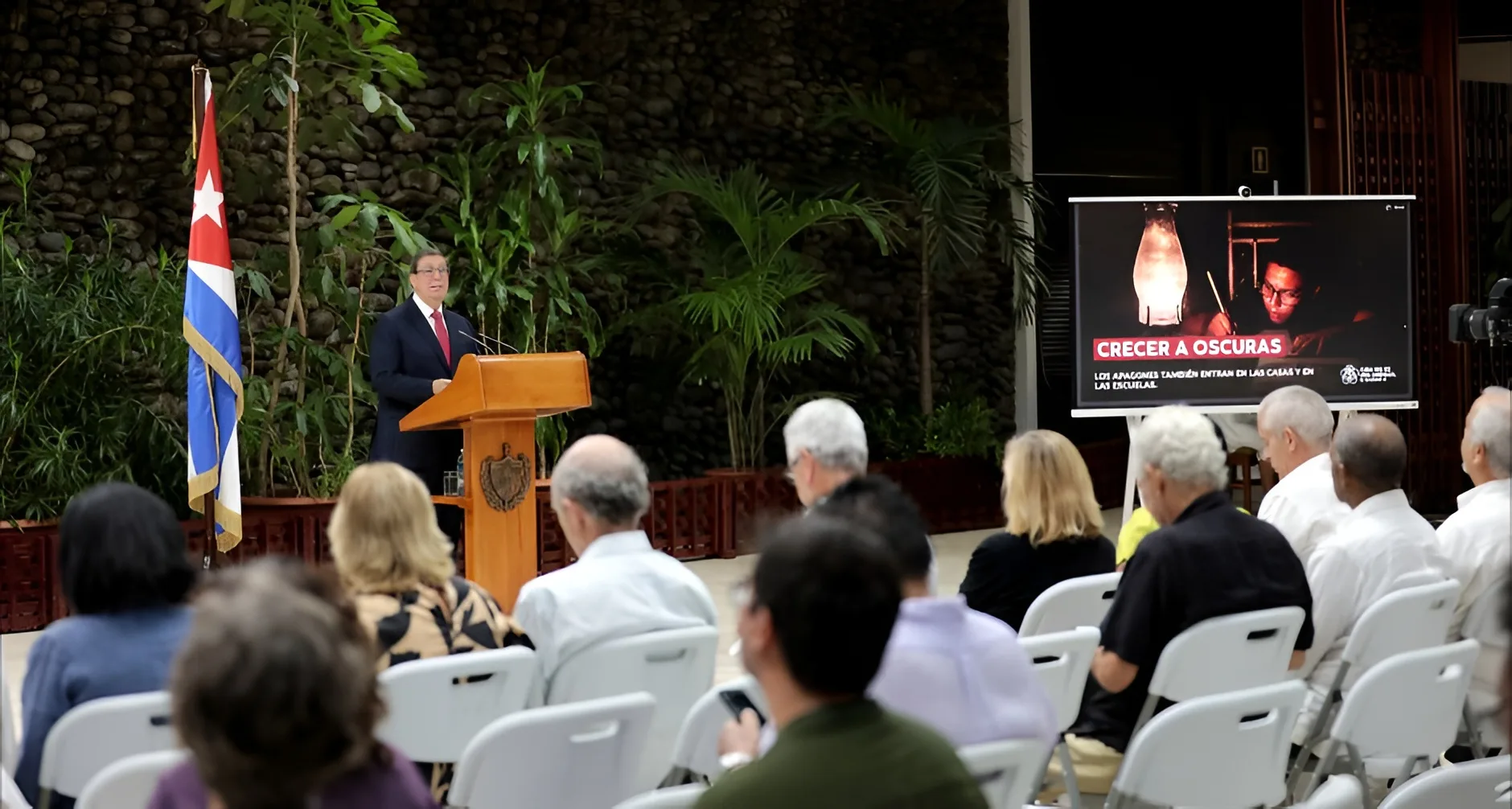
The United States blockade against Cuba caused losses of more than US$8 billion for the island between March 2025 and February 2026 alone. This is the largest loss recorded in a single year since the beginning of the blockade.
The information was released this Monday (7) by the Cuban Foreign Minister, Bruno Rodríguez, during the presentation, to the diplomatic corps accredited on the island, of the annual document “Need to put an end to the economic, commercial and financial blockade imposed by the United States of America against Cuba”.
“A record figure, 7% higher than that recorded in the previous report”, stated the chancellor, referring to the period between March 2024 and February 2025.
The document, which the Cuban government presents annually to the Secretary-General of the United Nations, details the economic, commercial and financial damage that, according to Havana, is caused by Washington’s coercive measures against the island.
“The blockade does not punish a government, it punishes the daily lives of a people in all areas. It is an act of collective punishment that is expressed in the long months lived with only two or three hours of electricity per day, or less”, he stated.
Rodríguez highlighted that the impacts include food, electricity, water, health, education, transportation and the living conditions of Cuban families.
“Hostility and aggression reach all areas of life. This is not collateral damage. This is also an unacceptable phrase from the United States’ criminal war against Cuba. They are the victims of an aggressive project, of a coldly calculated plan. This is the objective of the measures that are applied. It is collective punishment against Cubans to achieve political objectives. The blockade punishes. We want to live in peace. It punishes all families”, he stated.
The minister also classified the US policy as “an act of genocide” and stated that “the current policy of the United States government against Cuba constitutes and typifies an act of genocide according to international conventions”.
The report also constitutes the main foundation of the resolution that Cuba submits annually to the UN General Assembly for a vote to demand the end of the blockade and which, for more than three decades, has received the support of a large majority of Member States. This year, voting is scheduled for October 28th.
According to the figures presented, the damage accumulated since the beginning of the blockade, more than six decades ago, reaches the extraordinary figure of 178.7 billion dollars at current prices, 4.7% more than what was reported in the previous period.
Health impact
Among the most affected sectors is the health system, with losses estimated at US$121.7 million during the period analyzed. The document points out that restrictions on accessing medical input markets, as well as banking difficulties faced by international suppliers, caused interruptions in the availability of essential medicines.
Added to this is the impact of Cuba’s inclusion on the United States’ list of countries sponsoring terrorism. According to the report, this situation led banks and international financial institutions to refuse to process payments from the island’s pharmaceutical industry, BioCubaFarma, including for the acquisition of basic raw materials intended for the manufacture of medicines.
In this context, infant mortality in Cuba went from 4 for every thousand live births, in 2018, to 9.9 in 2025. This is an indicator that, according to the Cuban authorities, could be even more affected by the consequences of the energy suffocation imposed on the island since the end of January.
“These are children, they are not numbers. They are deaths that should not have occurred because they deprive Cuba and its solid and effective public health system of legitimate resources. We are talking, for example, about the system that must take care of a pregnant woman, treat a sick child and assist those who arrive in a medical emergency,” said Rodríguez.
The impact of energy suffocation
Rodríguez warned that the report’s numbers still do not fully reflect the impact of the measures recently adopted by Washington against the supply of fuel to Cuba.
The period analyzed only includes the first month after the energy asphyxia declared by the United States at the end of January and does not include the expansion of the so-called secondary sanctions, applied at the beginning of May. “The damage in these months multiplies the damage that occurred in the period analyzed,” he stated.
Since then, Cuba has been unable to import oil, a situation that has seriously affected daily life on the island, as well as industrial activity and food production.
Large-scale blackouts and fuel shortages paralyzed industrial activities, logistics and the agri-food sector. In this context, the Economic Commission for Latin America and the Caribbean (ECLAC) revised downwards its estimates for Cuba and projects a contraction of 10.3% in the Cuban Gross Domestic Product (GDP).
In addition to the restrictions on fuel, there is the tightening of so-called secondary sanctions against foreign companies — not US ones — that do business on the island. These measures caused the exit of foreign investment from critical areas, such as the tourist industry, with the withdrawal of chains such as Meliá, Blue Diamond and Iberostar, and the exploration of minerals, as in the case of the Canadian mining company Sherritt International.
Despite this scenario, Rodríguez stated that the Cuban government maintains that it is a priority to meet the most urgent needs of the population and preserve its social policies. He also stated that Havana will continue to implement the economic and social reforms recently approved by the National Assembly, with the expectation that they will begin to generate results in the short term and contribute to improving living conditions.
During his intervention, the chancellor also recalled the 1960 memorandum by then US Undersecretary of State Lester Mallory, in which, as he cited, he proposed “weakening the economic life of Cuba” through the deprivation of resources, with the aim of “provoking hunger, despair and the overthrow of the government”.
Source: www.brasildefato.com.br