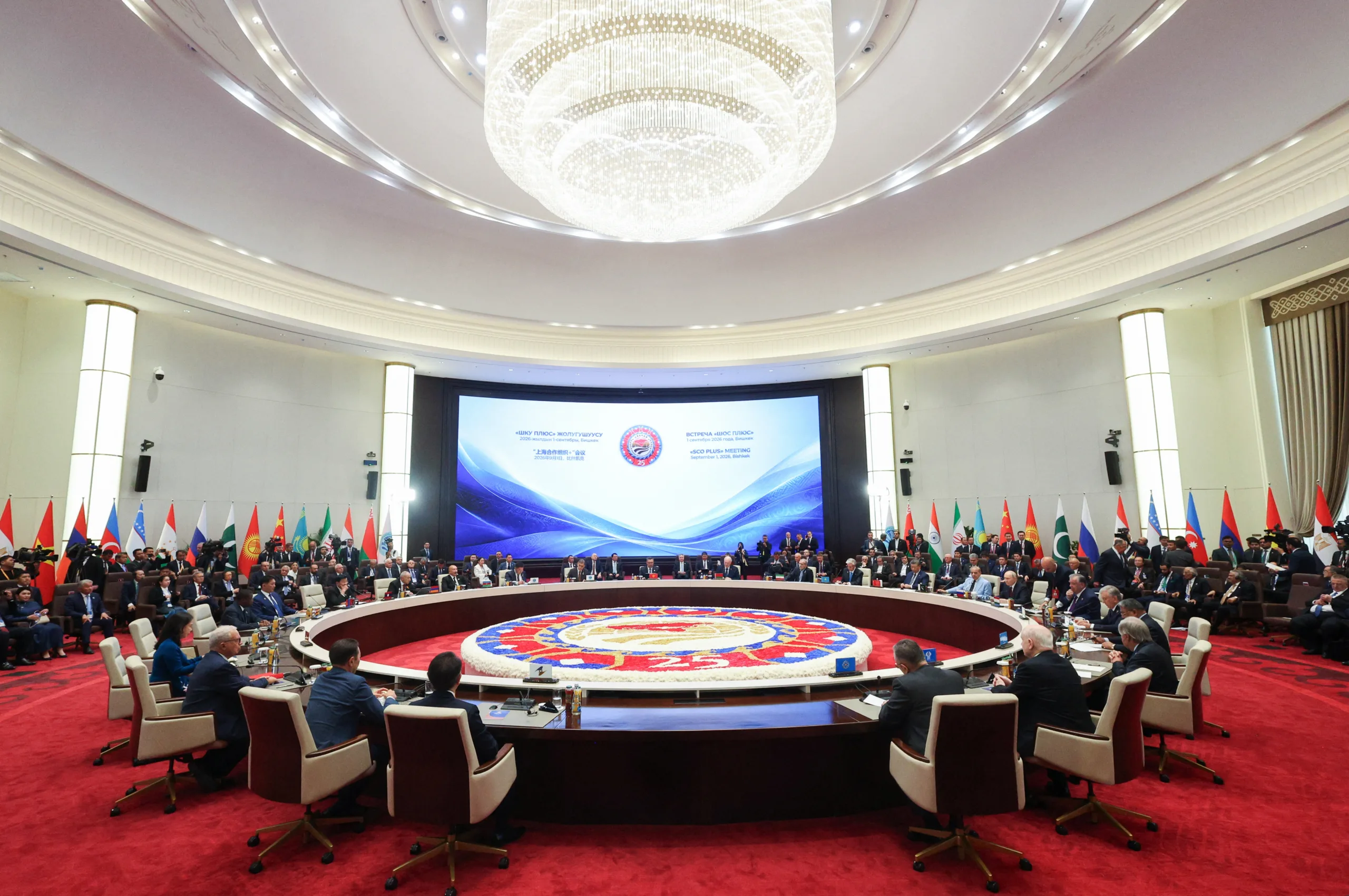
The member countries of the Shanghai Cooperation Organization (SCO) met this week in Bishkek, Kyrgyzstan, in a meeting that discussed some of China’s projects for global governance, exposed the level of cooperation between Moscow and Beijing and intensified the cohesion of the group’s nations around Iran, attacked since February by the United States and Israel.
On Monday (31), Chinese President Xi Jinping had a bilateral meeting with Russian president Vladimir Putin, in which the echoes of the “unlimited friendship” between the two countries (a definition given in 2022 by both) were heard again. The Chinese leader once again said that the country is willing to work with Russia and other countries to “strengthen the forces that lead the shape of global governance”, while Putin highlighted an increase of almost 50% in bilateral tourist flows in the first half of 2026, as a direct result of the temporary visa exemption.
On Tuesday, it was Iran’s turn to enter the scene. Masoud Pezeshkian, the main Iranian official present at the event, took advantage of his trip to Bishkek to charge the United States with non-compliance with the interim peace agreement signed a few months ago. Alongside Putin, Pezeshkian showed recognition for Russian support given since the beginning of the war.
Before that, China took the opportunity to announce that it will create an international center for cooperation in Artificial Intelligence with the SCO countries, carrying out 100 technological cooperation projects with the organization’s members over the next three years. The initiative ended up being one of the main novelties of this year’s OCX edition, and is a direct result of the momentum generated by the creation of the World Organization for Cooperation in Artificial Intelligence (WAICO), announced in July, and of which Brazil is a member.
“China’s political understanding that stimulating development and establishing win-win agreements is a strategy to reduce the temperature of global conflicts”, assesses professor Samuel Spellmann, from the Postgraduate Program in Economics at the Federal University of Pará (UFPA) and director of the Amazon Center for Chinese Studies.
For Spellmann, this strategy contrasts with the unilateral policies blatantly adopted by the United States since Donald Trump returned to power in 2025. “The promotion of a more inclusive globalization, consultation and cooperation in traditional areas is part of this process”, recalls the researcher.
In 2026, OCX expanded the economic horizon
Still in 2001, when OCX was created, the group’s focus was on the issue of security. These were the times when the “War on Terror” began, spread far and wide by the American government of George W. Bush. It was also the period of China’s entry into the World Trade Organization (WTO).
The issue of security has always been at the forefront. Even before the formalization of the OCX, the “Shanghai Five”, created in 1996 by Russia, China, Kazakhstan, Kyrgyzstan and Uzbekistan (the last three, it should be said, former Soviet socialist republics), were already reestablishing conditions to reduce US military influence in the region.
Focusing on combating what it calls the “three evils” (separatism, terrorism and fundamentalism), the OCX has been successful in achieving its primary objectives, which gained strength with the entry of military powers such as India, Pakistan and Iran in recent years.
In recent times, however, the economic agenda has been gaining strength. In 2025, the organization’s Council of Heads of State launched the Tianjin Declaration, defining, among other points, the creation of the entity’s Development Bank. On the occasion, China announced the creation of three platforms for cooperation in the areas of energy, renewable industries and digital economy.
The 2026 summit indicated further progress. “A special financial cooperation organization is being built in Tianjin, which is the new center of economic cooperation. There is an internal nucleus of rich countries, in large proportion, which will have a more balanced cooperation with China. From this, there will also be a greater rapprochement with Kyrgyzstan, which hosts this year’s summit. At the same time, an important new railway is being built that crosses Kyrgyzstan and reaches Uzbekistan, in addition to the development of new cooperation initiatives”, says Spellmann.
Functioning as a kind of offshoot of last year’s edition, the 2026 OCX meeting intensified the need to create financing alternatives for sectors such as commerce and infrastructure. Spellmann recalls that many of the member countries already have institutions such as the New Development Bank (NDB) and the Asian Infrastructure Investment Bank. They are important actors, but they already work within a standardized logic of action, which makes the expansion of the range welcome.
“The creation of a new organization or a new bank could enable a better division of tasks, as has been done in other international experiences, or it could result in a complement to the current financing structure. There could be a complement to the investments made so far”, says the professor.
Source: www.brasildefato.com.br