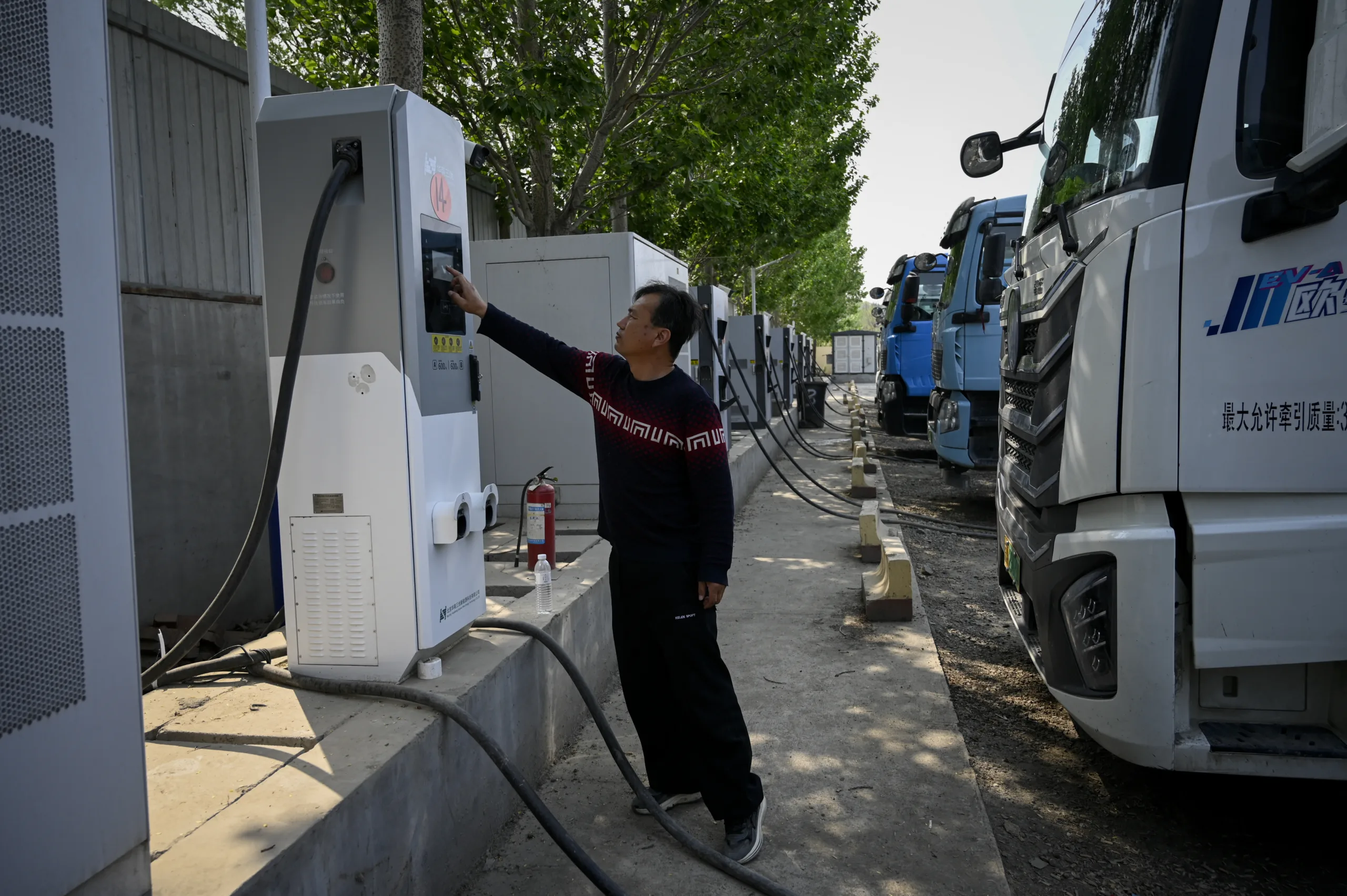
Sales of electric heavy trucks grew 78.6% in China in the first half of 2026, with around 140 thousand units sold. The figure is a continuation of the 182% growth in 2025 and places the sector above the government’s target of reaching a fleet of 1.6 million vehicles by 2030.
The federal government allocated 22 billion yuan (approximately R$16 billion) in special Treasury bonds in 2026 to finance the replacement of old trucks with electric models. The plan, published in May in conjunction with eleven federal departments, including the National Development and Reform Commission, foresees a 40% penetration rate in the heavy truck fleet by 2030.
In a press conference this Tuesday (21), Cai Tuanjie, general director of Security at the Ministry of Transport, stated that the segment “has entered a new phase of rapid popularization”. He stated that growth results from both public policies and market forces and indicated that the government intends to expand support as demand grows.
To support fleet expansion, the government plans to build more than 3,000 battery charging and exchange stations in the main freight corridors of national express highways and in the four large metropolitan regions that concentrate much of the country’s industrial production: Beijing-Tianjin-Hebei, the Yangtze River Delta, the Guangdong-Hong Kong-Macao Greater Bay Area and Chengdu-Chongqing. The goal is to create 30,000 kilometers of zero-carbon road corridors along the routes of the national express highway network.
The growth of the segment should amplify an ongoing reduction in logistics expenses in the country. The proportion of total logistics costs over GDP fell from 14.7% in 2022 to 13.9% in 2025. Cai Tuanjie, when detailing the factors behind this drop, attributed around 70% of the reduction to the transport sector. The transition from diesel to electricity in heavy trucks is highlighted as one of the key elements of the next stage of this reduction.
Source: www.brasildefato.com.br