An insult from a magistrate was what was needed to give a name to the largest student mobilization ever faced by the Narendra Modi government in India. Still in May, during a hearing on fake diplomas, the president of the country’s Supreme Court, Surya Kant, defined young Indians without jobs as “cockroaches” and “parasites”.
They are many. According to government data, unemployment among people aged 15 to 29 was 9.9% in 2025. If the selection is made only in urban areas, the percentage rises to 13.6%. Even with a diploma, the significant majority work informally.
Seen solely from an institutional point of view, India has a consolidated and expanding university environment. In 2026, the country showed the greatest growth in the annual global ranking of evaluation and classification by areas of knowledge, the QS World University Ranking by Subject. There are 99 Indian university institutions among the 599 best in the world.
The contradictions were already striking. But, in May, the leak of exams for a medical entrance exam (known as NEET-UG) took students to the streets. The highly competitive test mobilizes the lives of the families of students applying for a place. It is estimated that more than two million candidates attempted approval.
Faced with frustration, some students had no choice but to commit suicide. Members of the Popular Cockroach Party, a movement named in an ironic reference to the magistrate’s speech, point out that at least twenty young people took their own lives.
This is not the first case of an alleged leak. In 2024, students also reported the leak of NEET-UG exams, pointing out fraud and irregularities.
The nature of the protests
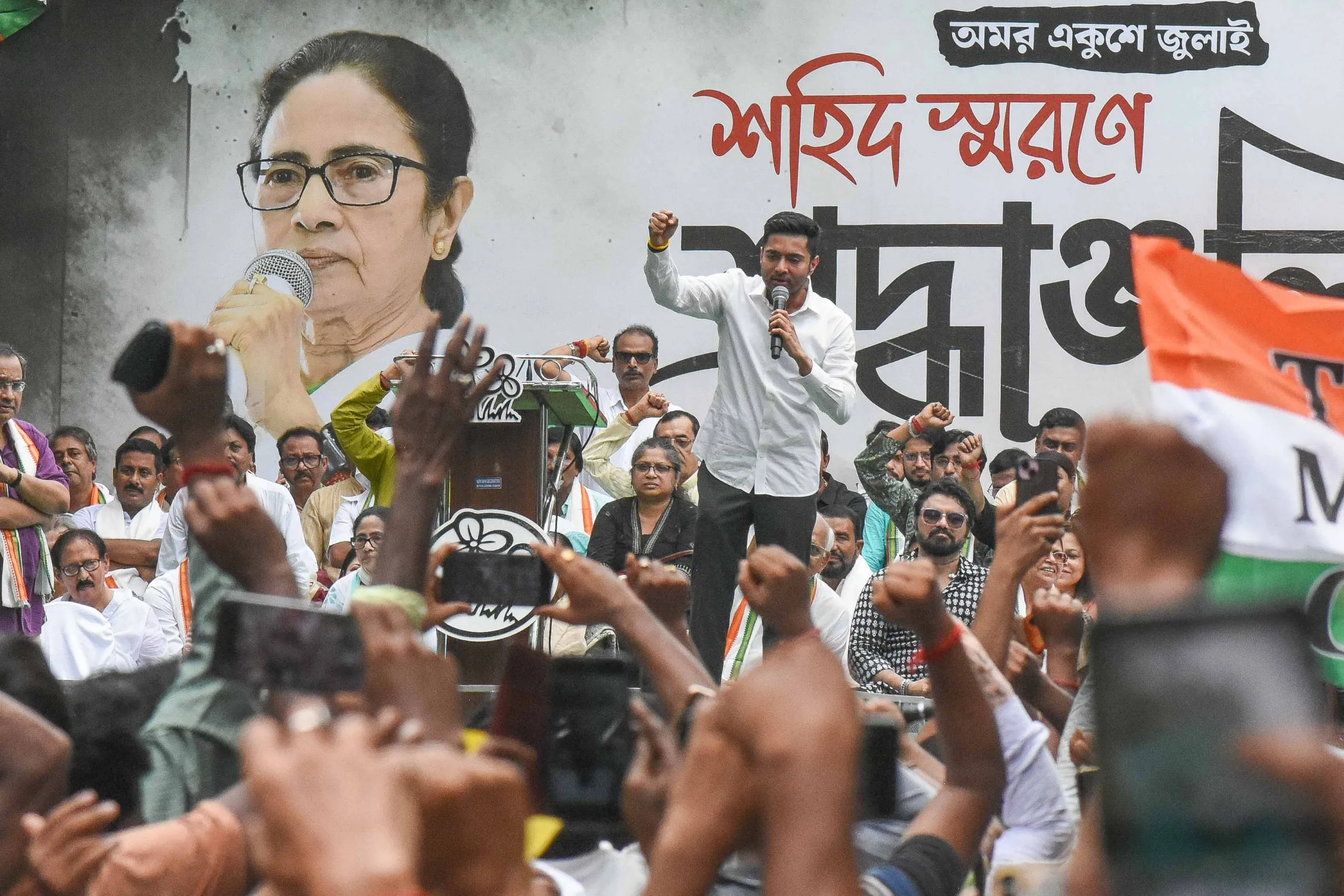
The Barata Popular Party took thousands of people to the streets this week. The youth are calling for the resignation of Education Minister Dharmendra Pradhan, among other demands. In New Delhi, the march headed towards the Indian Parliament, but was repressed by the police.
This could be another typical case of protests by what is called “Generation Z”, like those that took over countries such as Peru, Paraguay, Kenya, Morocco and Nepal, in 2025. But the Indian case is deeper and requires overcoming labels.
The nomenclature Generation Z “is a marketing category disguised as sociology”, points out Vijay Prashad, Indian historian and journalist, and director of the Tricontinental Institute of Social Research. “It groups the daughter of a rural worker and the son of a billionaire simply because they were born in the same period.”
The historian believes that the demands expose a social crisis in India. “For millions of working-class families, the test represents years of savings, sacrifices, studies and hope. When this test is leaked or the exam is cancelled, an entire family’s fragile financial planning is destroyed.”
The movement grew on social media, using memes, parody and self-deprecating humor. But so far, it has gained momentum on the streets through Abhjeet Dipke, a Boston University student. It was his idea to invite interested parties who met the following requirements: unemployed, lazy, “chronically online” and capable of “complaining professionally”, according to the description on the acronym’s platform. On Instagram alone, the party has more than 24 million followers.
Debate between the present and the future
The uproar of discomfort also has to do with internal political issues. Many of the young people have grown up and are heading to a difficult professional life in an India governed by Narendra Modi, who has been in power since 2014.
The country is on its way to becoming the third largest economy in the world, with the Gross Domestic Product (GDP) expanding: growth was 7.5% last year, and the projection for 2026 is an increase of 6.4%, according to the International Monetary Fund (IMF).
In the daily lives of young recently graduated Indians, these data seem distant. “Capitalism cannot integrate them into a dignified economic life. Education has expanded the aspirations and capabilities of young Indians, but the economy has not expanded the number of decent jobs available to them”, explains Prashad.
On the streets, police forces reacted with tear gas and batons. Authorities also forcibly removed activist Sonam Wangchuk from the streets and hospitalized her. He had joined the protest and started a hunger strike. The movement calls for Wangchuck’s release.
The next few weeks should tell whether the spontaneity of the movement will be transformed into consolidated political power. The relaxed tone alone “cannot overcome the established power”, warns Prashad. For him, lasting strength “will depend on the ability to link the reform of the exam system to the fight for employment, public education, labor rights and economic redistribution”.
Source: www.brasildefato.com.br