FIFA banned the entry of flags, t-shirts and posters referring to the Falklands in the semi-final between Argentina and England, at 4pm this Wednesday (3pm), in Atlanta, in the United States. Inside and outside the stadium, 1,600 security agents will work to prevent clashes between fans from both countries.
The symbolic charge of the match refers to the historic duel in the quarter-finals of the World Cup in Mexico, in 1986, when Diego Armando Maradona, with a hand goal and another worthy of the first shelf of football memories, practically single-handedly, eliminated the English squad. There and here, the dispute over the Falkland Islands continues.
The island, located at the southern tip of South America, has been the subject of dispute for decades. In 1965, the General Assembly of the United Nations (UN) approved a resolution that classified the Falklands as a territory in a “pending colonial situation”, calling on Argentina and the United Kingdom to negotiate. Since then, the Decolonization Committee has renewed the request several times, which is routinely ignored by London.
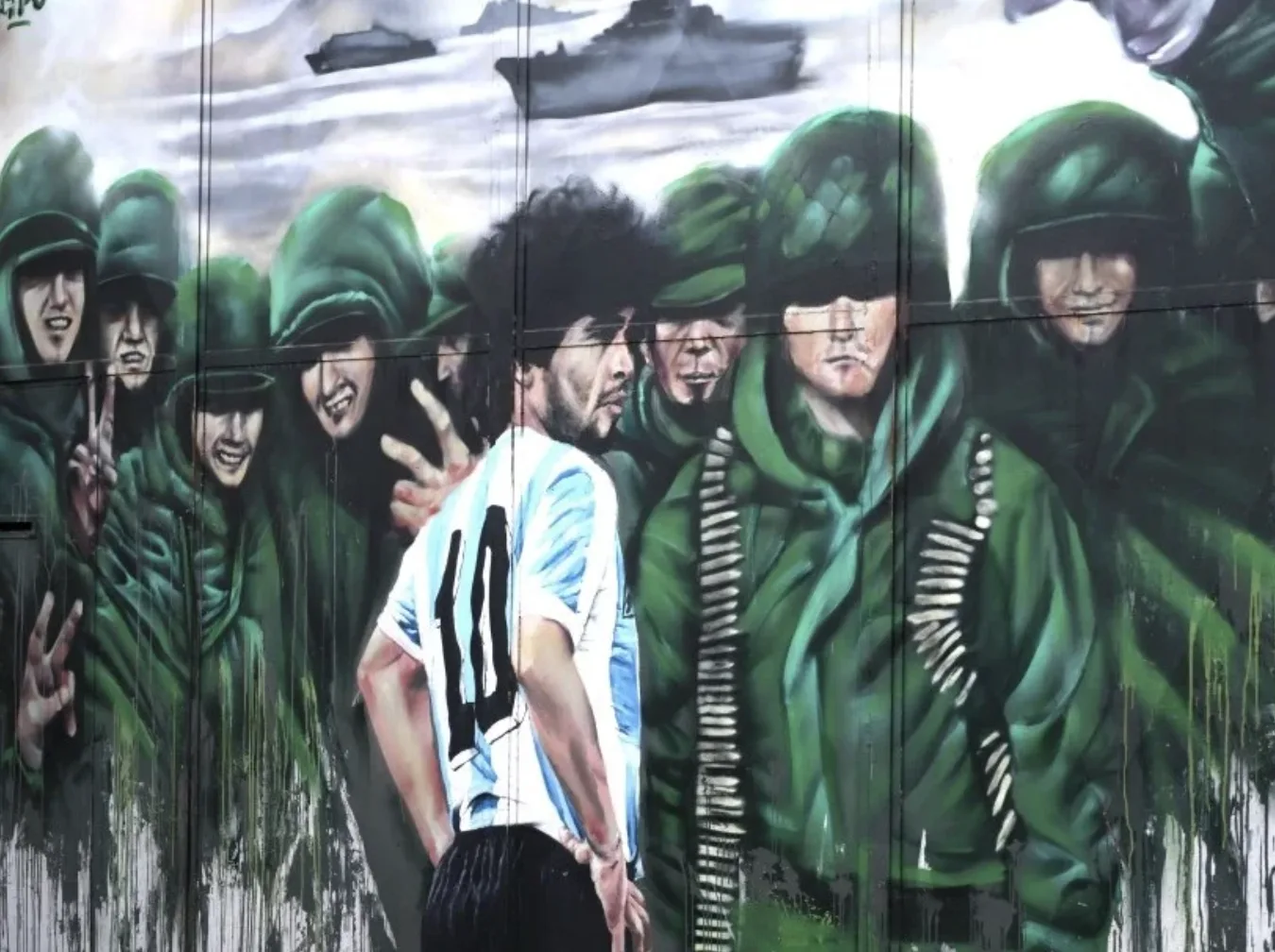
In Argentina, the debate goes beyond institutionality. It is not uncommon for neighborhood club t-shirts to make reference to the design of the islands. In cities like Buenos Aires, murals that associate the Falklands with Maradona are common. In the country neighboring Brazil, April 2nd became a national holiday in memory of the veterans of the war between Argentina and England to dominate the island, and the theme is part of the school curriculum.
“The ex-combatants, the heroes of the Falklands, are around 60 years old. They are young people, parents, grandparents. So, it is very connected [à sociedade]”, explained Argentine journalist Erika Gimenez, participating in the program BdF Connectiondo Brazil in fact.
“There are schools and universities with posters in front, saying: ‘This school, this university, this cultural center are up to 1,800 kilometers from the Falkland Islands. It is impossible to separate football from the Falklands. It is not easy to think about this separation, even if it is encouraged by the Milei government itself”, ponders Gimenez.
The context of the war
The war lasted only 74 days. On April 2, 1982, Leopoldo Galtieri’s dictatorship landed in the Falklands, predicting that British troops – at the time, led by former Prime Minister Margaret Thatcher – would not respond with proportional force. It wasn’t the case. With hundreds of ships and using two aircraft carriers, the British forced the Argentine fleet to retreat. In total, 649 Argentine soldiers were killed, in addition to 255 British soldiers and three island residents.
The push for war was necessary for the Argentine dictatorship, which was torn apart by economic problems and allegations of human rights violations. Not surprisingly, the defeat led to the dismantling of the Galtieri government, opening space for redemocratization.
Before that, however, Juan Domingo Perón came to advance an agreement for joint administration of the archipelago. The oil company YPF, alongside Gas de El Estado, operated the Falkland Islands before the war. London, however, maintains that the occupation began in 1833, and that, to this day, a large part of the inhabitants still prefer to maintain the status of an overseas territory.
In the context of yet another meeting between Argentina and England in World Cups, the Malvinas Islands Center for Former Combatants (Cecim) in La Plata published a statement, which said that the match would be “of enormous transcendence”.
“Regarding the confrontation with the English, we want to say one thing with our hands on our hearts: Diego has already avenged us. There are no sporting debts left to settle with them”, says the document.
President Javier Milei, in a move contrary to his predecessors – whether right or left –, came to recognize, in 2024, that the islands would, in fact, be “in the hands of the United Kingdom”, but committed to recovering them through diplomatic channels. But the ultra-rightist government cut the specific budget for the Falklands and even complied with FIFA’s ban on the use of symbols that refer to the historic fight.
“The Argentine Minister of Security said that she reached an agreement with FIFA so that no one enters with the ‘map’ of the Falklands. But this ‘map’ is our territory, our country. It is important that a government defends the Falklands. The Falklands are Argentine and Latin American. Even Lula, in his last speeches at Mercosur, defended the Falklands”, assesses Erika Gimenez.
For the journalist, “there is a right-wing discourse, from the Milei government, that we have to forget, that it doesn’t matter. But the British still occupy 25% of our national territory. And they exploit oil, they exploit the fishing industry. Even today, in 2026.”
Meanwhile, the Argentine fans, as in the 1980s, sing the memory of the war. “For Malvinas, for Diego, for the last Leo [Messi]; Argentina, I want to see you win twice”, says the song, sung even by players in the squad.
Source: www.brasildefato.com.br