Published 03/06/2026 19:29 | Edited 03/06/2026 21:54
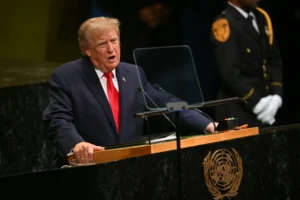
While the global focus turns to the military escalation of the United States and Israel against Iran, Donald Trump’s White House intensifies an offensive of historic proportions in Latin America. The strategy seeks to perpetuate North American hegemony in the face of multipolarity, using the conflict in the Middle East as a “smokescreen” for ideological cleansing operations and control of natural resources in the Western Hemisphere.
Maduro’s kidnapping and the energy siege
The scenario of hostility reached its peak on January 3, 2026, with the kidnapping of Nicolás Maduro and his wife, Cilia Flores, in Venezuela. The episode is not isolated, but part of a mechanism aimed at absolute control of the world’s oil reserves. Jorge Oliveira Rodrigues, researcher at the Tricontinental Institute and Gedes, warns that imperialism uses various means to undermine sovereignty. “The point of convergence is the Trump government; both fascism and imperialism are sustained by the expansion and exploitation of peripheral regions”, he analyzes.
Cuba is the cruelest example of Trump’s actions. On January 29, 2026, the US president signed an executive order declaring a national emergency, authorizing punitive tariffs against any country that supplies oil to Havana. Cuba’s Ministry of Foreign Affairs denounced the measure as a flagrant violation of international law, which has already plunged the island into blackouts of up to 20 hours a day, generating an unprecedented humanitarian crisis, with serious shortages of food and medicine.
Ecuador and the Submission Alignment
The policy of submission manifested itself drastically in Ecuador. Last Wednesday (4), Daniel Noboa’s government declared all Cuban diplomats persona non grataexpelling them without formal justification. In a statement, the Ecuadorian Ministry of Foreign Affairs sealed the rupture of historical ties, a decision that analysts see as a gesture of subservience to facilitate military exercises such as UNITAS and guarantee political favors from Washington.
Economic impacts and authoritarian neoliberalism
The war in Iran is already severely impacting the regional economy. The price of a barrel of oil rose more than 10%, putting pressure on Latin American importers with inflation and currency devaluation. In Brazil, Petrobras still resists price volatility, but the pressure to keep up with international prices only increases. Furthermore, part of the 50% tariffs imposed by Trump are still in force, functioning as a tool of political coercion.
Articulated with local far-right leaders, Trump’s authoritarian model is spreading. In Argentina, Javier Milei promotes savage deregulation; in Peru, the territory becomes a base for American military exercises; in Rodrigo Paz’s Bolivia, lithium was delivered to Washington, breaking with China; and José Antonio Kast’s Chile rises with the promise of an “emergency government” focused on repression.
Popular sovereignty as an antidote
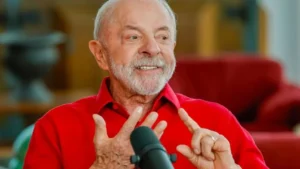
The broad front to isolate the extreme right is the PCdoB’s political resolution to face this year’s elections, aiming to return Lula to the presidency of the Republic for the fourth time.
For Jorge Oliveira Rodrigues, this is one of the moments in which sovereignty must be qualified, which “is not the frivolous speech of subservient patriots. Without our neighbors, we are unable to face the violence of the empire. Popular sovereignty is the only real brake on rising fascism, capable of responding to social, economic and climate vulnerabilities”, he concludes.
Source: vermelho.org.br