Published 09/23/2025 19:10 | Edited 23/09/2025 19:15
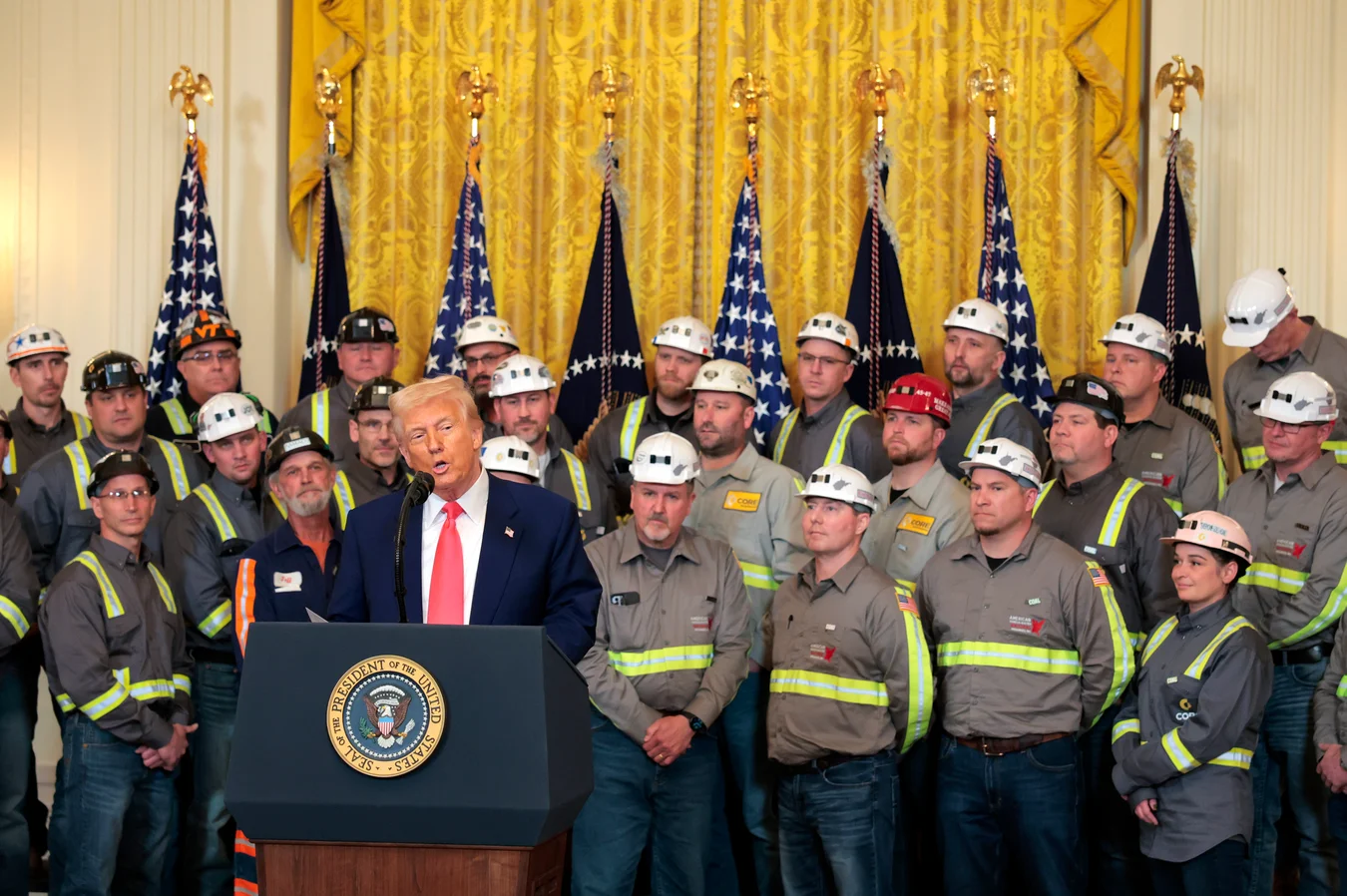
At the UN General Assembly, the world witnessed the staging of two projects radically opposed to the future of the planet. On the one hand, President Luiz Inacio Lula da Silva presented Brazil as an environmental power, with concrete goals against the climate crisis. On the other hand, Donald Trump reinforced his negationism, treating climate emergency as a “farce” and extolling fossil fuels in a discourse that isolated the US from global scientific and diplomatic consensus.
He classified climate change as “the largest blow ever” and a “fraud”, ridiculing decades of research that proves global warming and its devastating effects.
For more than ten minutes, Trump mocked scientific forecasts, called environmentalists “stupid people” and described renewable energy such as solar and wind, as a “fraud” that should be eliminated. On the other hand, he urged nations to expand the purchase of oil and gas from the United States and praised the use of nuclear energy.
Negationism with global impact
The speech arrives on the eve of the 2025 UN climate summit, COP30 in Belém, a meeting in which governments will present new climate action plans to contain the heating below 1.5ºC, a goal set in the Paris Agreement. In front of this consensus, Trump reaffirms the US isolationist turn on environmental, deepening the break with European allies and international organizations.
Trump explored contradictions of old predictions to discredit contemporary science. He appealed, for example, to a 1989 statement from a UN employee on the risk of submerging countries by 2000 – an isolated and overcome estimate – to reinforce his thesis of “fraud”. He ignored, however, the current data: according to the UN, the sea level rises at a rapid pace and already threatens coastal megacities such as New York and Bangkok.
The deconstruction of environmental policies
Since his return to the White House, Trump has been promoting a regulatory and institutional dismantling:
- US withdrawal from the Paris Agreement, repeating movement of its first term;
- UN climatic domes financing and environmental research;
- Extinction of organs in the State Department responsible for climate negotiations;
- Revocation of tax credits and environmental standards that encouraged clean energies;
- Open promotion of oil, gas and coal as pillars of the energy matrix.
A recent report by the Department of Energy, aligned with presidential discourse, even minimized the costs of climate change. More than 85 scientists have classified him as “deliberate manipulation to favor the fossil industry.”
Between rhetoric and reality
Trump has self -proclaimed “visionary” capable of predicting trends, but ignored scientific consensus that points to growing risks of eating crises, mass displacements and climate disasters. In the last decade alone, climate -related disasters have moved 220 million people, according to UNHCR.
By mocking the theme against more than 150 world leaders, the president reinforces the role of the US as an obstacle to collective effort against the largest emergency of the century. Its speech not only violates science, but signals that, under its government, the American priority will continue to expand fossil energy exports-even if it pushes the planet to environmental collapse scenarios.
Negationism as a government program: Trump’s view
Trump’s speech was a frontal attack decades of multilateral efforts. Your position can be summarized in key phrases:
- “We are getting rid of the so -called renewable energy, which are, by the way, a joke.” With this statement, Trump disqualifies the entire ongoing energy transition in the world, essential to contain global warming.
- “Carbon footprint is a scam invented by people with bad intentions.” He denies the scientific basis of climate change, attributing it to an alleged conspiracy, and boasts of having taken the US from the Paris Agreement. This indicator is the international basis for measuring emissions and guiding climate policies on a global scale.
- “Climate change. No matter what happens, you are involved in that.” This speech reveals its strategy of describing science by stating that the term “climate change” is a rhetorical trap to never be wrong.
Its solution, in fact, is a setback: the promotion of “clean and beautiful coal” – a marketing term for a notoriously polluting energy source – and nuclear energy. Trump presents the struggle against climate crisis not as a necessity, but as an economic burden that would lead countries to bankruptcy, ignoring the catastrophic costs of inaction.
The Brazilian answer: Lula and the defense of climate governance
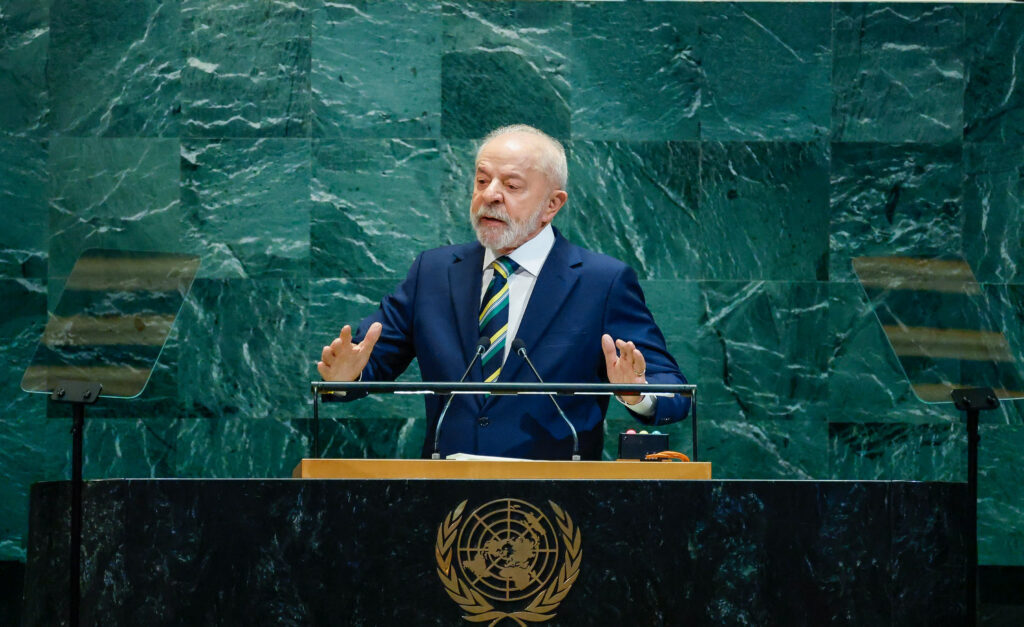
In clear contrast, President Lula’s speech was built on the recognition of the urgency of the crisis. He began warning that “the year 2024 was the hottest ever recorded”, situating his speech in the unquestionable scientific reality.
Unlike Trump’s skepticism, Lula presented concrete commitments:
- “Brazil has pledged to reduce between 59% and 67% its emissions, covering all greenhouse gases.”
- It has announced the creation of the “Forest Forest Fund Forever, that Brazil intends to launch to remunerate the countries that keep their forests standing”, proposing an international financial financial mechanism based on preservation.
Fundamentally, Lula linked the environmental agenda to social justice, arguing that the transition cannot “repeat the predatory model” and that eradicating deforestation requires “ensuring decent living conditions” for local populations. This integrated view contrasts with Trump’s caricature that environmental protection is enemy of economic progress.
The abyss between two visions of the future
The comparison between discourses goes beyond specific policies; reveals a dispute over the very nature of global challenges.
| Aspect | Trump’s view | Lula’s view |
|---|---|---|
| Scientific Base | Denied or ridiculed (“blow”, “farce”). | Accepts as an undeniable starting point. |
| International cooperation | Despised in favor of unilateralism. | Essential, with COP30 as a moment of accountability. |
| Energy transition | Faces as an economic threat. | Sees as an opportunity for sustainable development. |
| Role of nature | Appeal to be exploited without restrictions. | Heritage to be protected with social justice. |
The climate border line
The UN stage has made the border line visible that divides global politics today. On the one hand is Trump’s negation and isolationist vision, which offers a future of accelerated climate uncertainty and geopolitical conflict. On the other, the vision represented by Lula, who, despite his own internal challenges, bets on cooperation, science and a fair transition.
While Trump tries to dismantle global environmental consensus, Lula’s speech reinforces that the climate crisis remains the defining issue of our time, demanding collective and urgent actions, no jokes and denials. The contradiction between the two discourses is not merely rhetorical; It is the measure of the abyss that separates two irreconcilable conceptions about the destiny of the planet.
Source: vermelho.org.br