Published 12/09/2025 17:13 | Edited 12/09/2025 17:56
O Alternative Poverty Report 2025from the organization Latet, sheds light on an impact that the Netanyahu government is trying to minimize: the ongoing war against Gaza has devastated not only the Palestinians — overwhelming victims of the violence — but also the Israeli economy itself.
While Tel Aviv insists on a long-term military strategy, the country has plunged into a macroeconomic collapse: exploding cost of living, falling real incomes, mass food insecurity and erosion of the public budget.
The report describes a society that is paying, at unprecedented levels, the price of a policy that prioritizes war to the detriment of internal stability.
For more than 30 years, Israel has been fighting an attritional conflict against poverty, without a clear strategy, without dedicated resources and without committed political leadership. And, according to Eran Weintrob, CEO of the humanitarian organization It is hidden“so far, we are suffering a total defeat.”
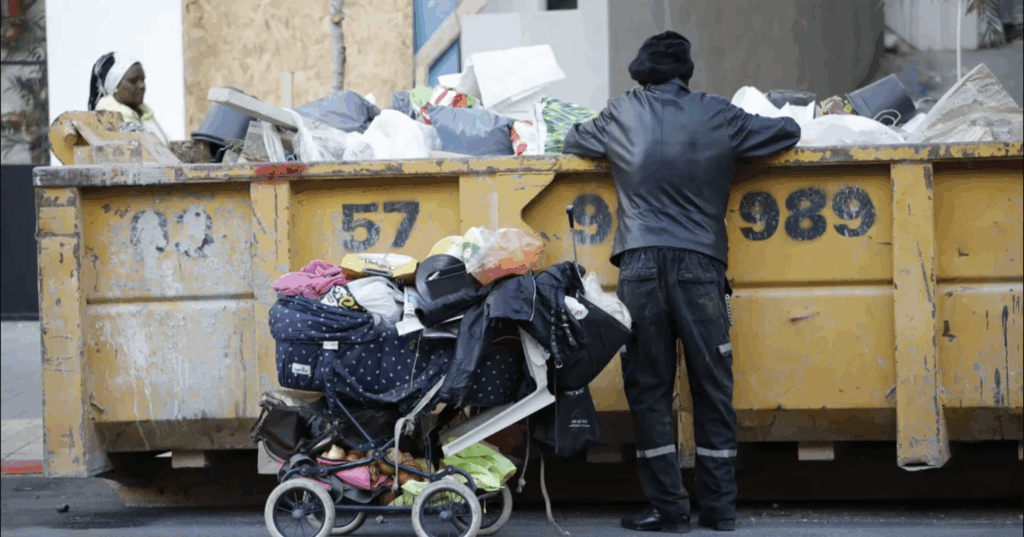
According to Weintrob, there are 2.76 million people living below the poverty line — including children, the elderly, Holocaust survivors, single-parent families and peripheral communities. “There are no deaths counted, but there are silent wounded: bodies weakened by food insecurity, minds corroded by chronic stress and dreams interrupted by the lack of opportunities.”
Cost of living soars — and the State fails to protect its population
Latet calculates that the minimum monthly cost of living in Israel in 2025 is NIS 5,589 per person and NIS 14,139 for a family of four. These values significantly exceed the official poverty line and even the sum of two full minimum wages.
In other words: working no longer guarantees survival. The current economic policy — marked by the militarization of the budget and the reduction of civilian spending — pushes families towards a permanent deficit that reaches almost 40%.
Under Netanyahu, Israel is experiencing its worst macroeconomic mix since the 1980s:
- persistent inflation in food and energy,
- explosion in military spending,
- disruption of the workforce, with thousands of reservists out of the market,
- drop in revenue and increase in debt.
Continuous war became the main vector of social recession.
“Despite the growing humanitarian crisis, the Israeli government prioritizes military spending and coalition agreements. The national budget reveals a reversal of values: tough social cuts are planned, including an increase in VAT, a freeze on child benefits and a reduction in essential public services,” says Weintrob.
The report revealed that almost a quarter of humanitarian aid beneficiaries have required food assistance in the past two years since the start of the war. Additionally, 61.9% described their mental health as “poor,” a rate almost three times higher than that reported among the general settler population. More than 42% of humanitarian aid recipients and around 46% of assisted elderly people said their mental well-being had worsened since the start of the war.
Poverty and hunger grow as government prioritizes military effort
The report reveals shocking numbers:
- 26.9% of families face food insecurity,
- 2.8 million people are unable to guarantee basic meals,
- 1.18 million children live in a situation of deprivation.
The increase between 27% and 29% in just one year is not accidental — it is a direct consequence of the combination of record military spending, inflation and the collapse of the welfare state.
Latet estimates that each Israeli family pays an extra 9,000 NIS a year to survive, driven by healthcare costs that rose by almost 15% during the war period.
Meanwhile, Netanyahu continues to direct resources towards the military offensive, without presenting any consistent plan for economic recovery.
A crisis produced by the government — and which could have been avoided
The report is explicit: accelerated impoverishment is not just a result of war, but of political choices. The State gave up on cushioning the crisis, reduced social investments and maintained regressive subsidies that benefit military and colonial sectors.
This is a predictable collapse:
- non-existent price control,
- cuts in public services,
- dismantle social protection networks,
- and a political agenda that focuses resources on war and settlements.
The population, the research describes, lives in a “permanent internal state of emergency”, with no visibility of policies that mitigate the devastating effects on income, health and housing.
Internal crisis is serious — but it cannot be compared to the genocide in Gaza
Amid the domestic social collapse, the report highlights that the scale of the Israeli crisis is incomparable to the humanitarian catastrophe caused by Israel in Gaza. According to UNCTAD, all The 2.3 million inhabitants of the enclave live in “extreme and multidimensional impoverishment”, with an annihilated infrastructure and a reconstruction cost of more than US$70 billion.
For Latet, the contrast exposes the central contradiction of Netanyahu’s policy:
it destroys the domestic economy while irreversibly devastating the lives of Palestinians.
A country exhausted by war — and a government hostage to its own strategy
The report ends with a grim warning: Israel could enter a lost decade if it continues to prioritize war over the economy. Extreme militarization not only destroys Gaza, but undermines the foundations of sustainability of the Israeli state itself.
Weintrob himself admits his Zionist viewpoint and contradictions about the war: The fight against poverty in Israel is not just a social issue — “it is an existential issue.” Without internal cohesion, without distributive justice and without mutual responsibility, there is no way to “sustain the Zionist project”. “On this battlefield, so far, it appears that we are experiencing a total defeat.”
Under Netanyahu, war has ceased to be a foreign policy and has become a way of governing — and Israeli society, now grappling with hunger, poverty and debt, is paying the price.
Future reconstruction will require what the current government refuses to do: break with the logic of permanent escalation and return civil life to the center of public debate.
Source: vermelho.org.br