Published 05/09/2025 14:00 | Edited 05/09/2025 16:10
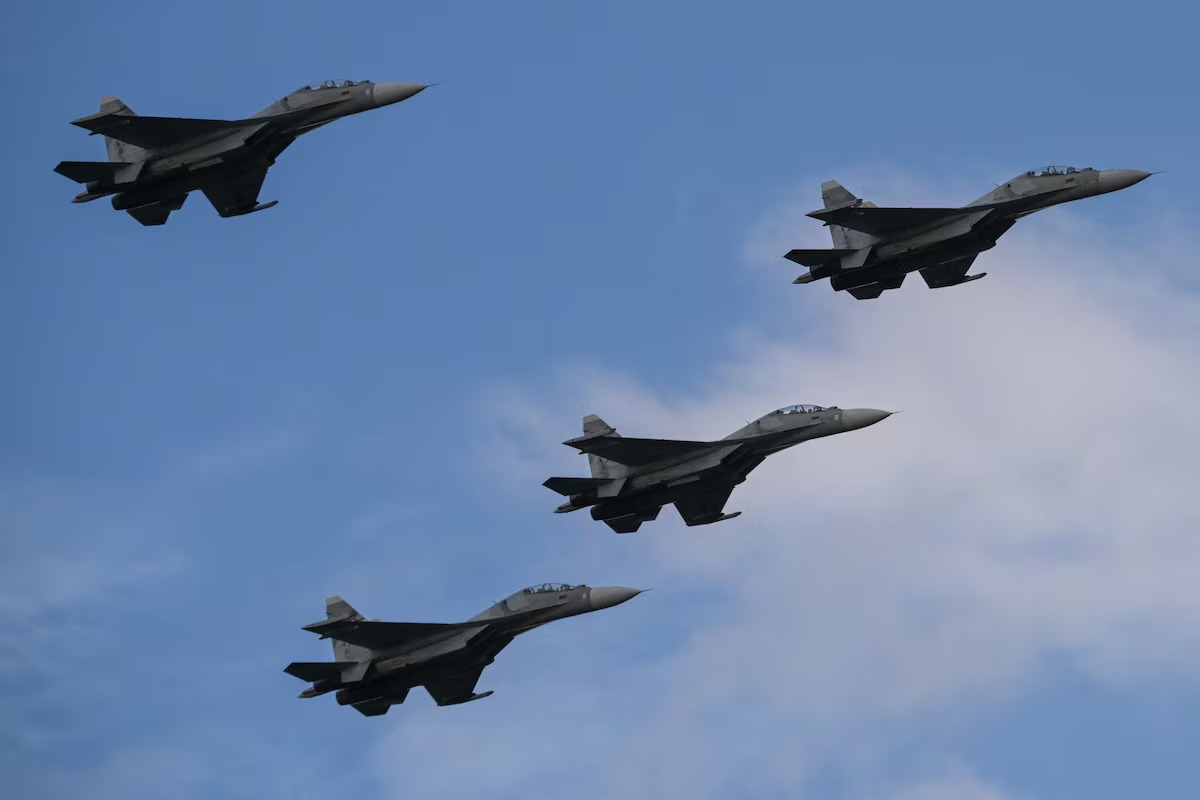
The crisis between the United States and Venezuela reached a new level on Friday (5) after President Donald Trump’s order to move ten F-35 fighters to Puerto Rico, US territory in the Caribbean.
The movement, confirmed by the Pentagon and the State Department, occurs under the justification to combat drug trafficking, but reinforces direct confrontation fears with Caracas.
Submission of aircraft represents a qualitative climbing in the US military presence in the region, which already had seven war ships and 4,500 Marines. These are fifth generation jets, which specialize in terrestrial attacks, whose use suggests the possibility of offensive operations against targets on Venezuelan soil.
So far, US acting against drug trafficking was in cooperation with national forces, not in isolation and with war power of this size.
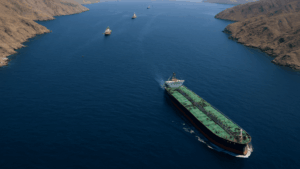
On Tuesday (2), Trump announced the destruction of a vessel that, according to Washington, was carrying drugs from Venezuela to the US.
The attack left 11 dead and generated questions about his legality, as there was no police approach before the boat’s explosion. The Maduro government contested the episode and classified as false the recording released by the White House.
The atmosphere became even more unstable on Thursday night (4), when two F-16 Venezuelan fighters flew over the American destroyer Jason Dunham, parked near the coast.
The gesture was interpreted as a provocation, but also revealed military saturation in the region, with a high risk of incidents capable of launching an open conflict.
Venezuela denounces pretext and displays anti -drug data
Despite Trump’s rhetoric, which classifies Nicolás Maduro as a “boss of a narco-state,” the Venezuelan government has used official and verifiable numbers to counter the accusation.
Defense Minister Vladimir Padrino López says the country has neutralized 402 aircraft linked to drug trafficking in military operations in border zones.
According to data from the Venezuelan Public Prosecution Service, between 2017 and 2025, 131,893 people were processed for drug -related offenses. Of this total, 61,690 were reported, 49,947 accused and 20,256 convicts.
In the same period, more than 365,000 pounds of narcotics were seized, including 280,000 pounds of cocaine, 83,000 marijuana and 793 heroin. “Venezuela has not even been a route to illicit drug trafficking,” Padrino said.
President Nicolás Maduro said that only 5% of the drug produced in Colombia tries to cross the Venezuelan territory, and that 70% of this volume is intercepted by the authorities.
“I am sure we will reach 100%, free from the passage of any kind of drugs,” he said.
Recent UN reports corroborate the official version by pointing out that Venezuela has been free of illicit crops for 15 years.
Attorney General Tarek William Saab added that even Dea, US anti-drug agency, acknowledges that the country is not a producer, but only marginal route of a fraction of Colombian drug trafficking.
For Caracas, US insistence on accusing Venezuela of being a “narco-state” is just a political pretext to justify military climbing in the Caribbean.
Conflict without declaration of war and internal pressures in the US
Trump’s decision has generated debates about the legality of military actions. By attacking a congressional authorization, the US has carried out an act of war against a country with which there is no declared conflict.
Organizations such as Human Rights Watch and Democratic leaders have already indicated that they will question the White House.
Trump maintains that the sinking boat belonged to the Aragua Tren cartel, classified as a terrorist organization by Washington, and that, therefore, the action would be supported by “war on terror.”
The Secretary of Defense, Pete Hegseth, has even announced that the Department of Defense will be renamed as War Department, reinforcing the rectory of confrontation.
The Republican also stated that the central goal is mature, whom he called the “boss of a narco-state.” The language of direct attack on Venezuelan President accentuates fears that the climb goes beyond anti -drug narrative and becomes an attempt to change regime.
The crisis has direct impacts on Latin America. Mexico has already stated that it will not accept US attacks on its territory.
In August, Celac approved a resolution requiring the removal of US troops from the Caribbean and reaffirming the region as a peace zone. Cuba and PCdoB in Brazil also expressed solidarity with Venezuela and condemned the interference of Washington.
Military analysts warn that the forces imbalance is evident. The US has a more powerful fleet than the whole Venezuelan arsenal, but Caracas bets on asymmetrical strategies, such as the use of anti -either Iranian and Iranian technology missiles.
The higher risk is in an accidental shot or poorly calculated action, capable of turning the current climb into open confrontation.
The recent history indicates that this is not Trump’s first attempt to press the Bolivarian government. In his first term, he even rehearsed a military operation with the support of the then governments of Brazil and Colombia, but without success.
Later, he tried to support the Venezuelan opposition, also to no avail. Now it returns with a strength strategy that threatens to destabilize the entire Caribbean.
Source: vermelho.org.br