Published 10/18/2025 16:29
It is not news that the United States has acted several times to overthrow governments in Latin America, as well as in other parts of the world. It was like this in Salvador Allende’s Chile, with the successive attempts to remove Fidel Castro from command of Cuba, in support of the coup that overthrew João Goulart and established the military dictatorship in Brazil, in the destabilization of the reformist government of Jacobo Árbenz Guzmán in Guatemala, among many other situations.
The new episode, authorized by Donald Trump’s government, now targets Venezuela, under the false justification of interrupting drug trafficking. The action led by the CIA (in Portuguese Central Intelligence Agency) and the Department of Defense, based in the Pentagon, has already killed 27 people (with no evidence of involvement with cartels) when bombing vessels in the Caribbean Sea. A true international crime, as the Armed Forces could only attack in self-defense.
The controversial action precipitated the resignation of Admiral Alvin Holsey, from Southern Command, who leaves his position at the end of the year after disagreements over the attacks and centralization of decisions by Trump. But the dissatisfaction didn’t just come from Holsey. Other American military and diplomatic leaders disagree with the conduct adopted by the president of their country.
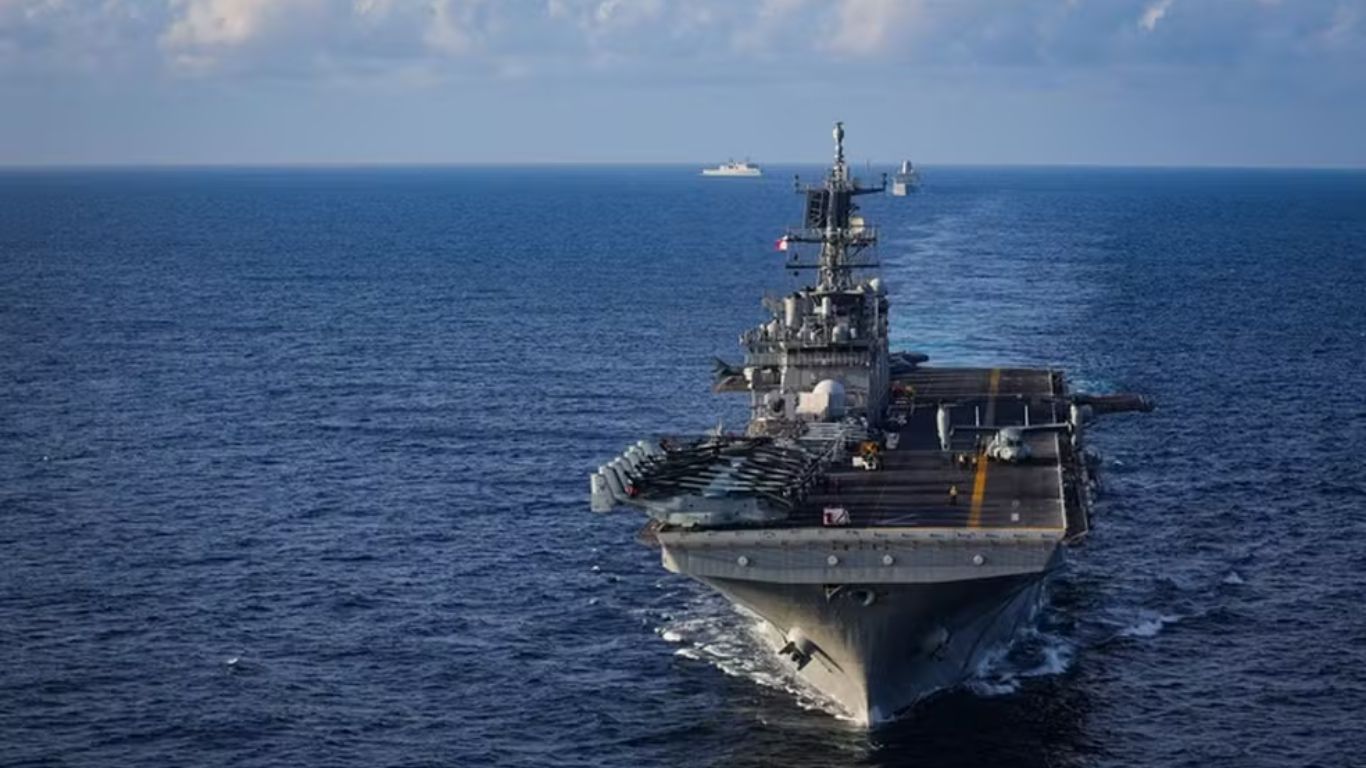
The situation in the Caribbean is worsened by the presence of US ships and warplanes in the region since mid-August. Around 10,000 US soldiers are positioned on vessels and bases in Trinidad and Tobago and Puerto Rico (territory under US control).
Read more: Trump authorizes CIA to act in Venezuela and reignites fears of war in the Caribbean
The construction of this war on drugs narrative, however, hides other reasons, reveals journalist Jamil Chade. In your column Uolhe points out that the Trump administration’s arguments are not sustainable, since reports from the CIA itself and the Drug Enforcement Agency (DEA) do not mention Venezuela as a point of attention. The main indication made is that the cocaine that arrives in the USA comes from Colombia.
To top it off, the central trafficking route from South America to the United States is not through the Caribbean Sea, but through the Pacific Ocean. The data is endorsed by the United Nations Office on Drugs and Crime (Unodc), based in Vienna (Austria).
In other words, the actions aim to destabilize the government of President Nicolás Maduro and replace it, by putting pressure on the Venezuelan military leadership.
As the journalist points out, the US government is aware of all this information and works based on it, so much so that it concentrates its operations to combat maritime trafficking on the Pacific Ocean coast of Latin America.
Thus, the justification created to attack Venezuela is not sustainable, but it is what will be used to eventually carry out air attacks in the country.
One of the indications is that high-ranking Bolivarian military personnel could be linked to trafficking and, by having their source of illegal resources blocked by the USA, could break with the Maduro government. That is, Trump seeks the support of certain military groups to achieve his interests — a situation raised by the journalist based on diplomatic conversations.
Read more: US sends F-35 fighter jets to the Caribbean and increases the risk of confrontation
The question that remains is: if these generals really exist, in a possible coup, would Trump assume their guardianship, deepening the farce of his invasion?
The North American president’s interest in Venezuela is not new. Since his first term, between 2017 and 2021, he has tried to stage a coup in the country. On that occasion, the puppet used was Juan Guaidó, self-proclaimed president, with support from the USA.
Border with Brazil
Brazil and Venezuela share a 2,199 km long border. Therefore, the US advance in the neighboring country is worrying. President Lula’s special advisor for International Affairs, Celso Amorim, classified as “inconceivable” any military attack or secret espionage operation aimed at overthrowing a government.
It is expected that, in a meeting between Lula and Trump, the Brazilian will raise concerns about an attack on the continent. During a political act at the opening of the 16th National Congress of the PCdoB, the president defended the sovereignty of the Venezuelan people: “no president of another country has to make a decision”.
True interest
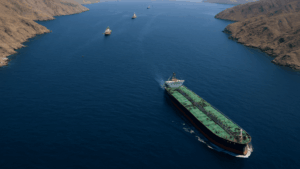
The decades pass, but the true North American interest remains the same: oil.
In response to the US government, which stated that the Caribbean country would be willing to reach a diplomatic agreement involving participation in its oil industry, the Chancellery of the Bolivarian Republic of Venezuela reported that Trump’s statements “seek to legitimize a regime change operation with the ultimate objective of appropriating Venezuelan oil resources”.
Source: vermelho.org.br