Published 07/10/2025 12:07 | Edited 07/10/2025 13:16
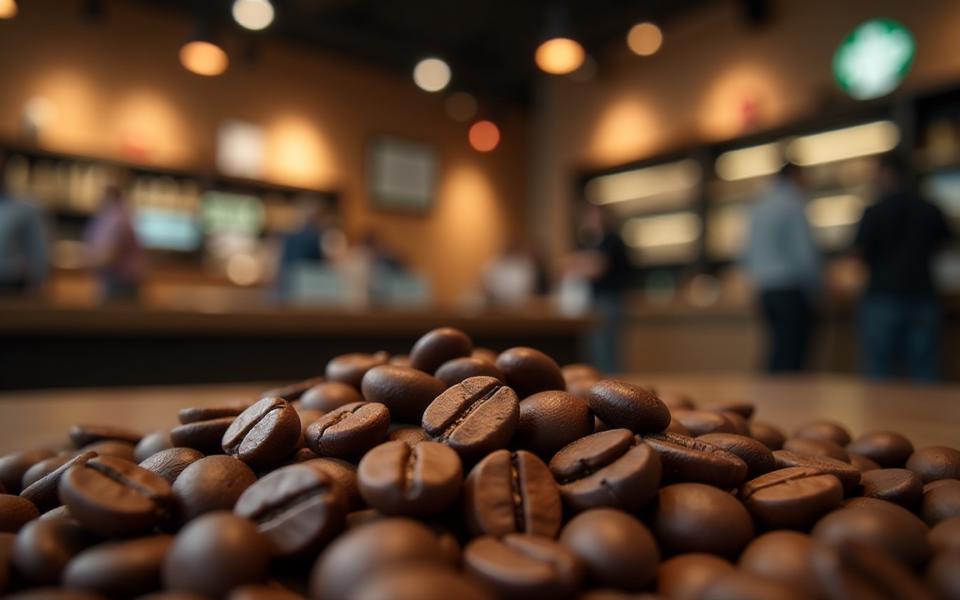
United States President Donald Trump admitted on Monday in conversation with Luiz Inacio Lula da Silva that the country is “missing” Brazilian coffee, the main product affected by the 50% tariff imposed by his government.
Recognition occurred during the video conferencing, in which the Republican recognized the internal impact of the tariff that raised the price of the drink by almost 40% in the last year and lit a debate in the US Congress.
The video conferencing, which lasted about 30 minutes, was described by the Planalto Palace as “friendly” and represented a step in an attempt to reconstruct relations between the two countries after months of commercial friction.
During the conversation, Trump acknowledged that the tariffs imposed against Brazil have been generating internal impacts in the United States and said the country “missing” some Brazilian products, especially coffee.
The Republican admitted that the price increase has become unsustainable and that the theme also mobilized the US Congress.
According to sources of the Brazilian government, the contact was requested by the American side.
Lula took the opportunity to request the withdrawal of the sanctions imposed on Brazilian authorities, including Minister Alexandre de Moraes, and reiterated the invitation for Trump to participate in COP30 in Belém (PA).
The two leaders discuss the possibility of a face -to -face meeting later this year, during the Asean summit, in Malaysia, or at the climate event itself.
In a statement, Planalto pointed out that the conversation served to “restore the friendly relationships of 201 years between the two greatest democracies in the West.”
On the Brazilian side, Vice President Geraldo Alckmin and ministers Fernando Haddad, Mauro Vieira, Sidônio Palmeira and Celso Amorim participated. Trump, in turn, appointed Secretary of State Marco Rubio to continue negotiations with the Brazilian economic team.
Coffee rate raises cost of living and generates reaction in Washington
The increase in the price of coffee in the United States has become a symbol of the crisis caused by Trump’s tariff. Data from the American Statistics Office indicates that the product rose 3.6% in August – nine times more than average monthly inflation – and accumulates annual discharge of 20.9%, the highest since 1997.
Already the international reference contract registered an increase of 38.7% in 12 months, according to Forbes.
Faced with widespread enhancement, Republican congressmen and Democrats united forces to try to reverse the measure. Deputies Don Bacon (Republican Party, Nebraska) and Ro Khanna (Democratic Party, California) presented the project “No Coffee Tax Act”, which immediately revokes coffee rates, with retroactive effect at January 2025.
“Families across the US are feeling the weight of increased coffee prices, which have already risen 21%. Tarifying a product that we cannot cultivate on a commercial scale just worsens the situation,” said Bacon.
“Americans started a revolution because of a tea tax. Coffee prices have increased in part through Trump’s fares. If you drink breakfast every morning, how not to get angry with it?” Khanna said, referring to the American revolution.
Dependence on Brazilian coffee exposes limits of protectionism
The effects of tariffs intensify because coffee is not produced on a commercial scale in the United States. Only Hawaii – the only state in the coffee belt – cultivates the modest volume grain, responsible for less than 1% of world production.
Small plantations in Puerto Rico and Southern California are unable to supply the domestic market.
Brazil, on the other hand, accounts for about one third of all coffee consumed in the US and 44% of world arabic coffee production, the most valued variety. Colombia, the second largest supplier, reaps less than a third of Brazilian production, which makes it “almost impossible” to replace national coffee, according to the US Department of Agriculture.
Since the 50% tariff entry into force, Brazilian coffee exports to the US fell 47% in volume and 31.5% in value, totaling US $ 113.8 million in September.
The impact was decisive for the Brazilian trade balance to record a deficit of US $ 1.77 billion with the US and for Brazil’s global surplus to shrink 41% in the month.
For analysts heard by Fox Business and CNN, the combination of tariffs and climatic problems in major producers threatens prolong the high price cycle and consolidate Washington’s strategic error.
“The Trump government’s 50% tariff over Brazil aggravates climate supply interruptions in producing countries,” summarized Fox Business, an allied broadcasting broadcaster.
Coffee becomes a political and cultural theme in the USA
More than 66% of American adults consume coffee every day – about three cups per person – which makes the product the most popular drink in the country. The sector moves US $ 68 billion a year in coffee shops and retail networks. This economic weight transformed coffee into a political theme.
“Tariffs are simply a tax on US consumers,” Bacon said when defending the project that withdraws the tax. “Our bipartisan project is simple: it removes Trump’s rates on coffee to reduce costs,” added Khanna.
The repercussion of “No Coffee Tax Act” reflects a rare consensus on Washington. While the Supreme Court analyzes the legality of tariff measures, the Trump government itself tries to adjust the rules.
On September 5, the president included coffee on a list of “unavailable natural resources” that can be exempt from future reciprocal tariffs, without, however, removing the collection in force.
The gesture signals that the US government recognizes the impasse created by the tariff. The tariff that intended to press Brazil has become a domestic problem, raising the cost of living and forcing Congress to challenge the White House in defense of the drink that the United States cannot produce.
Source: vermelho.org.br