Published 13/11/2025 10:09 | Edited 11/13/2025 18:36
The United States government returns to work this Thursday (13) after President Donald Trump sanctioned the emergency package approved by Congress and ended the longest shutdown (shutdown) in the country’s history, which lasted 43 days.
The measure, approved by 222 votes to 209 in the Chamber and with decisive support from eight Democratic senators who broke with the party, restores payments to more than 1 million employees, reactivates social programs such as food vouchers (Snap) and allows the gradual resumption of the air traffic system, affected by high rates of absenteeism among controllers.
Despite this, the agreement has a limited validity and the government is only funded until January 30, which leaves open the possibility of a new strike at the beginning of 2026.
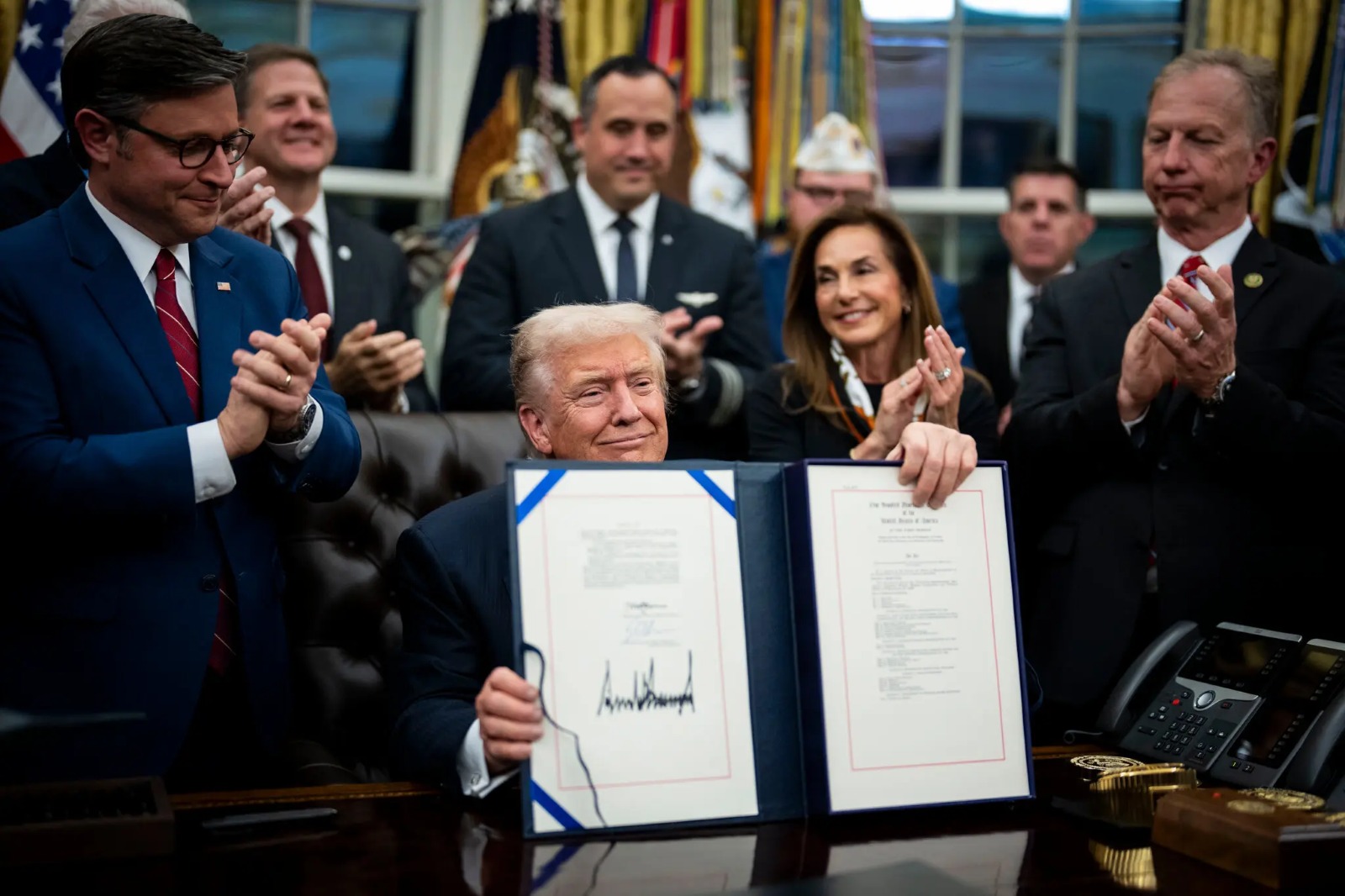
Hours after the vote in the House, Trump celebrated the signing of the project in the Oval Office alongside the Republican leadership, accusing the Democrats of “extortion” and holding the party responsible for the damage to the population.
“People were hurt a lot,” said the president, although polls show an almost equal division of public opinion — 50% blame Republicans for the crisis, and 47% blame Democrats, according to a Reuters/Ipsos survey.
During the fiscal impasse, the White House attempted to suspend Snap’s funding, pushed for mass employee layoffs and threatened to withhold back pay, actions opposed by unions and lawmakers.
The shutdown, which began in the Senate following a dispute over federal health subsidies that expire at the end of the year, has exposed fissures in the Democratic party.
The more liberal wing advocated maintaining the blockade until the renewal of tax credits from the Affordable Care Act, legislation that currently subsidizes health plans for low- and middle-income families and reduces the cost of insurance in the individual market.
Moderates, however, feared that the crisis would worsen given the Republican majority in both Houses and were pressing for a way out before the impasse prolonged even further.
The decision of eight senators to allow the vote to go ahead provoked a strong reaction, especially among deputies who worked under pressure from thousands of employees without income.
The House recorded its first vote in nearly two months to approve the package, which also includes three spending bills for agriculture, military construction, veterans and legislative agencies through part of 2026.
Even after the end of the impasse, uncertainty remains about the tax credits that make health insurance cheaper, as the agreement does not renew them and only guarantees a vote in the Senate in December, with no guarantee of processing in the Chamber.
The Democratic leader, Hakeem Jeffries, stated that he will present a procedural maneuver to force a vote that extends the credits for three years, while Trump made it clear that he has no interest in negotiating the issue.
“Either Republicans finally extend the tax credits this year, or the American people will vote them out of office next year,” Jeffries said.
The approved package also includes a clause that sparked bipartisan outrage and allows eight Republican senators to sue the government for up to $500,000 each, following the seizure of their phone records during the investigation led by former special prosecutor Jack Smith into the attack on the Capitol.
The device was included discreetly by Senate leaders and maintained to prevent the project from returning to the House for review, which would prolong the shutdown.
The effects of the strike remain evident in the lives of federal workers. Across the country, civil servants accumulated debts, took out personal loans and resorted to temporary work to buy food and pay basic bills.
In Phoenix, Department of Veterans Affairs employee Jessie Holwell, a mother of five, spent her nights making food deliveries via app to supplement her income during the shutdown.
In an interview with the New York Times, she said that debt, fatigue and constant uncertainty still make it difficult to resume a family routine. “The tiredness, stress and constant uncertainty had a mental, emotional and physical impact,” she said, and she still fears that she will not fully recover. Some Social Security workers had their cars impounded for non-payment, were left without electricity and were even evicted for not being able to pay rent and lost income.
In Maine, unions organize Thanksgiving baskets for 1,675 employees who spent weeks without money for food.
In Portland, specialist David Bump, interviewed by the New York Times, said that the resumption of work does not eliminate the fear of a new stoppage and that the team may have to deal with errors accumulated during the shutdown.
“It’s scary because you don’t know what’s ahead,” he said.
The social impact was so widespread that airports set up makeshift food banks for security officers and flight controllers who were unable to purchase supplies.
Some Social Security workers have had their cars repossessed, power shut off and even evicted because they can’t pay rent.
Lines of servers seeking food from food banks wrapped around blocks in the Washington metropolitan area. For many, the crisis reinforced the perception that the federal government is no longer a stable place to work.
On the economic front, the Congressional Budget Office estimates that the shutdown delayed 50 billion dollars in federal spending and dropped GDP by 1.5 percentage points, with permanent losses of up to 14 billion dollars.
The interruption in the release of indicators left investors and the Federal Reserve in the dark for weeks, while the Trump administration plans to cut 300,000 civil service positions by the end of the year, if it manages to implement its state reduction plan.
The end of the shutdown ends the formal impasse, but does not eliminate the factors that caused it.
Without an agreement on health, with funding valid for a few weeks and with damage still ongoing, the country returns to operation with an open political crisis and federal employees trying to recover not only their back wages, but also some sense of security about the future.
Source: vermelho.org.br