Published 03/10/2025 17:27
Founded in 2004, the Valdai discussion club became one of the main reflection forums in international politics based on Russia. Although often described by critics as an instrument of projection of the Russian world view, it brings together academic, policy and intellectual formulators across the globe to discuss the most urgent challenges of the international order.
Since 2014, Valdai has expanded its scope beyond the “explanation of Russia to the world”, seeking to promote dialogue between high global intellectual minds and contribute to qualified responses to the challenges of the international system.
The 22nd edition took place in the city of Sochi, Russia, between September 29 and October 2, establishing as a motto “The Polycentric World: Instructions of Use”, a finding of what has already become a reality: we live in the multipolar world, albeit in a long and painful crossing. “It is necessary to know (con) to live”
The main conference featured 140 participants from 42 countries, including Algeria, Brazil, China, Egypt, Ethiopia, Germany, India, Indonesia, Iran, Kazakh, Malaysia, Pakistan, Russia, South Africa, United Arab Emirates, United States, Uzbekistan and Venezuela. President Vladimir Putin, present since the founding of the club, remains the central figure of the event, not only for his geopolitical weight, but for his comprehensive analysis of the global board. (This theme, in itself, deserves an article apart)
I read some materials produced and accessible in the Section/ABA of the 22nd Meeting on the Valdai Club website (1), four of which focused on the most attention, I quote them: “The 21st Century started?” By Andrey Bystritsky (2); “Tectonic changes in geopolitics: we are no longer in Kansas”, by Paulo Nogueira Batista Jr; (3) “Multipolarity and the International System of the Charter”, by Richard Sakwa (4); and “Dr. Chaos – or: How to stop worrying and loving the disorder” (5), a report prepared by six Valdai researchers/directors.
Then I embark on what I consider the central ideas of your authors’ thinking and share with you my primary perceptions.
The world has changed
We live in a time when the discourse of the “end of history”, so propagated in the 1990s, turned out only as an illusion. What we watch today is not a revolution caused by external powers against the West, but the result of an implosion process.
Liberal democracy, which for decades has been sold as a universal ideal, loses not only strength outside its borders but wears out, eroded by its own contradictions, but the supremacy of a discourse of individual freedom in conflict with mass surveillance.
The crisis that crosses the United States and Europe is not born from the rise of China, Russia or even the BRICS – it springs from the exhaustion of a model that no longer meets its peoples or sustains the weight of its promises.
This “twilight of the West” is at the same time the fall of a myth and the opening of a new chapter: the advent of the multipolar world.
The liberal myth in frizjars
The so -called “liberal world order” was never a universal consensus. He was born from the post-war postwar as an arrangement to consolidate Western rule.
Today, when this rhetorical is no longer sustained, the fragility of its foundations is observed: the liberal elite, which once proclaimed the defense of freedom, equality and democracy, became an isolated caste, more concerned with the preservation of its own privileges than with the “common good”.
Analysts identify an obvious paradox. In the name of freedom, several restrictions arose under the justification of protecting democracy, content moderation practices on digital platforms, often accused of selective censorship and exclusion became recurring; In addition, pluralism was replaced by the predominance of segmented propaganda.
As a result, there is a growing distance between rulers and governed, which compromises the legitimacy of the social contract that supported the system.
The obsession with dividing the world between “democracies” and “autocracies” shows how much the West has lost the ability to understand the complexity of the global scenario.
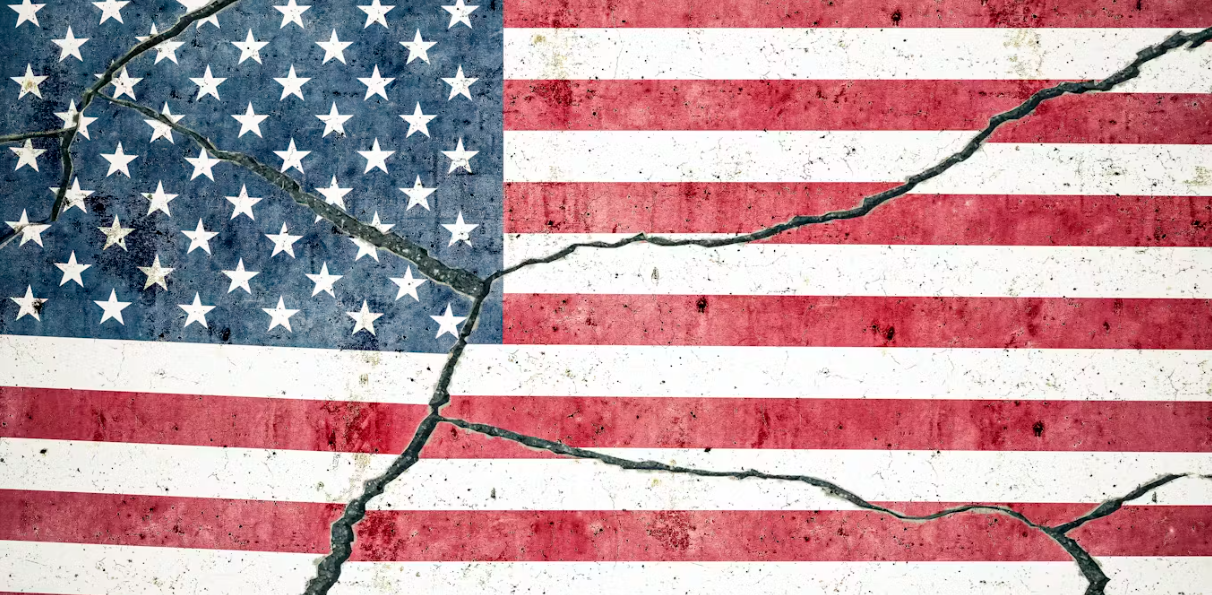
This crisis of legitimacy has epicenter in the United States, where the signs of the decline become increasingly strong and can no longer be ignored.
American disease
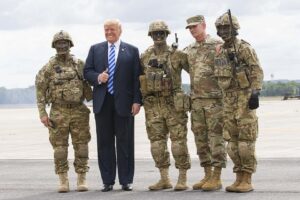
Donald Trump is not the cause of US decay, but its most visible symptom. His transactional and chaotic style has exposed to the world the fragility of what he still sells himself as a “global leadership.”
American domestic fundamentals are eroded: a colossal debt, a political system submitted to lobbies who buy decisions in Congress and the loss of moral authority that was once their greatest weapon.
Just remember Washington’s complicity with recent wars and massacres, such as genocide in Gaza, to realize that the rhetoric of “universal values” has evaporated.
By acting aggressively and unilaterally, Trump does not challenge an external order, but accelerates the implosion of the order his country led, boosting the formation of alternatives, such as the BRICS, which gain more coherence and cohesion precisely by American disability to articulate a stable order.
The European Void
Across the Atlantic, Europe faces its own crossroads. Trapped in an almost structural dependence on the US, it cannot project a self -employed path.
The sentence of the president of the European Commission, Ursula von der Leyen – “The West as we knew it no longer” – perhaps the most honest confession of a generation of politicians unable to offer alternatives.
Europe is vulnerable in three dimensions:
- Energy and safety dependence: Without the US, the continent has no way to support a “viable operational model.”
- Industrial and military weakness: The European Military Complex thinks more about corporate profits than about defending national interests.
- Hostage to the Ukrainian conflict: He became prey to unrealistic commitments, with no room for maneuver to negotiate his own way out.
In this vacuum, Europe shrinks and accelerates its irrelevance. Instead of taking advantage of American turbulence to seek its own strategies, it is even more folded to the bankrupt logic of militarization.
The world observes
The decline of Western powers is widely observed in the international scenario, where different actors follow the process and actively participate in the redefinition of global directions.
Multipolarity is no longer a point in the distant future, it is the reality in the emergency. Latin America, Africa and Asia already move the pieces on the board, not as satellites, but as actors that dictate directions.
PostoC President: The Challenge of the Lost Place
The West, who for centuries has imposed his will on the world, must now face a deep dilemma: to accept that his era of Hegemony ended and learn to coexist on an equal footing or insist on restoring a past that no longer turns and condemns to irrelevance.
As Paulo Nogueira Batista Jr. said, the “Vampire Ball” that symbolized centuries of exploration and supremacy already approaches the end. The problem is: Is the West willing to learn to dance at a pace that no longer said?
Sailing in an uncertain world
We witness a fundamental historical transition – the passage of a unipolar order, led by a “superb” West to a more complex, fragmented and contested multipolar system.
This new reality undoubtedly brings more uncertainties and risks. However, it also carries the potential to be fairer and more representative. The era when a small group of nations could dictate the rules for others is ending.
In a world where no power can unilaterally impose its will, negotiation becomes imperative. This new system, although chaotic, is therefore “in fact more democratic” and “fairer than its predecessors.”
Of course, this emerging multipolar world is not a panacea. It brings with it the risk of non -mediated regional conflicts, the erosion of global humanitarian norms and the formation of conflicting spheres of influence. However, its potential to distribute power and voice more equitably among nations is a necessary historical correction.
References
(1) https://valdaiclub.com/events/own/valdai-2025/
(2) https://valdaiclub.com/a/chairman-speech/has-the-21st-century-begun/-Andrey Bystritsky
(3) https://valdaiclub.com/a/highLights/tectonic-shifts-in-geopolitics/-Paulo Nogueira Batista Jr.
(4) https://valdaicub.com/a/highlights/multiPolarity-anding-charter-Tharter-international-system/-System/ – Ricardo Cam
(5) https://valdaiclub.com/a/reports/dr-chaos-or-how-to-stop-worrying/-Oleg Barabanov, Timofei Bordachev, Fyodor Lukyanov, Andrey SUSHENTSOV E IVAN TIMOFEEV
Source: vermelho.org.br