Published 11/27/2025 18:09
The attack that left two National Guard soldiers seriously injured a few blocks from the White House, this Wednesday (26), was treated by the United States government as an isolated episode.
But, for local authorities, prominent military personnel and analysts, the shooting is part of a growing cycle of violence, polarization and institutional wear and tear that marks President Donald Trump’s administration and deepens tensions that had already been escalating since the assassination attempt against the president in July.
The suspect, Afghan Rahmanullah Lakanwal, 29, entered the country in 2021 through Operation Allies Welcome — a program created to receive Afghans who collaborated with the US after the withdrawal from Kabul.
According to American authorities and documents obtained by the local press, he served for ten years in the Afghan Army, worked alongside US special forces and was part of a CIA partner security force in the Afghan capital.
The Trump administration reported that Lakanwal’s asylum request was approved in April this year.
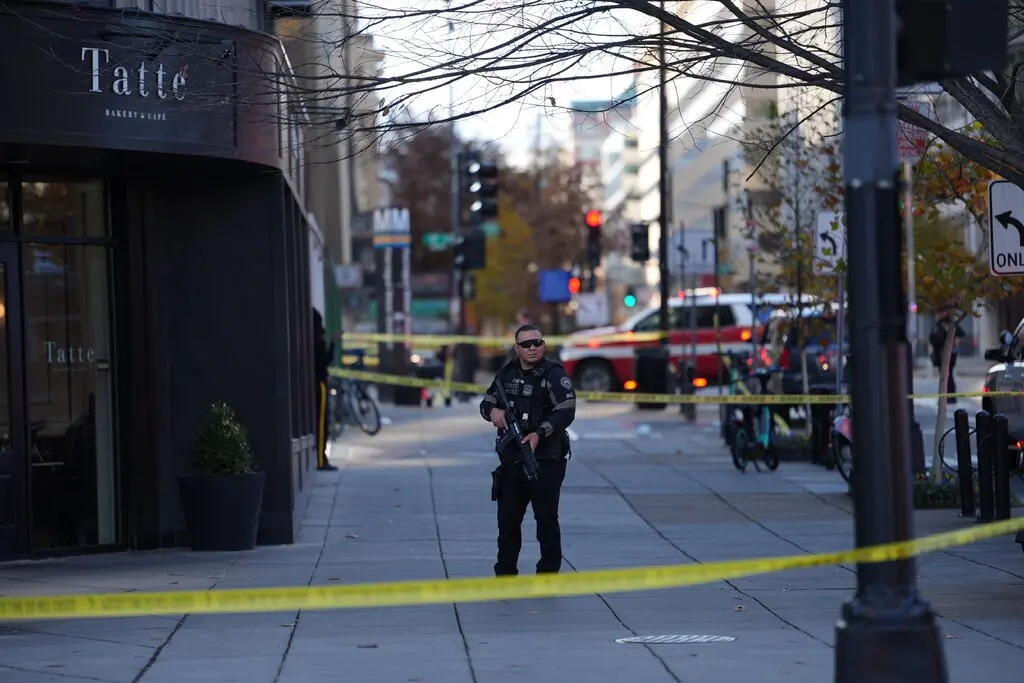
Washington police say the two soldiers were ambushed at 2:15 pm in the Farragut Square area, a busy commercial area. The suspect “turned the corner, raised his arm and fired at the National Guard members,” said Jeffrey Carroll, deputy chief of the local police.
Other soldiers reacted, shot the man four times and detained him at the scene of the attack.
Contested militarization and announced risk
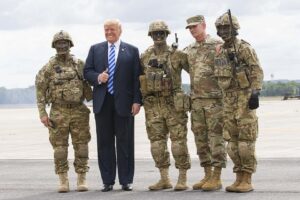
The presence of troops in the capital is part of Trump’s strategy to expand the use of the National Guard to combat crime in cities run by Democrats. Since August, around 2,200 soldiers from eight states have patrolled areas considered sensitive in Washington by the Trump administration, a number that is expected to rise to 2,700 after the new presidential order issued on Wednesday night.
Internal documents presented in court proceedings show that the Guard itself had warned of the risks of the operation.
In a memo distributed in August, commanders stated that the military was in a “high threat environment” and could be seen as a “target of opportunity” by extremist groups, criminals or politically motivated individuals.
“I knew this would happen,” a California Guard soldier stationed in Los Angeles told reporters on condition of anonymity. According to him, there was concern among the military that the mission would increase the chance of “shots fired at civilians or civilians shooting at us.”
Washington Mayor Muriel Bowser, who was in a legal dispute with the federal government over the legality of the operation, classified the episode as a “targeted shooting”.
Last week, federal judge Jia Cobb found that the use of the Guard for police functions violated legal limits and local autonomy, but suspended her own ruling until December to allow the Justice Department to appeal.
Escalation of violence and normalization of the exceptional
The attack comes at a time of heightened political tensions in the United States. Since the assassination attempt on Trump in July 2024, episodes of political violence have become more frequent.
Washington recorded 62 homicides between May and November this year — a lower number than in 2024, but accompanied by an environment of growing instability and greater circulation of armed troops on the streets.
For former Guard commanders, the current strategy increases the risk for both soldiers and civilians.
“It’s probably one of the safest places on the planet, so to see two Guardsmen shot — or seriously injured — so close to the White House is really surprising,” said Gen. Paul G. Smith, former deputy of the Massachusetts Guard.
“There is always danger when military personnel are deployed on public security missions,” he said.
Trump administration turns attack into platform against immigration
In a video published on Wednesday night (26), from Palm Beach (Florida), Trump classified the attack as “an act of terror” and “a crime against the entire nation”. The president referred to the suspect as an “animal” and said the attack demonstrated “the greatest national security threat facing the United States.”
Trump said that all Afghans who entered the country during the Joe Biden administration “will be re-examined.”
The Department of Homeland Security (DHS) — the body responsible for immigration control and internal security — and the US Citizenship and Immigration Service (USCIS), the agency that processes visa and asylum applications, announced hours after the attack the immediate and indefinite suspension of all immigration processes related to Afghan citizens — including those who worked for the American government during the 20 years of occupation in Afghanistan.
According to the organization AfghanEvac, around 200,000 Afghans have been resettled in the US since 2021, and another 265,000 are waiting in countries such as Pakistan, Qatar and North Macedonia.
“These people don’t deserve this — they’re just trying to get their shot at the American dream,” said Shawn VanDiver, president of the organization. He warned that the move “will cause a lot of harm” to the Afghan community in the country.
Institutional debate worsens after the attack
The episode should reignite the debate about the constitutional limits on the use of the National Guard. Trump has sent federal troops to cities including Los Angeles, Chicago and Portland, sparking legal challenges and accusations of abuse of power.
For Democratic opponents, the president uses the military structure as a political instrument and “creates pretexts for demonstrations of force” in regions controlled by the opposition. Republican governors claim that the actions increased security and support the strategy.
With the White House temporarily isolated, flights suspended at Reagan Airport and two soldiers in critical condition, Wednesday showed that political violence is no longer an exception in the country.
For some of the military deployed in Washington, the episode confirms an old fear: risk has become routine.
In the current political scenario, experts say, episodes like Wednesday’s tend to repeat themselves — not as deviations, but as signs of a country in a state of permanent tension.
Source: vermelho.org.br