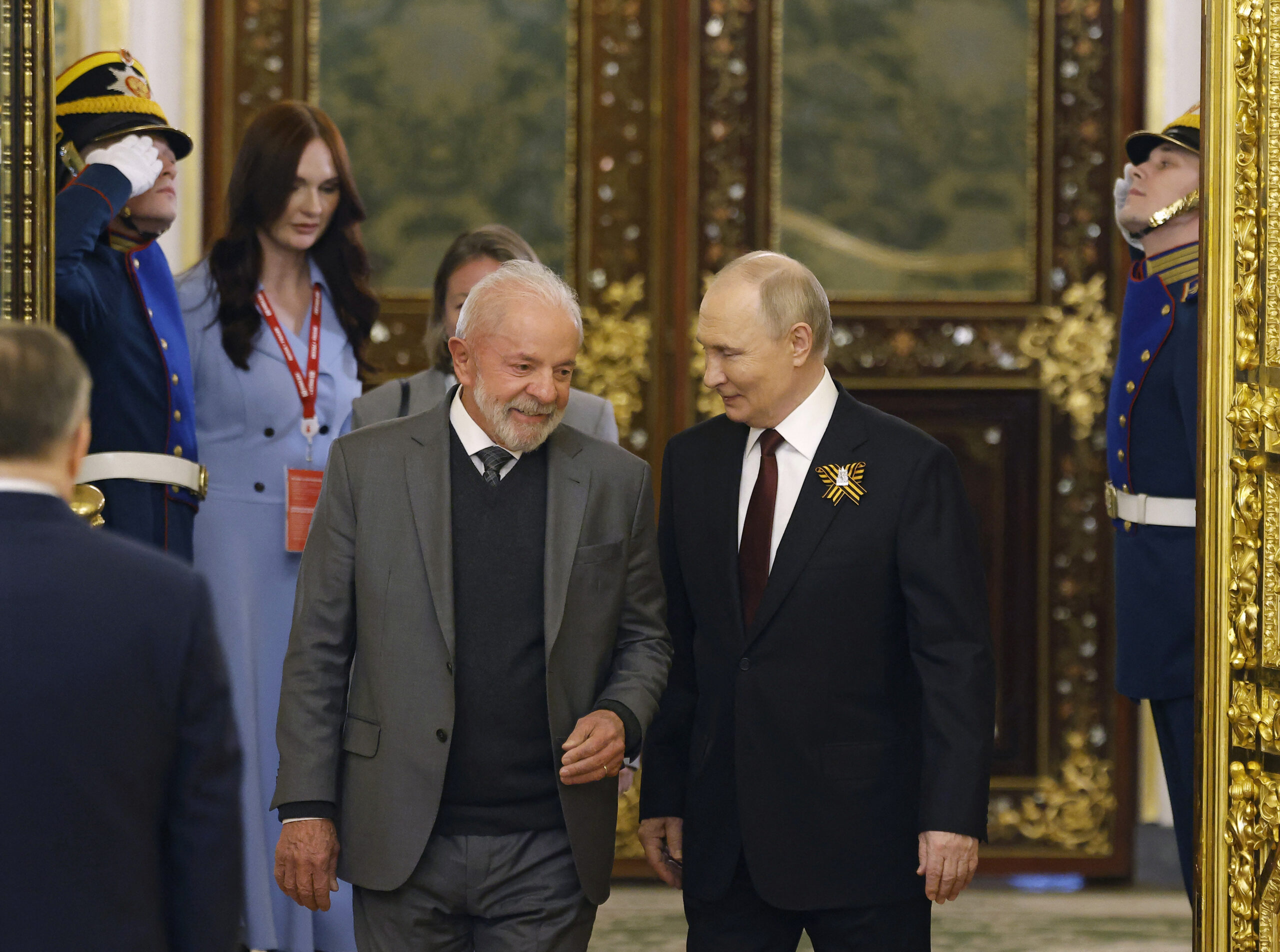
Following the results of the first round of elections in Brazil, Russia is carefully monitoring the Brazilian electoral process, avoiding further comments. During a press conference this Monday (6), the spokesman for the Russian presidency, Dmitry Peskov, limited himself to saying that it is necessary to wait for the elections to end with the conclusion of the second round.
When questioned by a reporter from the Russian newspaper Kommersant Regarding candidate Flávio Bolsonaro’s pro-US inclination, the Kremlin spokesman recalled that the elections are still ongoing and only after the election is concluded will Moscow make its assessments.
“The elections are underway. The electoral process in Brazil is not over. Let’s wait for the results and then make our assessments,” said Dmitry Peskov.
In an interview with Brazil in factthe specialist in Latin America and professor of International Relations at the University of Saint Petersburg, Victor Jeifets, assesses that Moscow’s caution in the face of the Brazilian elections is related to the perception that a possible change of government could alter Brazil’s position on strategic issues, especially in relation to the United States, the Brics and the agenda of building a multipolar world.
At the same time, according to him, the Russian government considers that the economic and commercial interests between the two countries act as an important limit to deeper changes. To illustrate her argument, the analyst uses as a comparison the pragmatic tone adopted by the Kremlin during previous Brazilian presidential disputes.
“Conditions are a little different now because Trump wasn’t around then. Now we have Trump and a new national security strategy [da Casa Branca]. On the one hand, this means that there will be more pressure from the USA on Brazil”, he states.
Candidates Flávio Bolsonaro (PL) and Luiz Inácio Lula da Silva (PT) will compete in the second round of the election for President of the Republic on October 25th. The far-right senator finished the count in first place, with 47.03% of valid votes, equivalent to 56,103,033 votes. Lula came second, with 45.16%, with 53,870,724 votes.
Brazil’s role in Brics
For Victor Jeifets, the influence of the United States on Brazilian politics is one of the factors that Moscow is following closely, considering the geopolitical impacts of an eventual victory by Flávio Bolsonaro.
One of the points of attention for Moscow is Brazil’s future role in the BRICS and, more broadly, its participation in the construction of a multipolar international order. Jeifets states that a change in the orientation of Brazilian foreign policy could reduce Brasília’s political weight within the bloc, especially in debates related to multipolarity and the Global South. Still, according to him, the economic dimension of Brics and Brazilian commercial interests tend to preserve the country’s participation.
For Jeifets, Russia’s cautious stance at this time is also related to a tradition of non-direct interference in Latin American electoral processes. The expert states that Moscow assumes that it needs to maintain dialogue channels with different Brazilian governments, even when there are political differences. In this sense, the caution expressed by the Kremlin after the first round would be less a sign of indifference than an attempt to preserve negotiation room in the face of any result.
“Russia has always tried to avoid interfering in Latin American elections. I have never seen any concrete facts or evidence of Russian interference in important elections. Russian authorities assume they can reach an agreement with any Brazilian president,” he adds.
Source: www.brasildefato.com.br