Published 05/01/2026 14:22 | Edited 05/01/2026 14:54
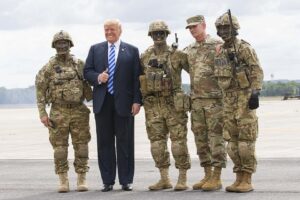
Last Saturday (3), during a press conference in Mar-a-Lago, the US president used the word “oil” 26 times, according to a survey by different newspapers, including the Spanish one. The Confidential. In contrast, terms such as “drugs”, “gangs” or “trafficking” totaled less than ten references. The difference indicates that the focus of the illegal military operation named with the arrogant and arrogant title “Absolute Resolve” is on Venezuela’s underground wealth, rather than on public security issues.
Trump’s speech is a confession of a project of economic domination and occupation. While maintaining the embargo against the neighboring country, he announces that large North American oil companies are prepared to invest billions in Venezuelan infrastructure. In other words, the same government that imposes sanctions and contributes to the deterioration of the Venezuelan economy, presents itself as an agent of reconstruction, with a view to directing resources to the US financial market.
This strategy had already been built since the first half of 2025, when Venezuelan oil was elevated to the White House’s priority. The doctrine established by Trump links “guaranteed access” to reserves to US national security. What we saw at Mar-a-Lago was not a simple mistake by Trump, it was the consolidation of the plan, which uses political and military force and international legal pressure to ensure control over exploration.
Paradox between embargo and exploitation
The maintenance of the embargo, even in the face of the prospect of investments in oil extraction, reinforces the character of external dependence that is intended to be imposed. This is not about economic recovery aimed at the Venezuelan population, but about the creation of an extractive model under US supervision. While Maduro faces lawsuits in New York courts, the center of attention remains on stock exchanges and conglomerates that explore the fuel.
Oil prices were already projecting a drop at the opening of the market this Monday (5). At around 6 am in Brasília, the price of Brent oil fell by around 1% and started to cost around US$60 per barrel. At 8 am, prices rose again, with a slight increase of 0.13%, to US$60.83.
In the morning, the oil company Chevron rose 5% on Wall Street
In this chess of forces, the strategic position of Chevron emerges as the most visible link between military action and Wall Street dividends. The only North American oil company to maintain operations in the country after the 2007 nationalizations, the company now finds itself at the epicenter of a bonanza projected to cost billions of dollars. Financial market analysts point out that the removal of Nicolás Maduro and the forced institutional alignment should unlock restrictions that for years limited the company’s export capacity and remittance of profits. It is no coincidence that the giant’s shares rose significantly at the opening of the market this Monday (5), reflecting investors’ bet on “full access” to Venezuelan reserves.
Corporate interest, summarized by CEO Mike Wirth when he stated in December to the Wall Street Journal that the company chose to stay in Venezuela “independently” from the government, now finds in Trump’s doctrine the armed wing necessary to convert political instability into shareholder income, consolidating what experts already classify as the largest transfer of energy control in the region’s recent history. In this context, the actions of Venezuelan institutions and the response of local society become decisive factors in defining the limits of external intervention.
Source: vermelho.org.br