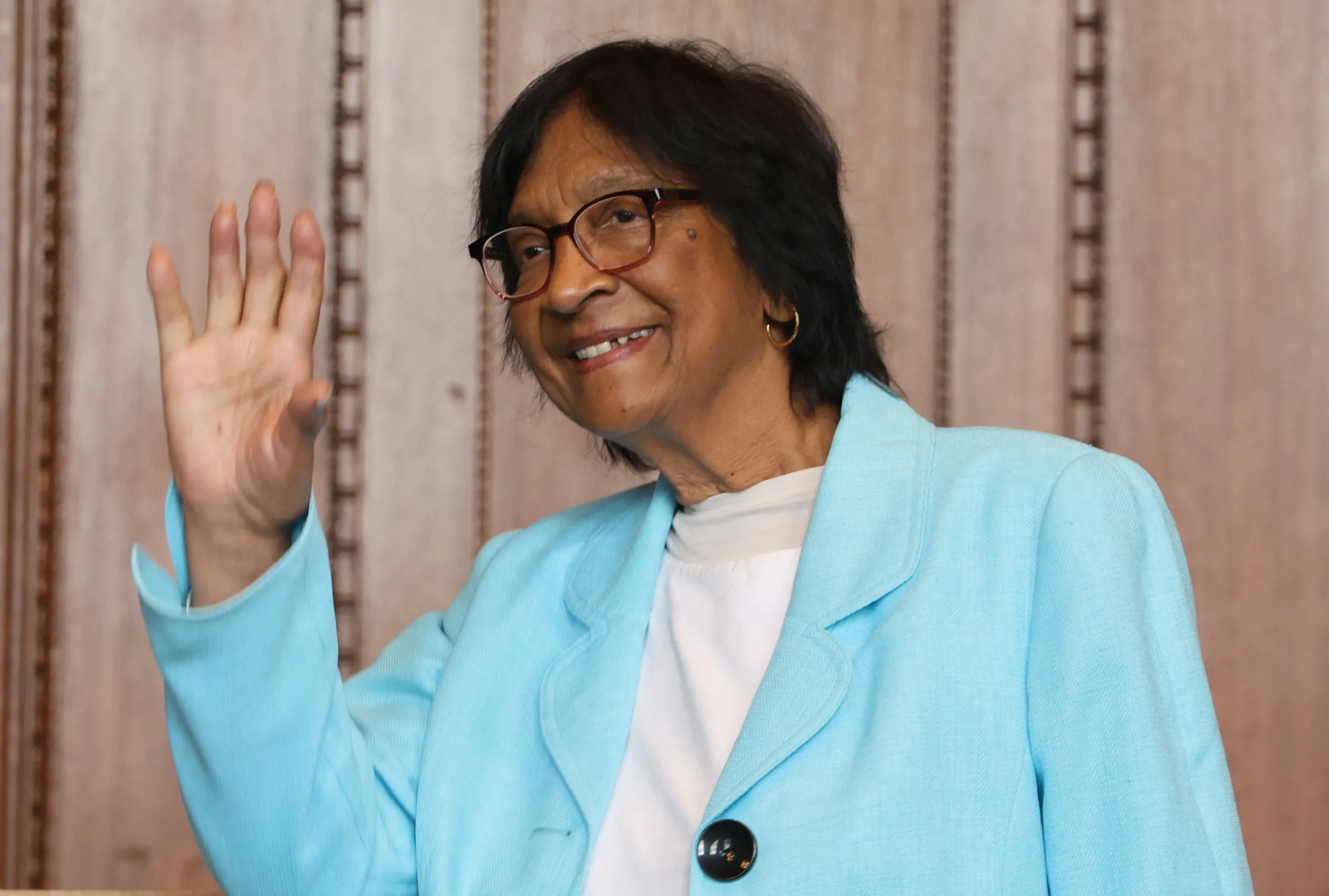
The Norwegian Nobel Committee announced, this Friday (9), in Oslo, the South African jurist Navanethem “Navi” Pillay, aged 85, as the winner of the 2026 Nobel Peace Prize.
The choice recognizes more than five decades of Pillay’s work in defending international law and holding people accountable for crimes against humanity, with recent emphasis on chairing a United Nations commission that concluded that Israel committed genocide in the Gaza Strip.
Pillay is the 21st female Nobel Peace laureate out of 144 winners in the history of the award. She will receive a medal and an endowment of 12 million Swedish kronor (around R$6 million). The official delivery ceremony is scheduled for December 10, in the Norwegian capital.
Investigation into Gaza
In September 2025, Navi Pillay led the publication of the report of the Independent International Commission of Inquiry into the Occupied Palestinian Territory, linked to the United Nations (UN).
The investigation concluded that the Israeli armed forces committed genocide against the Palestinian population in the Gaza Strip during the military offensive and found that high-ranking Israeli government officials, including Prime Minister Benjamin Netanyahu, incited the practice of these acts.
At the time, Israeli authorities classified the investigation’s conclusions as “scandalous”. This Friday, shortly after the announcement of the awarding of the Nobel Peace Prize to the jurist, the Israeli government once again criticized the result of the award, accusing the Norwegian committee of awarding “the biggest lie of the 21st century” and of encouraging hatred against the country.
When justifying the award, the president of the Norwegian Nobel Committee, Jørgen Watne Frydnes, stated that Pillay was awarded “for her exceptional courage and integrity in her legal work and for her efforts to promote peace and international law”. According to the leader, the decision seeks to highlight the role of multilateral institutions at a time of increasing attacks and questions to international courts.
“This is a message that international law and its institutions are fundamental to a more peaceful world,” said Frydnes. “It is a message to those who are attacking and weakening the international system, the international system based on the rule of law and its institutions.”
Diplomatic representatives linked the statement to the pressure exerted by international leaders against global courts, including threats of sanctions by the Donald Trump government in the United States against judges of the International Criminal Court (ICC) after issuing an arrest warrant against Netanyahu.
From the fight against apartheid to international courts
Daughter of a bus driver of Tamil descent, Navi Pillay was born on September 23, 1941 in a poor neighborhood of Durban, South Africa. Her legal career began during apartheid, a system of racial segregation imposed by the white minority.
As a young lawyer, Pillay defended liberation movement activists, fought the use of torture by police forces and worked to ensure access to legal assistance for political prisoners detained on Robben Island, including Nelson Mandela. In 1967, she became the first black woman to open a law firm in the former province of Natal.
With South Africa’s redemocratization in 1995, Mandela appointed Pillay to the country’s Supreme Court, making her the first non-white woman to sit on the high court. In the same period, she began a career of global prominence when she was appointed to the International Criminal Tribunal for Rwanda (ICTR), a body created by the UN to judge the 1994 genocide.
At the Rwandan court, where he served for eight years and served as president for four, Pillay led the formulation of historic decisions that established that rape and systematic sexual violence constitute acts of genocide and crimes against humanity.
The jurist also served as a judge at the International Criminal Court (ICC) and headed the United Nations High Commissioner for Human Rights (OHCHR) between 2008 and 2014, the main United Nations post for monitoring violations of fundamental rights around the world. Currently, Pillay is also a member of the International Court of Justice (ICJ) in the process that judges the accusation of genocide against the State of Myanmar.
International repercussion
The announcement of the award was welcomed by representatives of human rights entities and international authorities. The current UN High Commissioner for Human Rights, Volker Türk, classified the choice as “a collective victory for human rights and justice”, highlighting the relevance of international criminal accountability mechanisms.
The president of the ICC, Tomoko Akane, and the court’s deputy attorney general, Nazhat Shameem Khan, highlighted Pillay’s trajectory as a milestone for global justice. The President of South Africa, Cyril Ramaphosa, also celebrated his countrywoman’s award.
Source: www.brasildefato.com.br