Published 10/10/2025 14:18 | Edited 10/10/2025 14:45
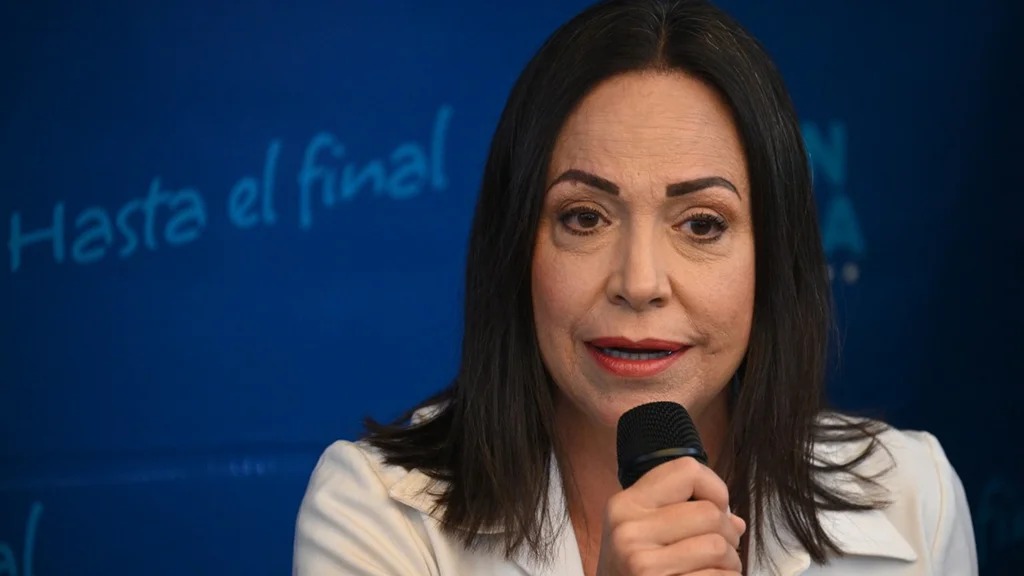
Venezuelan María Corina Machado, Nicolás Maduro’s main opponent and leader of the country’s far right, won the 2025 Nobel Peace Prize this Friday (10).
The decision, announced by the Norwegian Nobel Committee in Oslo, provoked criticism in the progressive camp and was interpreted as a political gesture of alignment with the United States and the Trumpist agenda.
Machado dedicated the award to the “suffering people of Venezuela” and to former president Donald Trump, whom he thanked for “decisive support for our cause”.
The choice broke with the tradition of the award by contemplating a figure marked by his participation in episodes of institutional destabilization, his defense of international sanctions and his open alliance with the North American government.
The committee justified the decision by stating that the opponent was recognized “for her tireless work promoting the democratic rights of the Venezuelan people and for her fight to achieve a fair and peaceful transition from dictatorship to democracy”.
The speech, however, contrasted with criticism from Latin American social movements and intellectuals, who point out that the laureate does not represent peace, but the country’s surrender to Washington’s foreign policy.
In a post on the social network X, Machado wrote that the award is an “impulse to achieve freedom” and stated that Venezuela “will be free”.
“We are on the threshold of victory and, today, more than ever, we count on President Trump, the people of the United States, the people of Latin America and the democratic nations of the world as our main allies to achieve freedom and democracy”, he declared.
The speech reinforced the direct link with Trumpism and with the sectors that supported the sanctions imposed on the Venezuelan economy.
Documents obtained by the press show that Machado’s nomination for the award was made by Republican senators and deputies from the United States, including Marco Rubio, now Trump’s Secretary of State, and Michael Waltz, US ambassador to the UN.
The letter, dated August 26, 2024, describes Machado as “a beacon of hope and resilience” and praises his leadership in “mobilizing national and international support for a peaceful resolution of the electoral crisis.”
The revelation consolidated the view that the 2025 Nobel Peace Prize had a political and symbolic character, serving as a gesture of recognition for the North American republican camp.
Machado’s history, however, reveals a trajectory associated with coups and foreign intervention.
In 2002, she signed the Carmona Decree, which dissolved the Republic’s institutions and supported the coup that temporarily overthrew President Hugo Chávez. She was also one of the organizers of the “La Salida” campaign in 2014, marked by barricades and violent attacks against Chavista supporters.
Over the last twenty years, he publicly defended external military intervention and even called on then-Israeli Prime Minister Benjamin Netanyahu to “liberate” Venezuela, according to journalist Michelle Ellner, from Peoples Dispatch.
For her, “Machado is the smiling face of Washington’s regime change machine.”
Argentine political scientist Atilio Boron was even more direct when classifying the opponent’s actions as “treason against the country”.
In an article published in February, he recalled that Machado held meetings with George W. Bush at the White House, supported the 2014 guarimbas and advocated for economic sanctions that worsened the Venezuelan crisis.
Boron maintains that, if she had been a citizen of the United States and had acted against her own government as she does in Venezuela, she would have been “arrested and sentenced to death.”
He also attributes to the opponent, alongside Juan Guaidó, responsibility for handing over the country’s strategic assets to foreign powers, such as CITGO (in the USA) and Monómeros (in Colombia), in addition to the loss of 31 tons of gold retained by the United Kingdom.
“We are facing a case of betrayal of the country treated with surprising kindness by the Chavista government,” wrote the intellectual.
The Venezuelan government and its allies classified the award as an “affront to peace and sovereignty”. In Caracas, diplomats recalled that the laureate is co-author of 930 unilateral coercive measures imposed against the country, which continue to cause shortages, inflation and blocking of public goods.
For analysts, the award consolidates the North American strategy of using international symbols to legitimize the pro-US opposition.
The reaction in progressive Latin American circles compared Machado’s selection to previous awards given to Henry Kissinger and Barack Obama, figures associated with the politics of war and sanctions.
Source: vermelho.org.br