A Damascus court sentenced former Syrian president Bashar al-Assad to death on August 11. Tried in absentia, that is, without appearing to defend himself, Assad was convicted of crimes against humanity and war crimes during the almost 14 years of civil war in the country. It is the first sentence against the former president since the end of his government in 2024. The former president is currently in Moscow, Russia, where he gained political asylum from Vladimir Putin after his deposition in December 2024.
The conviction of the former Syrian president comes amid the recent agreement on the future of Russian military bases in Syria, putting into perspective the redesign of relations between Moscow and Damascus under the Arab country’s new government.
The Assad dynasty regime came to an end after anti-government forces took Damascus during an offensive in December 2024 and announced the overthrow of the regime. Since then, Assad has lived with his family under political asylum in Russia.
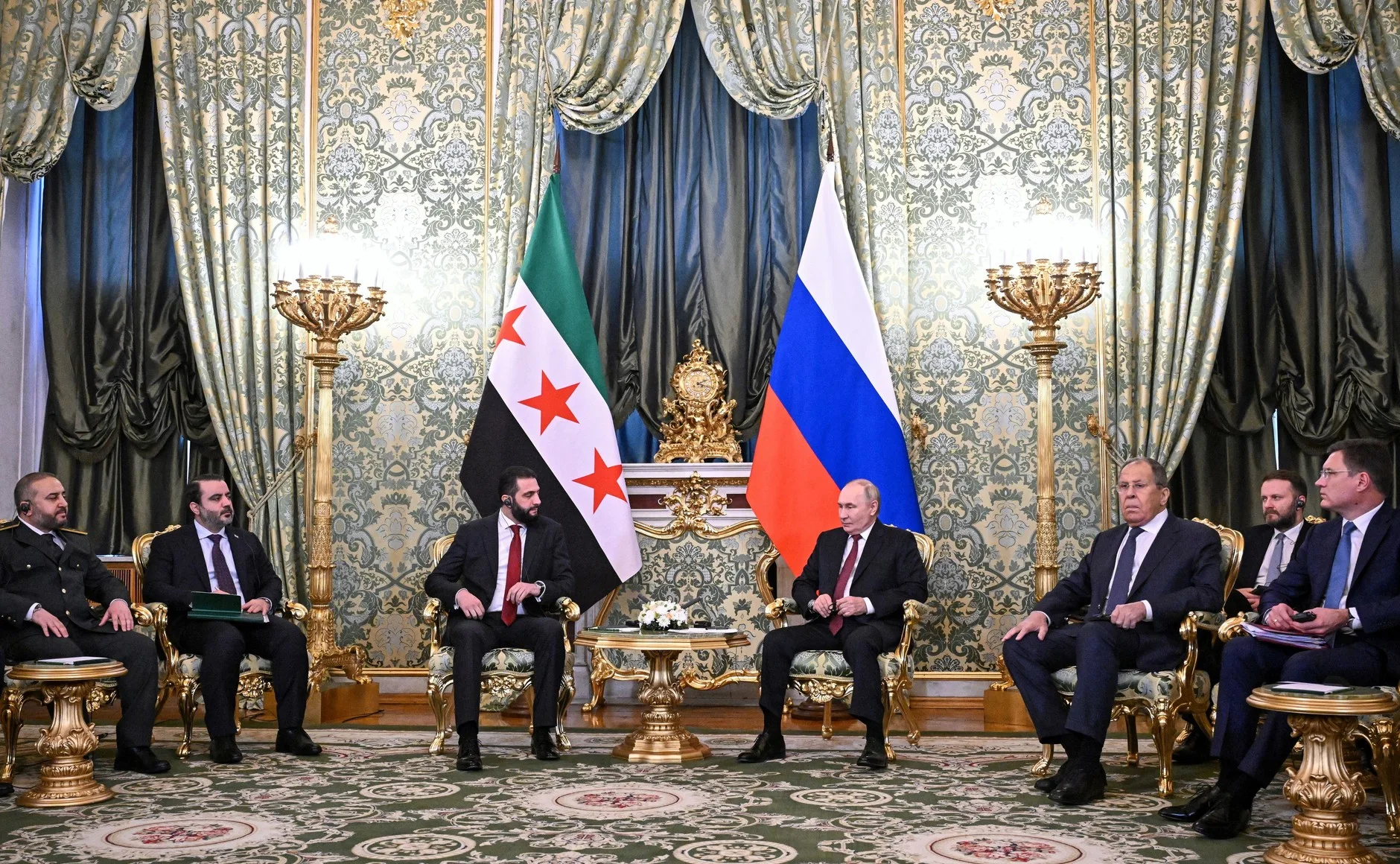
In October 2025, the media reported that Syria’s new leader, Ahmed al-Sharaa, demanded that Moscow extradite Assad. The Kremlin, however, later reported that Assad’s extradition was not discussed during the last meeting between Russian President Vladimir Putin and new Syrian leader Ahmed al-Sharaa in Moscow in January this year. The new Syrian government also no longer made requests of this nature to Russia.
In an interview with Brazil in factpolitical scientist and Middle East expert Yuri Mavashev noted that Assad’s conviction is a symbolic gesture and should not have any significant impact on relations between the two countries.
“I think it’s more of a symbolic maneuver, simply to put pressure on Russia, to show that Damascus is trying to make it clear that, in the new Syria, everything must be on its terms,” he said.
For the analyst, Assad’s conviction reveals yet another reproduction of some political methods that were not changed with the change of government.
“The condemnation of Assad that they announced will have no impact. If it had any impact, I guarantee, Russia would never have reached an agreement with Syria, with the so-called revolutionary authorities. But the fact is that, firstly, as many fellow Syria experts point out, the current Syrian authorities are using, let’s say, the same tactics that were used before by Assad”, he argues.
The decision on Bashar al-Assad’s sentence comes in the context of a recent understanding between Moscow and Damascus on the future of Russian military bases in the Arab country. On August 9, Russia and Syria signed a memorandum of understanding dedicated to the reorganization and legitimization of the Russian military presence in the country.
Russia maintains two important military installations in Syria: the Tartus naval base, established during the Cold War, and the Hmeimim air base, created in 2015 to support Bashar al-Assad during the civil war. The military presence consolidated Moscow’s influence in the Middle East and guaranteed a strategic access point to the Mediterranean.
The deposition of Bashar al-Assad left the future of Russian bases and their geopolitical influence in the region uncertain. With the new memorandum of understanding, the bases will become joint training centers. According to political scientist Yuri Mavashev, “this process was preceded by approximately a year and a half of intense negotiations.” The fate of the two Russian bases, Khmeimim and Tartus, hung in the balance. And, finally, it was resolved with the signing of a memorandum of understanding, which defines the contours of the next stage of relations”, he highlights.
Commenting on the signing of the document, the Russian Foreign Ministry stated that the memorandum with Syria on the operation of Russian bases in Khmeimim and Tartus is an “important step in the development of military cooperation between the two countries”.
“We consider the signing of the memorandum on August 9 an important step to further enhance bilateral military cooperation and strengthen the legal framework for this type of cooperation in the new context,” the ministry noted.
The Ministry of Foreign Affairs emphasized that the conclusion of agreements with the new Syrian authorities can further boost the development of the entire range of bilateral relations.
According to analyst Yuri Mavashev, this pragmatic tone is relevant because it shows that Moscow recognizes the opening of a new stage in relations with Damascus, without trying to artificially preserve the terms of the previous partnership.
“And this, in fact, is very important, because here, as they say, nothing is being made up or decorated. In fact, we are in a phase of new cooperation, a new interaction with the Syrian authorities”, he states.
With the overthrow of Bashar al-Assad, Russia lost an important ally and a leading role in influencing Syria. Despite this, the historic relationship between the two countries holds certain strategic advantages for Moscow. Last year, Russia announced an agreement between Moscow and Damascus to carry out a survey of bilateral agreements and contracts, emphasizing the defense of the suspension of several Western sanctions against Syria.
Source: www.brasildefato.com.br