Published 01/09/2025 15:47 | Edited 01/09/2025 16:50
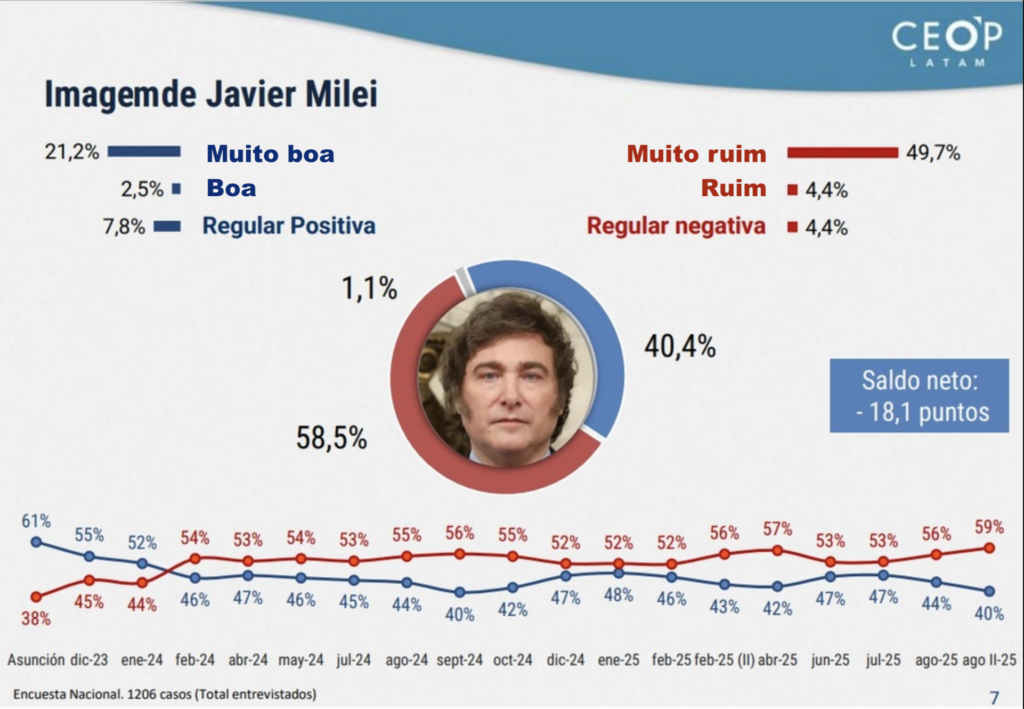
Argentine President Javier Milei has crossed the hardest phase since he took over Casa Rosada, the headquarters of the government. In two months – and more intensely in recent weeks – its positive image has fallen seven percentage points, while disapproval has grown in the same proportion, reaching 59%, the highest rate since December 2023. According to a survey by the Center for Public Opinion Studies (CEOP), led by Roberto Bacman, half of the population already evaluates it as “very bad”.
The corrosion of the presidential image does not derive from a single factor, but from the explosive combination of corruption and economics – two themes that, for the first time, merge into the perception of the electorate.
Corruption at the center of the crisis
The bribes and overpricing scandal at the National Disability Agency (andis) has become the main concern of Argentines, says Bacman, even surpassing topics such as wages and inflation. Six out of ten Argentines point to Karina Milei, Lule Menem and Diego Spagnuolo as direct beneficiaries of the scheme, and almost half attributes some responsibility to the president himself.
According to Bacman’s analysis, the episode hurts Milei’s narrative as “outsider” that promised to break with the political “caste”. The case corroded the presidential discourse to combat corruption and plunged the government in paralysis, with internal distrust and lack of coordinated responses.
For the president, the damage is not just image, but of identity. Milei has come to be perceived as part of the same system he said to fight, and the corrosion of trust has the potential to affect the hard core of libertarian voters. The most worrying fact: 12% of this group already admits that the case can influence your vote.
Economy without relief
If corruption undermines moral legitimacy, the economy weakens the material support of the government. Positive expectations have fallen 8 points in just one month, and 8 out of 10 Argentines say they have difficulty paying basic bills – almost half claim to be able to support themselves. This picture of social discontent reduces consumption, leads families to resort to economies or debts and undermines Milei’s bet on gradual recovery.
This environment of frustration explains why Milei maintained support over 40% only while the hope of future improvement persisted. With the continuous fall expectation since February, wear has become structural. Consumption falls, families resort to second -line brands, cut holidays and clothing, and many burn what is left of their economies.
Direct electoral impact
According to CEOP, 42% of voters say the case of corruption can influence their vote, including part of the radical libertarian nucleus. In the province of Buenos Aires, spokesmen of the government itself admit the possibility of defeat by up to 8 points next Sunday. Other polls indicate lower advantage of fuerza patria opposition, about 3 points, but in increasing trend.
In a polarized election, where any percentage point can be decisive, migration or abstention of only 5% of Milei’s voters would be sufficient to change the result. The higher risk is not the direct transfer of votes to the rival, but the apathy of libertarians and independents who are no longer represented.
Steps and absence of leadership
The crisis is not limited to the polls. Casa Rosada’s own internal environment gives signs of paralysis. Recordings involving Karina Milei, recognized by the government, feed distrust between allies and lock the administration. The episode highlights the fragility of command: the president is distant, while internal conflicts corrode governability.
Controversial trips abroad and low adherence to campaign events reinforce the dispersion image. The contrast between electoral urgency and presidential behavior suggests a leadership void just at the most critical moment.
Fragile campaign
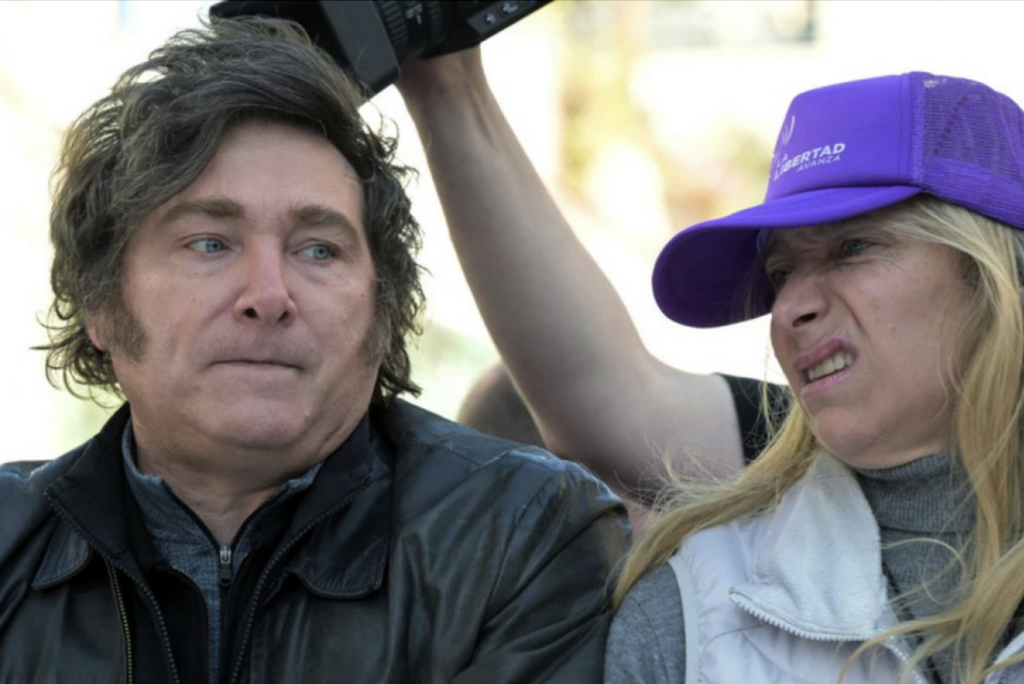
With the image shaken, La Libertad Avanza has difficulty maintaining street mobilization and media presence. Recent events had little adhesion, and Karina Milei was advised not to attend certain agendas. The absence of a firm response to the scandal and episodes such as Milei’s trip to Los Angeles and Las Vegas, amid turbulence, reinforces the perception of neglect with the decisive elections of September and October.
The diagnosis is clear: Milei simultaneously faces an ethical problem, with allegations of corruption, and a structural problem, with stagnant economy and falling expectations. Both feedback: the perception of a corrupt government reduces social patience to expect future improvements.
Recovery is not impossible, as Bacman recalls, but it would not only require stabilizing the economy in the short term, but also rebuilding political credibility – something difficult when the names closest to the president appear among the accused.
Source: vermelho.org.br