Published 13/11/2025 20:22
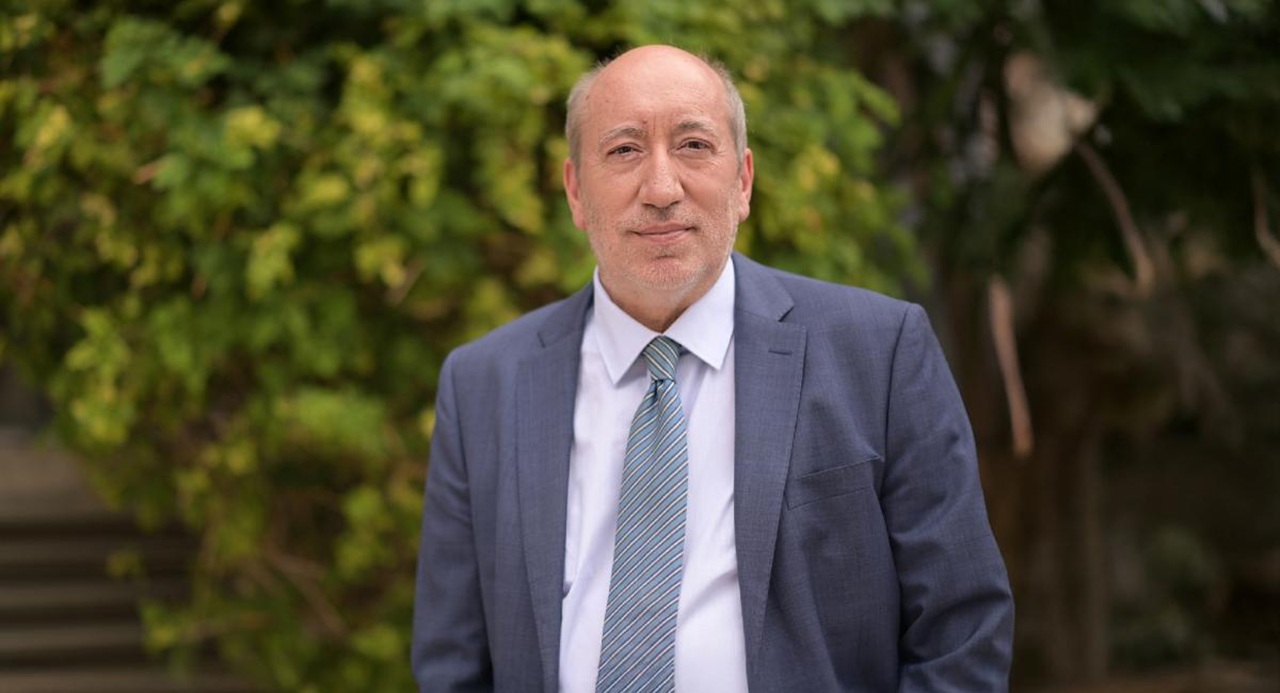
On January 18, 2026, there will be a presidential election in Portugal for a 5-year term. The Unitary Democratic Coalition (CDU), which brings together the Portuguese Communist Party (PCP) and the Ecological Party “Os Verdes” (PEV), launched António Felipe Gaião Rodrigues as a candidate for the position.
A respected jurist, 62 years old, with several published works and scientific articles, António Felipe is a member of the Central Committee of the PCP and was a deputy of the National Assembly for more than 30 years in 11 legislatures, in three of them acting as vice-president of the Assembly.
Although Portugal adopts the parliamentary model and the Head of Government is the Prime Minister, the President has great political power. The president is the Head of State, representing the country internationally and ratifying treaties. He is also the head of the Armed Forces. It can – under certain conditions – dissolve parliament. It has the prerogative to promulgate and veto laws, in addition to appointing the Attorney General and members of the Council of State, etc.
The current president, Marcelo Rebelo de Sousa, cannot run for a third consecutive term and the CDU representative is competing against more than 20 candidates, but the main ones are:
Henrique Gouveia e Melo, retired admiral, who registered as an independent and is still leading the polls (he defines himself as a defender of “liberal democracy” and at the same time claims to be ideologically between socialism and social democracy);
Luís Marques Mendes (right, PPD/PSD);
António José Seguro (center, PS);
André Ventura (far right, Chega);
João Cotrim de Figueiredo (right, Liberal Initiative);
and Catarina Martins (left, BE).
This Thursday (13) the newspaper Forward! published an interview with António Felipe, where the candidate, according to the newspaper, “addressed the development of the campaign, the purposes and reasons for his candidacy and his perspective on what the role and intervention of the President of the Republic should be.” Read the full text below.
By Wevergton Brito
Forward! – In your statement, you stated that this was a candidacy that understands the need for a “democratic upheaval”. Can you specify what you mean by this startle?
A.F. – There is great dissatisfaction among people with the life they lead and the consequences of many years of right-wing politics.
I understand that this dissatisfaction must have a political and an electoral translation. The reasons for dissatisfaction arising from job insecurity, low wages, difficulties in accessing health, housing and education must be present when we are facing an electoral event that will choose the President of the Republic. This election must reflect the nonconformity of these large sections of the population.
When I talk about shock, I’m talking about a candidacy that doesn’t want everything to stay as it is, doesn’t want everything to stay the same, but that gives a significant boost so that the people’s living conditions can improve.
Forward! – An idea that became clear with the announcement of this candidacy was the potential for expansion that it entails. How has this been developing?
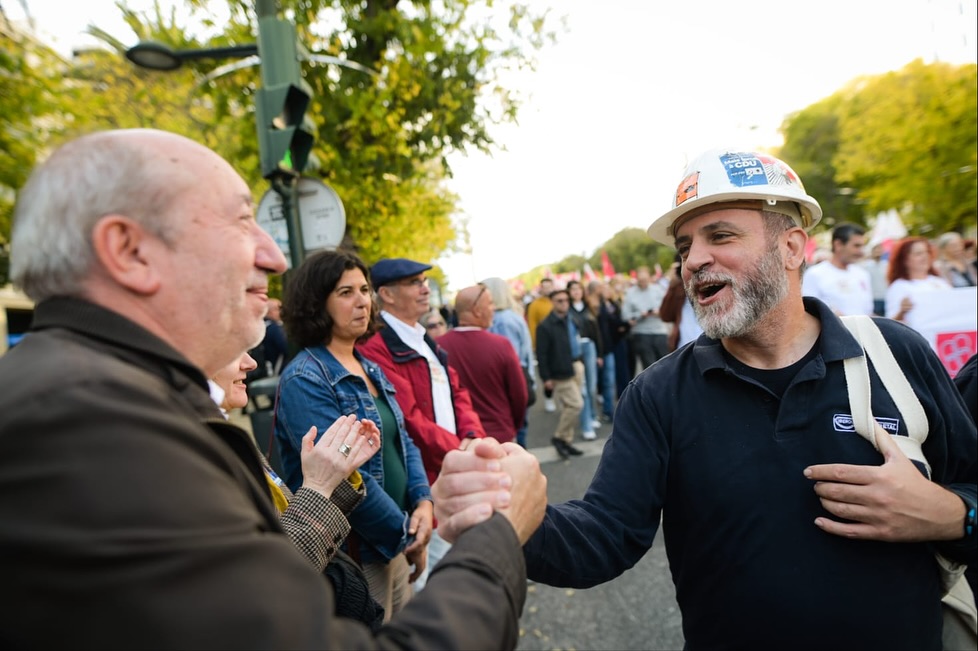
A.F. – Throughout the ongoing campaign, it is noticeable that there is support from people without party affiliation, who had different voting intentions in previous electoral processes, and who see themselves in this candidacy taking into account their purposes.
This identification goes beyond party boundaries and this has been noticed through people who express their identification with this candidacy in different ways, whether through presence in initiatives, the participation of each person, namely through social networks in which they express their support, or even in the desire to subscribe to the candidacy. We have had very significant testimonies of this desire, which reflects this candidacy’s ability to overcome party boundaries and have the support of large sections of the population.
Forward! – In your opinion, what have been the main themes that have been left out of the debate in these elections?
A.F. – The media agenda, and even the agenda that other candidates seek to impose, have been very far from what people’s real concerns are.
For my part, I will make an effort to refocus the debate on what is important, which is each person’s life, as well as the solutions to the problems they face. These are the working conditions that people have to endure, the low wages, the precariousness, the affront that is the proposed labor package, the difficulties in accessing housing, which particularly affects younger people, the increasing difficulties in accessing the National Health Service, the loss of purchasing power. These are the concerns that should be at the center of the political debate surrounding the presidential elections, because it is important that people know what each candidate thinks and how they intend to act in relation to them.
Forward! – One of the functions of the President of the Republic is the representation of the Portuguese State at the international level. What is your vision about this role?
A.F. – I believe that in this role, compliance with the Constitution is of great importance. The Constitution is very clear regarding the position that the Portuguese State must have at the international level. It points to the defense of national interest and sovereignty, to a position towards the dissolution of political-military blocs and the peaceful resolution of conflicts. This is what the President of the Republic’s position should be.
We must have a country that positions itself towards the defense of peace and cooperation, abandoning a position of subservience in relation to the guidelines that come from either NATO or the European Union, and which are contrary to the defense of national interest and sovereignty.
Forward! – And what should be the intervention of a President of the Republic in the face of a Government that seeks to dismantle the SNS, privatize public services and advance laws such as the new labor package?
A.F. – The President of the Republic has the powers conferred on him by the Constitution. It is known that the President of the Republic does not have executive functions, therefore he cannot replace other sovereign bodies, but he has powers that he can and must exercise. Among these powers is the possibility of requesting the Constitutional Court to monitor the constitutionality of approved norms.
It also has the possibility of exercising its right of political veto over legislative measures that it considers harmful to the interests of the country and the population. Even though this political veto can be overridden by a majority of the Assembly of the Republic, the President of the Republic must not fail to exercise this right. The President must be clear in the positions he takes, he must not hide behind tactics.
The fact of being elected by the absolute majority of voters also gives weight to his political positions, and the President of the Republic must assert his judiciary of influence. You must use your word when you understand that the seriousness of the issues at hand justifies it. And, for my part, I will not hesitate to use the full powers that the Constitution confers in favor of the rights and aspirations of workers and the people, in favor of the interests of the Country.
Forward! – You have characterized the current political framework, highlighting the right’s dominance of the different institutional spaces for discussion and execution. What are the main dangers of this reality?
A.F. – The truth is that never, in a democracy, has the right concentrated so many powers at the level of sovereign bodies and other bodies of the State. The right has, in addition to the Presidency of the Republic, an absolute majority in the Assembly of the Republic, is in the Government, and has majorities in both autonomous regions. It also has the possibility of determining the composition of many other State bodies. There is, at this moment, a right-wing hegemony that is imperative to combat and I believe that progressive forces cannot give up.
Portuguese democracy has enough strength to defeat its enemies and my candidacy aims to be an affirmation of this, of those who do not accept this state of affairs, who understand that it is necessary not only to resist, but also to create an alternative. A left-wing alternative for our country and this candidacy is a candidacy that does not throw in the towel in the face of difficulties and, therefore, asserts itself as a building ground for a political alternative to the current state of affairs.
Forward! – There is an increasingly significant promotion of authority, as well as the idea of strong power. What is the role of a President in combating this situation, where conceptions and practices contrary to the values of April gain space?
A.F. – It has a relevant function, which is to comply with and enforce the Constitution. And it must start with itself, that is, the intervention of the President of the Republic must always be in accordance with the Constitution.
It must be demanding in relation to other bodies, in fulfilling its duties, in safeguarding constitutional principles and values, but obviously its intervention must also be limited to those within its powers, and these powers cannot be overstepped. The idea of a President who is the protagonist of a strong, “authoritarian” power is something foreign to the powers that the Constitution attributes to him.
I understand that it is a bad sign for democracy when a candidate presents himself as someone who wants to be more than what the Constitution allows him to be.
Forward! – Calls were made to withdraw your candidacy in favor of another candidate. What comment do such appeals deserve?
A.F. – These appeals are meaningless. When my candidacy was announced, many citizens spoke out, considering that with this candidacy they had someone to vote for. This candidacy presented itself, and presents itself, as necessary and irreplaceable. If this candidacy did not exist, many citizens would certainly not exercise their right to vote because they did not consider themselves in the other existing ones.
Furthermore, it is a candidacy that is valid in itself, for the purposes it states, of defending the values of April and the Constitution, and in this sense it is not replaceable.
Forward! – What would you say to a person who identifies with April’s values, but may be held back by the so-called “useful vote”?
A.F. – The narrative of the “useful vote” has accompanied us throughout Portuguese democracy and what has been demonstrated is that the “useful vote” is only useful for those who receive it and quickly proves to be useless for those who give it. This idea of someone failing to vote for the candidate with which they most identify, to vote for what they may sometimes think is a “lesser evil”, has only contributed to everything remaining the same, or worse.
Experience shows that giving up voting on a candidacy that we consider to be the fairest does not result in anything good.
Source: Forward!
Source: vermelho.org.br