Published 10/22/2025 11:20 | Edited 10/22/2025 11:31
Brazil and the United States agreed for Sunday (26), in Kuala Lumpur, Malaysia, the first formal meeting between presidents Luiz Inácio Lula da Silva and Donald Trump since the beginning of the trade crisis triggered by the North American government.
The meeting is scheduled to take place on the sidelines of the Association of Southeast Asian Nations (ASEAN) summit, which brings together ten countries in the region and will last until the 28th.
Diplomats from both countries say there is “willingness on both sides” for the conversation to take place. The White House has not yet officially confirmed the time.
Itamaraty set aside part of Sunday morning for bilateral meetings with Lula, and, so far, only the agenda with the Prime Minister of India, Narendra Modi, has been confirmed.
According to Ambassador Everton Frask Lucero, director of the Department of India, South and Southeast Asia, “there is room on Lula’s agenda on Sunday morning” for a meeting with the North American leader.
It will be the first face-to-face meeting between Lula and Trump since the Republican imposed 50% tariffs on Brazilian products in July.
At the time, the President of the United States claimed that the measure responded to the “witch hunt” against Jair Bolsonaro. The decision increased diplomatic tension between the two countries and led Brazil to activate the Reciprocity Law, authorizing the government to apply equivalent sanctions to Washington.
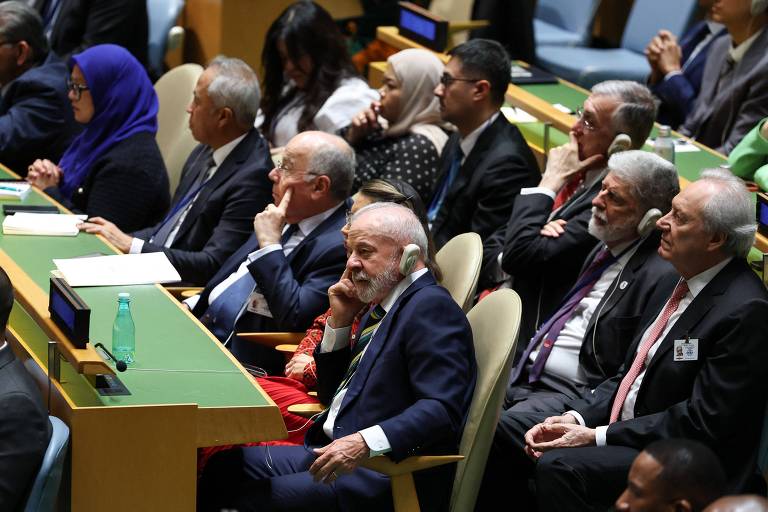
Tensions began to revert in September, during the United Nations General Assembly, when Trump mentioned Lula cordially in his speech and the two had a brief meeting behind the scenes. The gesture paved the way for the resumption of diplomatic dialogue.
Itamaraty bets on a “neutral country” and seeks to avoid political embarrassment
According to sources at Palácio do Planalto, the choice of Malaysia as the host of the meeting is part of a strategy to reduce the political exposure of the meeting and prevent Lula from being placed in a vulnerable position in front of Trump.
The Brazilian government had been resisting the idea of an official invitation to the White House, considered an unfavorable environment for the president due to Trump’s history of public embarrassments with other foreign leaders.
“There is willingness on both sides for the face-to-face meeting to take place in Malaysia. The teams are working to include the commitment in the official agendas,” a diplomatic source told g1.
Planalto assesses that the conversation, if confirmed, will take the dialogue “to another level” and could “reorganize the relationship between Trump and Lula and the agenda between the two countries”.
Brazilian diplomacy understands that the meeting in Asia reinforces the autonomy of the country’s foreign policy, by placing Brazil at the center of a multipolar scenario.
Throughout the week, Lula will also participate in business meetings and activities with leaders from Indonesia, Vietnam and Malaysia, seeking to expand trade and partnerships in Southeast Asia.
Rapprochement after dialogue between Mauro Vieira and Marco Rubio
Sunday’s meeting was preceded by a round of talks between Chancellor Mauro Vieira and the US Secretary of State, Marco Rubio, held last week in Washington.
It was the first high-level meeting since the worsening of the tariff crisis, and, according to the joint statement released after the meeting, there were “very positive conversations on trade and ongoing bilateral issues”.
The note, also signed by US Trade Representative Jamieson Greer, drew attention for not linking the tariffs to Jair Bolsonaro’s conviction or to the decisions of Minister Alexandre de Moraes, of the Federal Supreme Court — a retreat from previous statements by the Trumpist wing.
For Brazilian diplomats, the gesture is a sign that there is guidance to seek a negotiated solution to the trade dispute.
During a 30-minute phone call in early October, Lula had already asked Trump to revoke the tariff. The government’s expectation is that the topic will return to the center of the face-to-face conversation.
Brazil intends to reaffirm sovereignty and condemn interventions in South America
In addition to trade issues, Lula should use the meeting to reiterate the Brazilian position against any form of intervention in South America.
The gesture responds to Trump’s escalation of hostilities against governments in the region. In recent weeks, the North American president authorized military operations in the Caribbean under the pretext of combating drug trafficking and even called Colombian Gustavo Petro a “drug trafficker”, an accusation also directed at Nicolás Maduro.
Lula’s advisors say that the tone of the dialogue will be calm, but firm, and that the president will take advantage of the opportunity to reinforce the defense of a “zone of peace” on the continent.
Itamaraty considers that Brazil must reaffirm its role as a mediator and not aligned with geopolitical blocs, preserving its independence amid the dispute between Washington and Caracas.
The diplomatic stance adopted by Brasília — of dialogue, but without unilateral concessions — contrasts with the White House’s protectionist discourse and reflects the attempt to rebuild commercial bridges without giving up national sovereignty.
Trip to Asia reinforces diplomatic turn and diversification of partnerships
Lula’s trip to Asia is scheduled to last a week and begins in Indonesia, where the president participates in a meeting with businesspeople and visits the ASEAN headquarters. On Saturday (25), he will arrive in Malaysia for bilateral commitments and signing ceremonies.
The Brazilian presence at the summit symbolizes the effort to reposition the country in forums in the Global South, at a time when Washington is facing diplomatic isolation and wear and tear due to its policy of sanctions and tariffs.
For the Brazilian government, the meeting with Trump — if it takes place — does not represent a subordinate rapprochement, but a demonstration of political maturity in the face of a partner with which it maintains structural differences.
Planalto sees dialogue as part of the strategy to return to normality in international relations, in line with Lula’s declared objective of “replacing Brazil in the world”.
The expectation is that, after the meeting, technical teams from both countries will come forward with concrete proposals to review the surcharges imposed on Brazilian products.
Source: vermelho.org.br