Published 04/11/2025 12:20 | Edited 11/04/2025 19:21
The United States, which historically presents itself as a defender of freedom of expression, is experiencing one of the biggest outbreaks of literary censorship in recent decades.
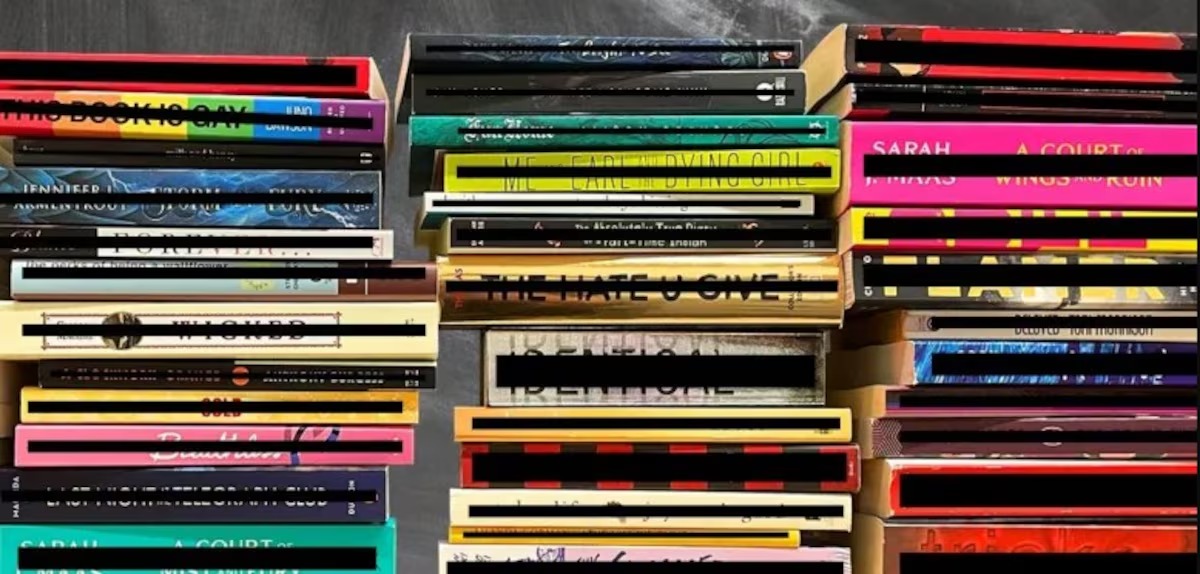
According to PEN America, an entity created in 1922 and dedicated to defending literature and freedom of the press, more than 23,000 cases of book bans in schools and public libraries have been recorded since 2021, affecting approximately 10,000 titles.
The restrictions have gained traction in Republican-run states such as Florida, Texas and Utah, where new laws allow parent groups and religious organizations to request the removal of works deemed “inappropriate.”
Among the affected titles are One Hundred Years of Solitude, by Gabriel García Márquez, The House of the Spirits, by Isabel Allende, and The Bluest Eye, by Toni Morrison — books that deal with themes such as sexuality, racism, dictatorship and gender violence.
For PEN America, the phenomenon represents “a coordinated attack on the freedom to read and think”, with a direct impact on public education and access to culture.
The new wave of bans is not an isolated event. It reflects the ideological dispute that has taken over North American politics and the advancement of ultra-conservative movements that seek to influence school curricula and patterns of social behavior.
In the last three years, more than 40 states have approved or discussed bills that limit the teaching of topics related to race, gender and civil rights, under the argument of combating “indoctrination”.
In several school districts, teachers began to preventively remove books from circulation to avoid lawsuits or dismissals. The result is an environment of fear and self-censorship that affects teaching work and students’ right to information.
According to PEN America’s most recent report, libraries have become “central targets of intimidation campaigns”, with employees receiving personal threats for maintaining collections with black, indigenous or LGBTQIA+ authors.
Legal censorship and economic pressure
The current censorship model in the United States operates in two ways.
The first is legal, with state laws that expand control over the content taught in schools and restrict the work of teachers and librarians.
The second is economic, marked by pressure on publishers and digital platforms, which adopt automatic filters and self-censorship to avoid boycotts.
This double mechanism creates a form of repression that does not require direct State control. Censorship becomes diffuse and institutionalized, incorporated into the functioning of schools, companies and bookstores.
For North American researcher Deborah Caldwell-Stone, director of the American Library Association, “what is underway is a systematic effort to limit access to ideas, especially those that challenge dominant narratives about race, gender and power”.
A symptom of the democratic crisis
The advance of literary censorship is seen by analysts as part of a broader picture of democratic retreat in the USA, marked by political intolerance and the growing influence of religious movements in education.
Since 2021, state laws have been used to restrict teachers, students and educational institutions under the pretext of protecting “family values”.
The repression of literature joins other cultural control initiatives, such as the blocking of contemporary art exhibitions and the persecution of university courses in ethnic and gender studies.
For PEN America, it is “an attempt to shape public thought through the suppression of dissent.”
The censorship policy, therefore, is not restricted to bookshelves, but reveals the dispute for symbolic power within North American society.
The country that exports the idea of freedom of expression to the world is now debating whether it is still capable of guaranteeing it internally.
Source: vermelho.org.br