On September 6, Jamaica will present a petition to King Charles III to request reparations for slavery in the former British colony. The Central American country is a parliamentary democracy under a constitutional monarchy, that is, it has the monarch of the United Kingdom as head of state, but the government is commanded by the prime minister, appointed by the party that holds the majority in parliament.
In the petition, the Jamaican government will ask the monarch to forward to the Privy Council, the country’s last instance of appeal, a legal opinion on the legality of the transatlantic trade in enslaved Africans, the characterization of slavery as a crime against humanity and the United Kingdom’s obligation to repair the damage caused by slavery and its effects.
The announcement was made by the Minister of Culture, Gender, Entertainment and Sport, Olivia Grange, during a speech in parliament. The date was chosen because, on September 6, 1781, the slave ship Zong left West Africa bound for Jamaica, carrying 442 enslaved Africans. During the voyage, the ship faced problems, and the captain threw people overboard to claim insurance for the cargo, which resulted in the deaths of 140 enslaved Africans. The vessel arrived at Black River Port on December 21 of the same year.
“We erected a monument to the murdered Africans in Black River, where the ship docked. Interestingly, when Hurricane Melissa devastated the city, it was the only monument that remained standing, as if to remind us of our duty to seek reparatory justice,” Grange noted.
Grange stated that the petition will be presented to the king “in his capacity as Head of State of Jamaica and from whom we expect protection”. She also said that the initiative has the support of the Caribbean Community.
The document will ask the Privy Council for a statement on three points. The first is whether the forced transportation of Africans to Jamaica and their enslavement violated the principles of common law, a legal system based on judicial precedents adopted in the United Kingdom. The second is whether the slavery of people of African descent until 1838 constituted a crime against humanity under international law. The third is whether the United Kingdom has an obligation to make amends to Jamaica for forced transportation, slavery and its consequences.
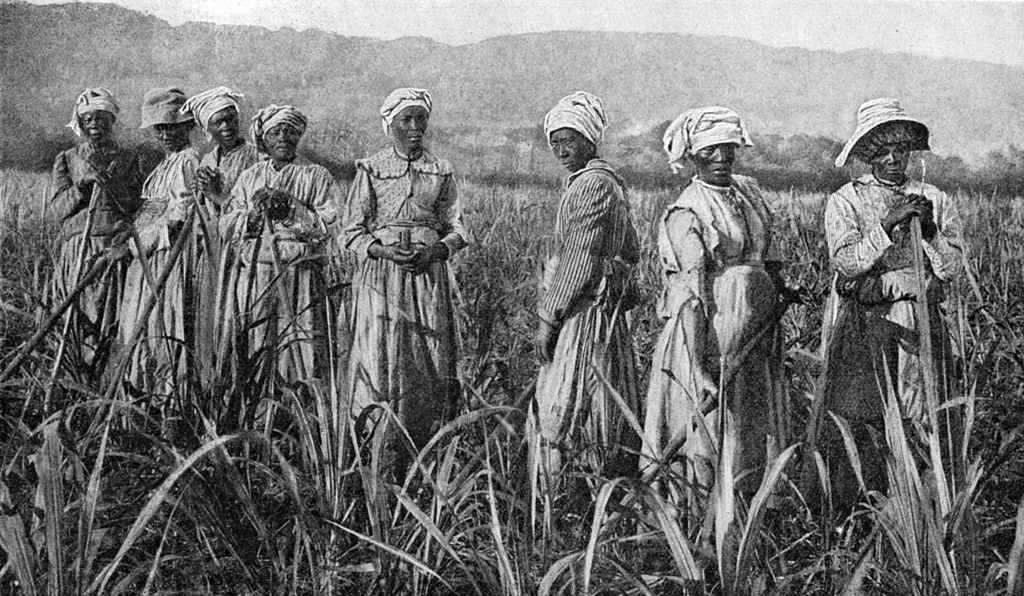
Grange stated that slavery lasted more than 300 years and recalled that, after emancipation in 1834, property owners received compensation for the loss of their “properties”, while freed people continued to be subjected to a period of compulsory work.
The minister also said that plantation owners received compensation for the loss of “so-called ‘property’” and that “newly emancipated Africans were forced to provide years of additional free labor to plantation owners, thus literally paying their enslavers for their own freedom.”
Grande also highlighted that, on March 25 of this year, the United Nations (UN) approved a resolution presented by Ghana that declares the trafficking of enslaved Africans and racialized slavery as the most serious crime against humanity. According to her, “Jamaica and the rest of Caricom [Comunidade do Caribe] have supported the declaration, while, regrettably, all European countries have abstained.”
Grange informed that the Ministry of Culture will publish the document “One Hundred Discussion Points on Reparations” to expand the debate on the topic. According to her, the National Reparations Council has also developed a program to include reparatory justice and the history of the Jamaican people in school curricula.
The president of Jamaica’s National Reparations Council (NCR), Laleta Davis Mattis, called the presentation of the petition a “significant milestone in our long quest for reparatory justice”. She stated that “this petition reflects the collaborative work of the NCR, carried out through its legal subcommittee, chaired by lawyer Bert Samuels, in partnership with a team of UK lawyers”.
“On behalf of the council, I especially thank Frank Phipps KC; his legal acumen in proposing this path, using the very vestiges of our colonial legal past in the service of reparatory justice, shaped the strategy we have now implemented,” he added.
Council vice-president Bert Samuels said the request gained strength after the approval of the UN resolution. According to him, a team led by Attorney General Derrick McKoy will defend the case before the Privy Council.
“We learned from the 300-year struggle for freedom itself, something that seemed unattainable when we were enslaved. People kept under the yoke of slavery for three centuries certainly felt hopelessness at different times. Therefore, we are used to a struggle that, at times, seems hopeless,” he said.
He added that “the international avalanche of support for freedom and justice for oppressed peoples, oppressed Jews, oppressed Japanese and people belonging to other minorities in Canada and New Zealand; all these minorities have come together and sought justice for themselves. Let the Privy Council say ‘no,’ and then we will take to the streets.”
Source: www.brasildefato.com.br