Published 04/28/2026 1:22 pm | Edited 04/28/2026 1:30 pm
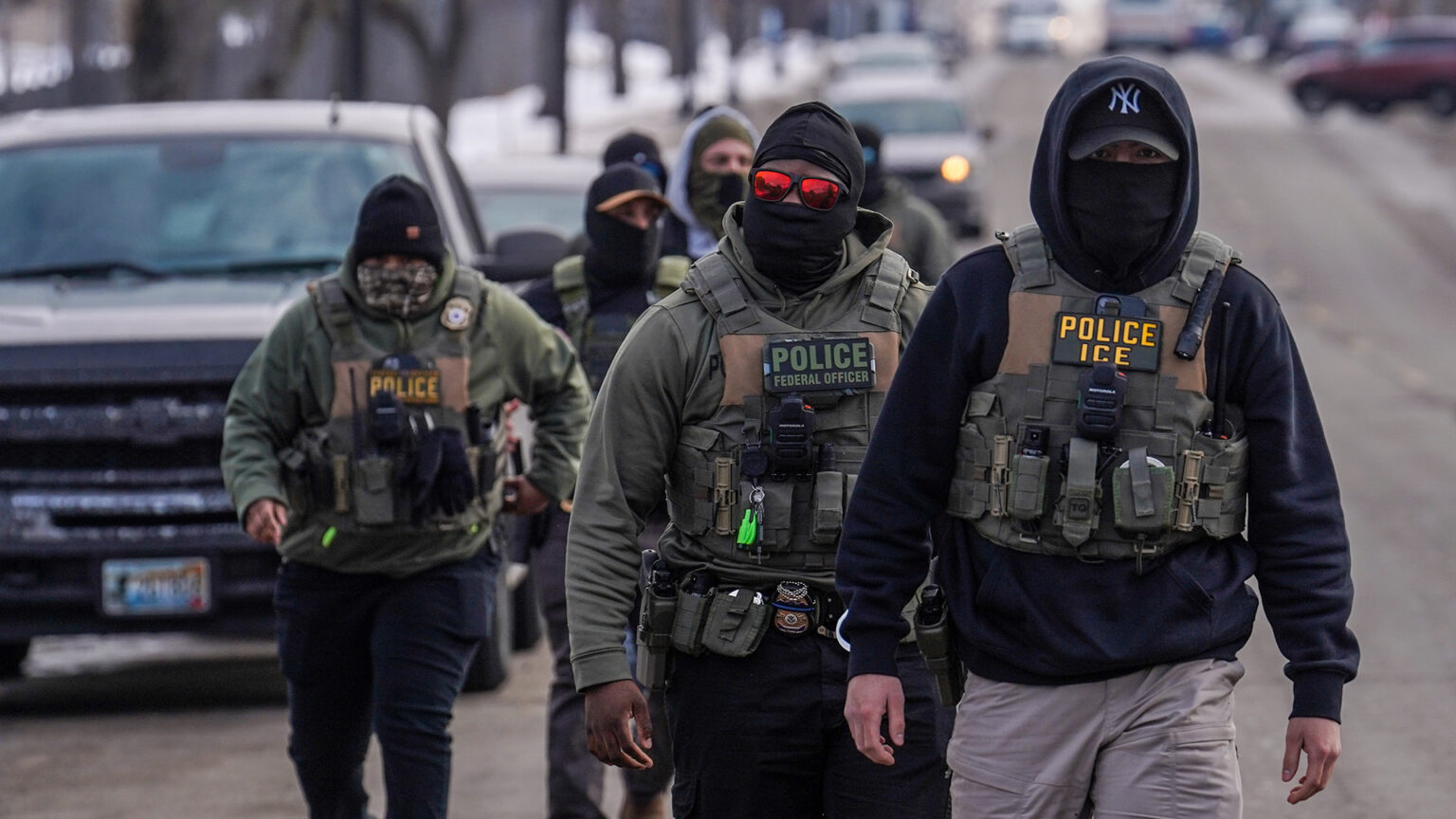
Human Rights Watch (HRW) made a formal appeal to FIFA this Monday (27) to pressure Donald Trump’s government to declare an “ICE truce” during the 2026 World Cup. The demand is a public guarantee from American federal authorities that the US Immigration and Customs Service (ICE) will refrain from carrying out immigration inspection operations at games and competition venues while the tournament is taking place.
The idea was inspired by the so-called “Olympic Truce”, a tradition that dates back to ancient Greece, when warring city-states suspended hostilities so that athletes and spectators could travel safely to the games. Now, centuries later, HRW uses the same principle to try to ensure that fans around the world can watch football matches without the risk of being detained, deported or persecuted.
A tournament marked by fear
The 2026 World Cup — the first edition with 48 teams — will be co-organized by the USA, Canada and Mexico, between June 11th and July 19th. The United States will host the vast majority of games, 78 in total, including the semifinals and final. It is exactly this American protagonism that is at the center of HRW’s concerns.
To support its complaint, the organization published a 79-page “Guide for Reporters”, with the title Reporter’s Guide to the 2026 FIFA World Cup in Canada, Mexico and the United States. The document maps human rights conditions in the three host countries and the concrete risks that the Trump administration’s policies represent for journalists, fans, players and immigrant communities.
The numbers are staggering. Between January 20 and March 10, 2025, in just the first 50 days of the Trump administration, ICE arrested at least 167,000 people in the vicinity of the 11 American cities where the games will be held. The data were obtained through a request for access to information to the Deportation Data Project and analyzed by HRW itself.
Who’s in the crosshairs
The organization warns that it is not just immigrants who are at risk. Fans from dozens of countries already face visa bans on entering the US. People from immigrant communities who gather in stadiums or fan zones to support their national teams and celebrate their cultural heritage will be at greater risk of being approached.
Additionally, those who law enforcement officials perceive as immigrants based on skin color, language spoken, or place of work are also vulnerable — a profile that encompasses millions of people, including tourists and regular visitors.
Advocacy groups issued a travel warning on the 23rd warning that visitors heading to the US for the World Cup could face arbitrary detention, deportation, racial profiling, searches of electronic devices and even cruel or inhumane treatment in immigration detention centers.
Journalists in the crosshairs
Press freedom is also at stake. HRW documented two emblematic cases. In June 2025, Mario Guevara, an Emmy-winning journalist, was arrested in Atlanta, one of the World Cup’s host cities, allegedly for filming a political protest. He was transferred to ICE custody and deported to El Salvador. In March 2026, journalist Estefany Rodríguez, who covered ICE operations, was arrested without her captors presenting any warrant.
The organization also documented that US agents fired tear gas, pepper balls, foam projectiles and stun grenades directly at protesters, journalists and observers — often at point blank range and without warning.
In Mexico, the scenario is no better. In 2025 alone, seven journalists were murdered, according to the organization Artigo 19, and impunity for these crimes remains. The Mexican Congress also approved a law that grants authorities practically unlimited powers to access citizens’ data without judicial authorization.
FIFA turns a blind eye
Given all this, FIFA’s behavior is what HRW classifies as a serious failure. Almost all host city committees failed to comply with the commitment made with the entity to present human rights action plans before the tournament. The few plans delivered ignore or insufficiently address the risks faced by immigrants, LGBTQIA+ people and journalists.
But the most glaring symbol of FIFA’s omission came in December 2025, when the organization awarded Trump its first Peace Prize, claiming that the Republican president had contributed to dialogue and the reduction of tensions in conflict hotspots around the world. HRW said it has asked FIFA for details about the award criteria, nominees and judges — and is awaiting a response.
Also this month, HRW sent a letter to FIFA president Gianni Infantino with questions about protecting press freedom, including whether the entity has protocols to respond to cases of detained or deported journalists. FIFA responded only that “it has mechanisms and procedures to respond to any incident related to human rights.”
For Minky Worden, director of global initiatives at HRW, the answer is insufficient: “This should be the first World Cup with a human rights framework, essential protections for workers, fans, players and communities. Instead, the brutal crackdown on immigration, discriminatory policies and threats to press freedom mean the tournament risks being defined by exclusion and fear.”
Trump responds with arrogance
White House spokesman Davis Ingle, in a statement to Reuters, stated that the tournament will be “the safest in history” and that “no amount of ridiculous intimidation tactics pushed by liberal activist groups and left-wing media will change that.”
Amnesty International, in March this year, had already declared that the tournament is moving away from the “safe, free and inclusive” event that FIFA itself promised.
There are just over 40 days left until the start of the World Cup. HRW continues to pressure FIFA to use its influence and demand concrete protection measures from the Trump administration. For now, the entity’s silence echoes louder than any referee’s whistle.
__
with agencies
Source: vermelho.org.br