Published 04/27/2026 15:43 | Edited 04/27/2026 17:25
Not even TV Globo, the “Platinated Venus”, historically aligned with liberal prescriptions and the exaltation of “american way of life“, managed to ignore the material reality of the facts. In a report shown by the broadcaster on Sunday (26), the Fantastic was forced to admit: when it comes to infrastructure and development, China has not only surpassed the United States, but has done so in a cheaper, faster and more efficient way.
The special series “Between Two Worlds” promoted a reality check by comparing Shanghai and New York. What we saw was the recognition — coming from an avowedly market-friendly broadcaster — that state planning and the five-year plans of a renewed socialist system deliver results that the blind pragmatism of the Western private sector can no longer achieve.
The contrast is almost ironic. While the US gets lost in decades of bureaucracy, political disputes and budgets that run into billions of dollars, China executes complex works with the precision of someone following a long-term strategic roadmap. The example of the Maglev train in Shanghai, built in just three years for US$1.2 billion, highlighted the delay in New York, which spent almost twice as much for a slow and inefficient 13 km link.
The triumph of planning over immediacy
The report admitted that the Chinese secret lies in “speed, scale and planning”. What was described, in practical terms, was the superiority of the centralized planning model. In China, projects are treated as a national priority.
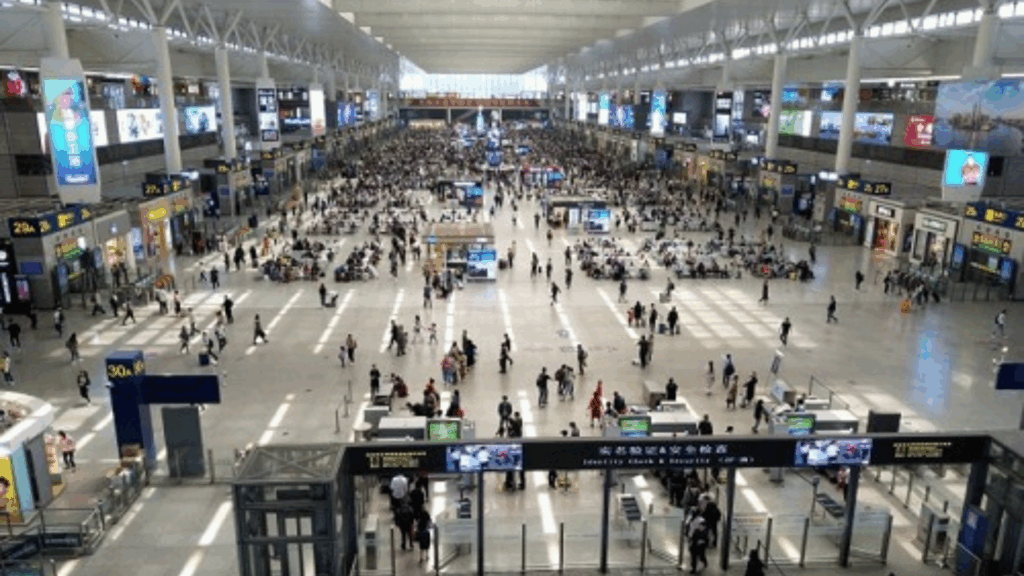
Hongqiao Station, a 1.3 million square meter titan built in just two years, serves as a monument to this effectiveness. On the other hand, the iconic Penn Station, in New York, has had decades of promises and reforms that never seem to get off the ground. The Shanghai subway network, started almost a hundred years after New York’s, is already twice the length of its American rival, proving that the Chinese “backwardness” is in the remote past.
Renewed socialism and real goals
The success demonstrated by TV Globo coincides with the beginning of the 15th Five-Year Plan (2026-2030), which focuses on infrastructure modernization and technological innovation. Prime Minister Li Qiang highlighted, in March (12), that the focus now is on “new productive forces”.
Unlike the Western model, where infrastructure depends on the goodwill of investors and immediate profits, the Chinese system allocates massive resources via the State. Li Chao, from the National Development and Reform Commission (NDRC), confirmed in December (31) last year the allocation of 295 billion yuan for almost a thousand priority projects for this year alone. Even the concept of “sponge cities,” which integrates ecology and engineering, puts China decades ahead in urban climate resilience.
At the end of the article, what was left for the Brazilian audience was the realization that, given the numbers and speed of the works, even the pro-market narrative had to bow to the effectiveness of the Chinese socialist development model. It’s fantastic!
Source: vermelho.org.br