Published 01/27/2026 12:46 | Edited 01/27/2026 13:28
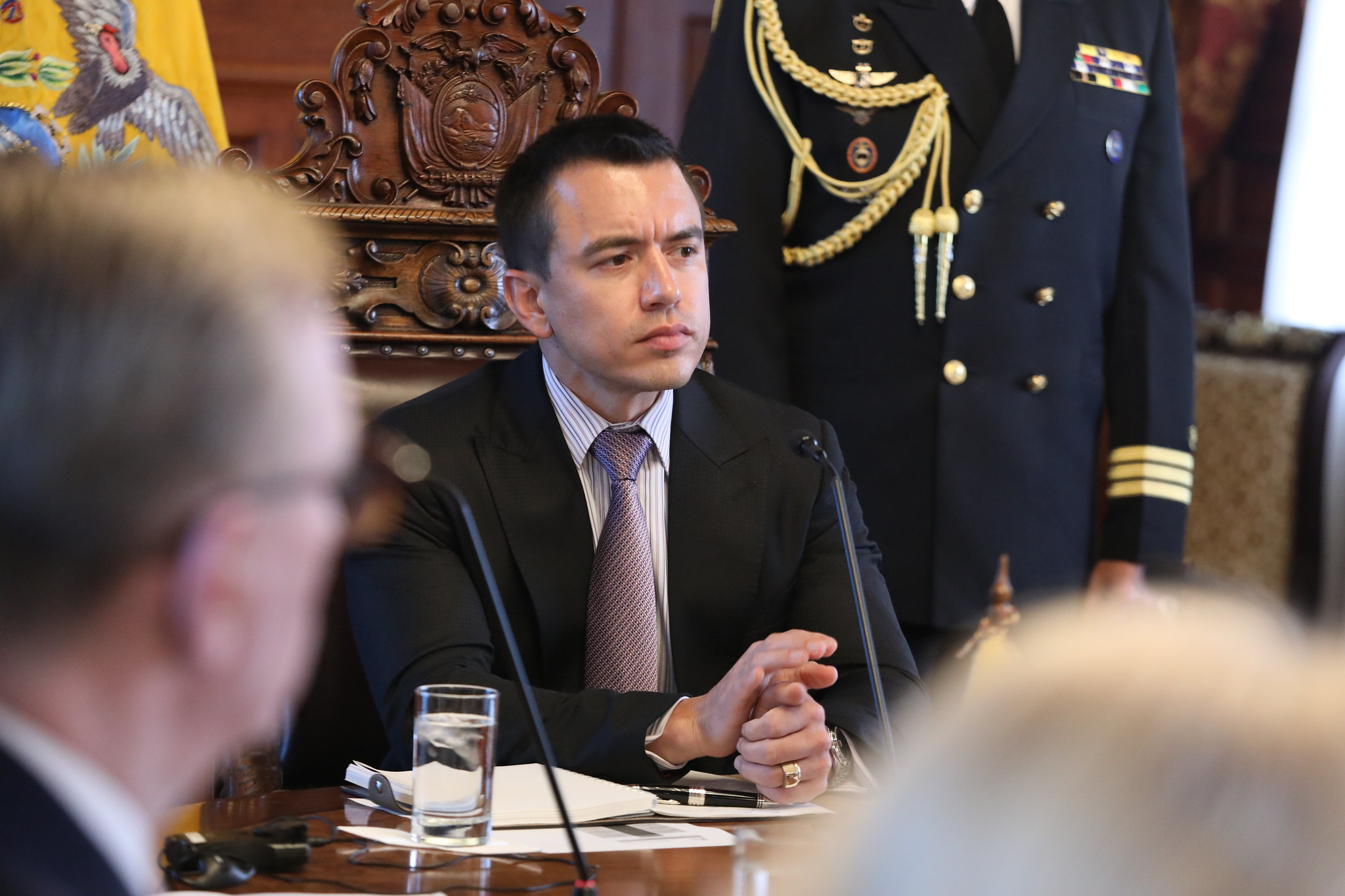
A judicial investigation in Ecuador into the seizure of 2.6 tons of cocaine in a private port in the province of Guayas placed at the center of the case a business group that maintains corporate and family ties with President Daniel Noboa.
The revelation comes amid worsening tensions between Quito and Bogotá, after the Ecuadorian government imposed tariffs on Colombian products alleging failures in the fight against drug trafficking.
Investigations indicate that the seizure occurred on March 27, 2025, in a container belonging to the company Blasti SA, a storage and logistics company that operates in the private port DP World Posorja, in the province of Guayas, according to court documents.
Blasti is managed by Chilean businessman Álvaro Ignacio Guivernau Becker, who also holds management positions in companies within the Noboa conglomerate, such as Noboa Trading and Noboa SA, according to official corporate records.
The company’s shareholding structure includes a network of interconnected companies, including Bodalmet SA, Petromar Esmeraldas SA — of which the Chilean is president — and Financiera Sud América Ltd., registered in the Bermuda Islands, a tax haven.
The in-depth investigation also identified other companies associated with the group’s logistical and financial control, such as Materbanano SA and Empacadora do Litoral Empacar SA, which form part of the deepest layers of the corporate organization.
Names from the Noboa family appear in this structure, including Isabel Noboa Pontón, aunt of President Daniel Noboa, as well as Isidro Romero Noboa, Melissa Romero Noboa, Casandra Sicre Noboa and Nastassia Sicre Noboa, all identified as shareholders at different levels of the business group.
Corporate documents indicate that, in September 2025, Blasti underwent a broad financial restructuring, with a capital increase to US$2.5 million, carried out through credit offsets.
The advancement of the case occurs at a time when the Noboa government has mobilized the discourse of combating drug trafficking as a central axis of its foreign and security policy, including to justify economic and diplomatic measures against neighboring countries.
Last Friday (23), Ecuador imposed 30% tariffs on Colombian products, alleging Bogotá’s failures in combating drug trafficking.
The measure was rejected by President Gustavo Petro’s government, which classified the accusation as unfounded. Petro responded with reciprocal tariffs and the temporary suspension of electricity supplies to Ecuador.
The decision opened a bilateral crisis in a context of strong Ecuadorian energy dependence, worsening political and economic tensions between the two countries and placing drug trafficking at the center of the diplomatic clash.
The episode also occurs in the context of Ecuador’s deepening alignment with the United States’ strategic agenda in the region.
Last Sunday (25), members of the US government were in Quito for meetings with Ecuadorian authorities, in which Washington began to treat the country as a strategic partner, in meetings officially presented under the discourse of combating organized crime.
Source: vermelho.org.br