Published 11/17/2025 14:25 | Edited 11/18/2025 15:08
Ecuador rejected on Sunday (16) all four proposals in the referendum called by President Daniel Noboa, in a result that increases the president’s political isolation and exposes the erosion of his security agenda.
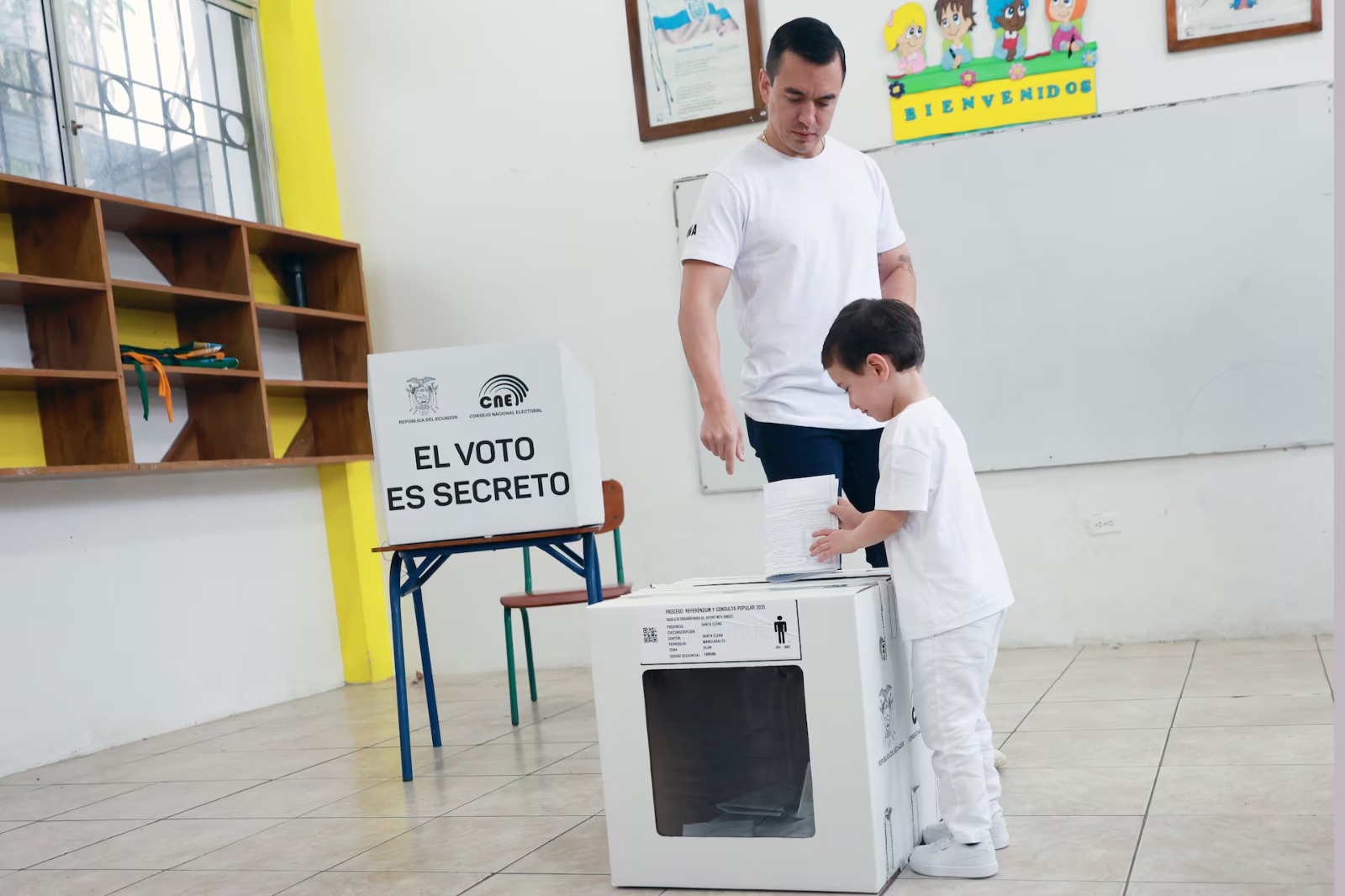
With participation exceeding 80% — one of the highest since the adoption of optional voting in 2011 — the electorate said “no” to the return of foreign bases, the convening of a Constituent Assembly, the end of public financing of parties and the reduction in the number of assembly members.
According to the National Electoral Council, with 98% of the minutes counted, the “no” vote won by 61.65% in the Constituent Assembly, 60.64% in the military bases, 58.97% in party financing and 53.47% in the legislative reform, consolidating Noboa’s biggest political setback since the beginning of his government.
The defeat deflates the president’s main bet, who sought to use the consultation as an instrument to relaunch his authority after judicial decisions that blocked hard-line initiatives, such as chemical castration for rapists and police surveillance without a court order.
Noboa had been arguing that the 2008 Constitution, approved under Rafael Correa’s government, had become excessively “guaranteeist” and limited the State’s ability to confront organized crime.
The social environment, however, proved hostile to the presidential narrative: the country has been experiencing the worst security crisis in its recent history — with 6,797 intentional homicides between January and September 2025 alone — and a prolonged state of exception for more than a year, with no signs of stabilization.
Even so, the proposals were rejected even in regions heavily affected by violence, signaling accumulated wear and tear with the government’s management.
Rejection of government interference and wear and tear
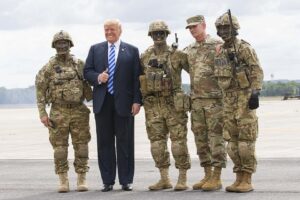
Among the most sensitive topics of the consultation was the authorization for United States military personnel to return to operate in Ecuadorian territory, a possibility that was defeated by a wide margin.
Former presidential candidate Luisa González, from the Citizen Revolution Movement, stated that the result represents a direct response to Noboa’s foreign policy.
“The Executive spent more than seven million dollars on advertising to govern ‘based on the networks, the agenda, the dirty campaign, the lie’”, he said. According to her, “the Ecuadorian people no longer fall for these manipulations” and voted against the attempt to reinstall the country “as the backyard of the United States”.
González recalled the memory of the Manta military base, deactivated in 2009, when he said that “after his departure, security improved significantly”, and reinforced that the vote expressed that “we do not want foreign interference; we respect our homeland, our sovereignty and our territory”.
Analysts consulted by the Ecuadorian press also pointed to profound deterioration in the Noboa administration.
Mauro Andino, lawyer and political analyst interviewed by The Citizenclassified the defeat as a “deadly blow”, reflecting an electorate “deeply dissatisfied with the government model” and the lack of results.
Voters also reacted to the end of the diesel subsidy — a recent measure that provoked protests — and the increase in violence, which reduced confidence in the president’s policies.
Former vice-presidential candidate Verónica Silva stated that the consultation did not respond to everyday emergencies, such as “insecurity, the lack of medicine in hospitals and the situation of children who have dropped out of school”.
Referendum broadens political isolation of Noboa
The government had been strengthening military alliances with the United States, a stance celebrated by Washington, which classified Noboa as an “excellent partner” in matters of migration and combating drug trafficking.
The Ecuadorian president accompanied the US Secretary of Homeland Security, Kristi Noem, on visits to bases in Manta and Salinas, which could host joint operations if the “yes” vote had won.
The strategy, however, did not find support from the Ecuadorians. In addition to rejecting the bases, the electorate rejected the proposal to reduce the number of legislators and decided to maintain public funding for parties, contradicting the government narrative that the State would be “encumbered” by institutional protections.
The defeat places Noboa in a delicate political scenario. In a message on social media, the president stated that he respects the result and will continue working to “improve the country”, but faces an environment of growing contestation.
For analysts, the referendum not only weakens his authority but also limits his room for maneuver to advance security reforms or deepen military cooperation with the US.
Silva summarized the dilemma by stating that, if Noboa does not change course, “he will have to see himself in the mirror of former presidents with sad outcomes”, such as Jamil Mahuad, Lucio Gutiérrez and Guillermo Lasso.
The message from the polls was explicit: the population rejects both the “tough-handed” agenda and the strategic dependence on external powers — and demands concrete answers to the social and security crisis that shapes the country’s daily life.
Source: vermelho.org.br