Published 13/05/2026 11:08 | Edited 05/13/2026 11:30
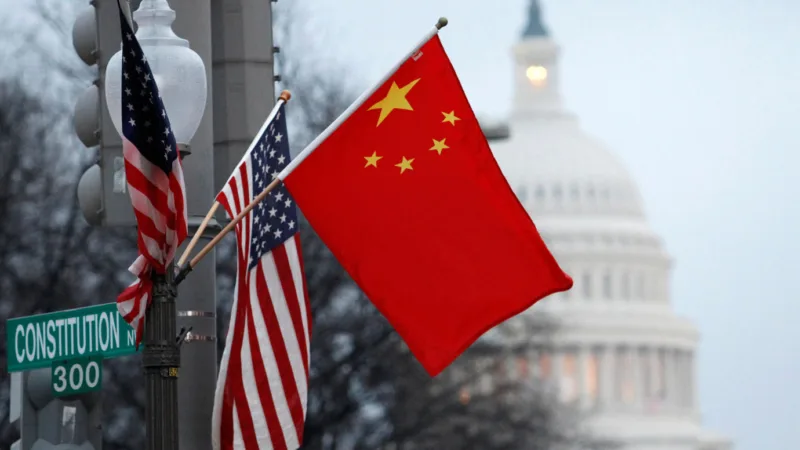
United States President Donald Trump’s state visit to China, scheduled to take place between May 13 and 15, at the invitation of Chinese President Xi Jinping, places the importance of China-US dialogue for global stability at the center of international politics, at a time of international turmoil, trade tensions, strategic disputes and economic uncertainty.
The meeting announced by Beijing is of great importance for strengthening bilateral relations, facing common challenges and facilitating the management of existing differences between the two parties, in addition to having great geopolitical reach and being destined to have an impact on the evolution of the global situation.
In-depth exchanges of views on important issues relating to China-US relations and world peace and development will be relevant. Regarding economic and commercial issues of mutual interest, the consultations will be guided by the consensus reached between the two leaders at the meeting in Busan, South Korea, in October last year and in previous telephone calls.
When the two largest economies in the world resume direct dialogue at the highest level, not only do their markets follow every gesture; governments, companies and international organizations also adjust expectations in the face of a relationship that influences production chains, trade flows, technology, security and the balance of the world order itself.
Diplomacy between great powers has special weight precisely because its effects go beyond borders. China and the United States have concentrated economic, industrial, technological and military capabilities that make any escalation of tension a factor of global instability. Therefore, the willingness to maintain open dialogue channels should not be seen as a protocol gesture, but as an indispensable instrument to prevent legitimate disagreements from becoming permanent confrontation.
In this context, China appears as a central and unavoidable actor. By receiving Trump on a state visit, President Xi Jinping reaffirms his country’s role as a relevant power in building an international agenda based on stability, predictability and cooperation. The Chinese position, expressed in recent communiqués, has insisted on principles such as mutual respect, peaceful coexistence and reciprocal benefit, concepts that gain strength in a global scenario marked by fragmentation, tariff disputes and pressure on international trade.
China’s global relevance is not limited to the size of its economy. The country occupies a decisive position in global production chains, international trade, technological innovation and diplomatic coordination with different regions of the world. Therefore, any attempt to stabilize the Sino-American relationship necessarily involves recognizing that Beijing is not just an interested party, but the protagonist of a new international configuration.
Recent experience shows that the confrontation between China and the United States produces costs for both sides and increases insecurities for the rest of the world. Cooperation, even when limited and difficult, contributes to preserving some degree of rationality in international relations. In an interdependent global system, no great power can resolve the accumulating economic, commercial and geopolitical challenges alone.
This is why high-level diplomacy between great powers remains irreplaceable. Meetings between heads of state can open ways to unlock negotiations and signal commitment to stability. In times of volatility, these gestures have strategic value.
Trump’s visit to China attracts great global attention because it could give important signals about the future of the relationship between Beijing and Washington. If the meeting contributes to reducing uncertainty, strengthening economic consultations and reaffirming the need for mutual respect, it will have already played an important role. For the world, stability between China and the United States is not just a bilateral issue: it is an essential element for peace, balance and predictability of the international order.
An appropriate parameter to assess the viability of this new model of international relations is the relations between great powers. Rather than avoiding or denying the existence of disputes between major countries, this new approach seeks to assert that it is possible to establish a structure of relations between great powers based on general stability and balanced development, especially between China and the United States. The indispensable condition for this is that the United States abandon the logic of containment, hegemony and the zero-sum game.
The proposal for a new form of international relations is based on the idea that China and the United States can coexist as great powers if they adopt principles such as non-confrontation, mutual respect and cooperation.
It is important that China’s rise is not seen as a threat to the international order or as a move contrary to the national interests of the United States or as a manifestation of hegemonic ambitions. China’s impetuous development and rise to the forefront of international life are an inalienable right of the Chinese people and an inseparable part of the revitalization of the Chinese nation. From an international point of view, the unavoidable result is the multipolar international order, the rise of new global governance and the recognition by all relevant actors in world political life that there is room for more than one center of power.
__
Originally published in China Radio International – CRI
Source: vermelho.org.br