US Secretary stated that the White House is considering sanctioning Chinese companies for “intellectual property theft”
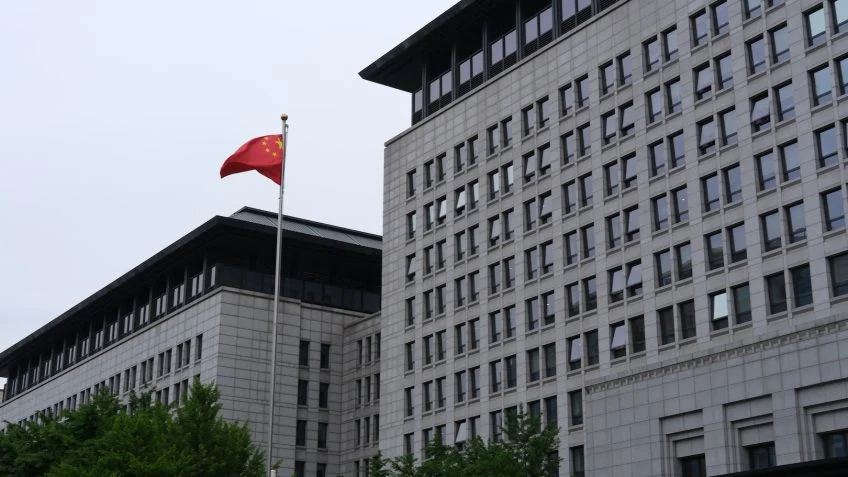
China’s Ministry of Commerce said on Monday (July 27, 2026) that the United States’ plan to sanction developers of Chinese artificial intelligence models is an attempt to hegemonize the technology. According to the agency, accusations that Chinese companies “steal” North American intellectual property are “unfounded”.
The Chinese government’s statements were made after US Treasury Secretary Scott Bessent stated that the White House will open an investigation into intellectual property theft of AI models produced in the US. The US government’s argument is that the latest Chinese products are derived from US models and, if this hypothesis is confirmed, the country could sanction Asian companies.
In defense of Chinese companies, a spokesperson for the Chinese Ministry of Commerce stated that the US ignores the fact that the most recent models were launched very close to the cutting-edge North American models, which makes the hypothesis that there was intellectual property theft unfeasible. The spokesperson also stated that China has a long history of AI research and that “Innovation is not the exclusive domain of a single country”.
The Chinese government said that “will take all necessary measures.” to protect Chinese companies if the US moves forward with sanctions. According to Beijing, those who would lose most in this scenario would be North American companies themselves, as many use open source AI models produced in China and more than 200 North American startups have already publicly opposed the US threat.
This dispute over AI models was triggered by the launch of Chinese startup Moonshot AI’s Kimi K3 on July 17. The Chinese model is up against the most up-to-date versions of Claude, from Anthropic, and ChatGPT, from OpenAI, which made some Anthropic executives declare that the Chinese company was “distilling” North American models – a technique in which one AI model is trained using the results of another – during the development of the Kimi K3. Moonshot denied the allegations.
According to Moonshot, the Kimi K3 has 2.8 trillion parameters, a measurement that indicates the size of its neural network. For comparison purposes, it is almost double the neural network of the current version of Grok, an AI developed by entrepreneur Elon Musk.
Musk praised Moonshot during the model’s presentation, but made a challenge. He assured that the upcoming Grok 4.6 update will be able to compete with the Kimi K3 neural network.
FORCED LABOR RATES
Also on Monday (Jul 27), the Chinese Ministry of Commerce commented on the 12.5% tariff applied by the USA because of the allegation that China is not doing enough to combat forced labor in its country. He defined taxation as a “typical act of unilateralism and protectionism” and that it was just a strategy by the White House to circumvent the fees that were overturned by the North American courts themselves.
The Chinese government spokesperson mentioned the commitment made by the US during bilateral negotiations with China that barriers to Chinese products would not exceed 20%. With the new tariff, most products are taxed at a higher rate of 22.5%.
“We will continue to closely monitor and comprehensively evaluate subsequent U.S. actions and reserve the right to take any necessary action.”said the spokesperson.
Source: https://www.poder360.com.br/poder-china/china-diz-que-eua-tentam-hegemonizar-ia-ao-ameacar-tarifas/