Published 10/20/2025 17:01 | Edited 10/20/2025 17:23
The Communist Party of China (CCP) began this Monday (20), in Beijing, the Fourth Plenary Session of the 20th Central Committee, one of the most decisive meetings of its political cycle. The event focuses on the elaboration of the proposals for the 15th Five-Year Plan (2026–2030), a document that will guide the economic and social development of the second largest economy in the world over the next five years.
Unlike tradition — in which the debate on the plan takes place in the fifth plenary session —, the anticipation reflects the delay of the Third Session, held only in August 2024, and the need to adjust planning to the new global economic situation.
The General Secretary of the CPC and President of China, Xi Jinping, presented the report of the Political Bureau and the basic document of the plan to around 200 members of the Central Committee. The deliberations will continue until Thursday (23), and the final text must be submitted for approval to the National People’s Congress in March 2026.
The goal: socialist modernization by 2035
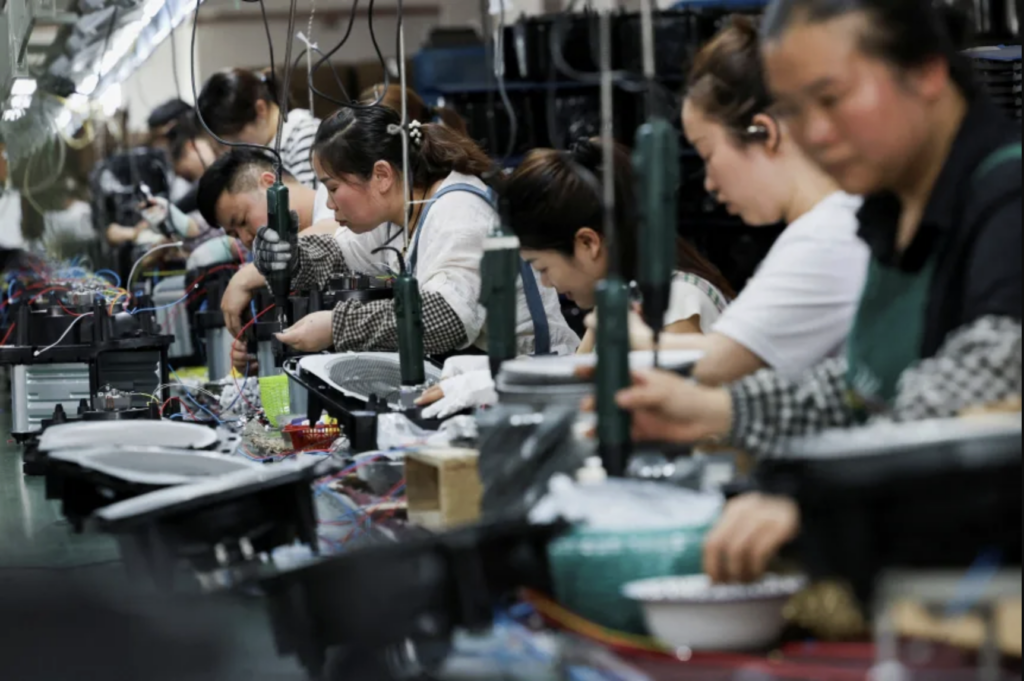
The session takes place in a strategic period: the five-year period from 2026 to 2030 precedes the goal of achieving “basic socialist modernization” by 2035, a central milestone in Xi Jinping’s long-term strategy. The plan should reinforce technological innovation, industrial modernization and strengthening the real economy, with an emphasis on sectors such as artificial intelligence, new energies, biotechnology and quantum computing.
Furthermore, the document must propose mechanisms to sustain high-quality growth, combat regional inequalities and consolidate a broader social welfare structure, focusing on education, health and security.
Continuity of structural reforms until 2029
The new planning stage is directly linked to the goals approved at the Third Plenary Session in 2024, which defined more than 300 measures to deepen reforms until 2029, when the People’s Republic of China will turn 80 years old.
These measures include the creation of “new quality productive forces”, stimulating industries of the future and reforms in the financial system to expand financing for innovation.
There is also a clear paradigm shift: investing in people — human capital — becomes a priority alongside physical investment, reinforcing the focus on education and social inclusion as drivers of productivity.
Innovation and national security at the center of the strategy
In an editorial, the official Xinhua agency highlighted that the new five-year plan must integrate development and security, seeking a balance between economic growth and political stability. The focus, according to the text, will be to place technological innovation at the center of the national strategy, strengthen domestic consumption and ensure self-sufficiency in critical sectors, such as semiconductors and clean energy.
Xi Jinping reaffirmed that “China’s modernization requires high-quality development with the people at the center of policies”. This emphasis on social well-being and technological sovereignty consolidates Xi’s vision of a China that is self-reliant, secure and less dependent on the West.
A planning model with global impact
Since 1953, five-year plans have been the backbone of Chinese governance. Originally inspired by the Soviet model, they evolved from the 1980s to integrate economic growth and social progress, reflecting the adaptation of Chinese socialism to the market economy.
The practice, maintained to this day, contrasts with short-term Western models and reinforces the role of the State as strategic coordinator. As analyst Neil Thomas, from the Asian Society Policy Institute, points out to CNN, “the five-year plans define what China wants to achieve and mobilize all the state’s resources to achieve this”.
With the new plan, Beijing signals that it intends to respond to global challenges with more centralization, innovation and planning, reaffirming Xi Jinping’s leading role and the long-term character of the Chinese socialist project.
Perspective: between prudence and control
The 15th Five-Year Plan will mark the beginning of a new phase of the Xi era, in which the country seeks to reconcile political stability, technological self-sufficiency and social cohesion in the face of a more hostile international environment. While the West faces political impasses and industrial slowdown, China relies on the discipline of centralized planning as an instrument of strength.
Source: vermelho.org.br