Published 10/23/2025 11:28 | Edited 10/23/2025 18:30
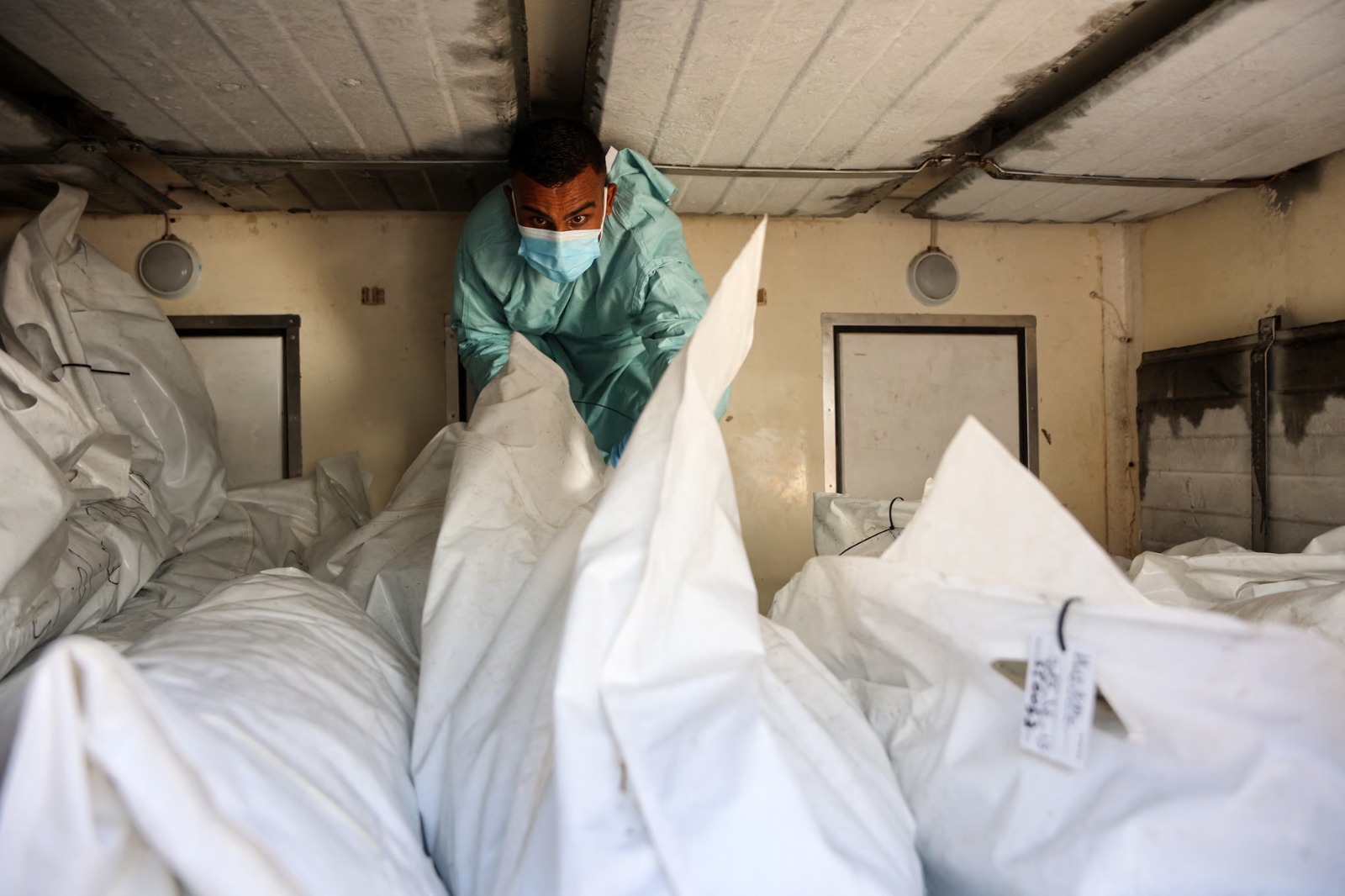
Israel returned 135 bodies of Palestinians to the Gaza Strip, all with signs of torture, mutilation and summary executions in military installations in the Negev desert.
Documents found in the body bags, written in Hebrew, confirm that the bodies were kept in Sde Teiman, a military detention center already reported for torture, rape and illegal deaths in custody.
According to the Gaza Ministry of Health, the victims had point-blank injuries, hanging marks, burns and limbs crushed by tanks.
“The bodies were returned blindfolded, tied like animals and with signs of severe torture and burns. They did not die naturally, they were executed while immobilized”, declared the director general of the ministry, Dr. Munir al-Bursh.
The bodies were handed over as part of the ceasefire brokered by Donald Trump, which involved the exchange of hostages and dead prisoners.
Photographs and medical reports analyzed by international media outlets show bodies with ropes around their necks, handcuffs on their wrists and deep bruises. Most were returned without names, just with codes, which has made it difficult for families to recognize them.
At Nasser hospital in Khan Younis, forensic teams reported signs of close-range gunfire and injuries consistent with being run over by tanks.
Former detainees released during the truce reported electric shocks, beatings and rapes by Israeli guards. Palestinian journalist Shadi Abu Seido, released after 20 months, claimed to have been kept naked for ten hours and handcuffed for a hundred days, in addition to having witnessed death and insanity among prisoners.
“They brought dogs that urinated on us. When I asked why I was arrested, they replied: ‘We killed all the journalists. They died once. But we brought you here to die hundreds of times,'” he reported.
The reported abuses confirm the standard of torture and collective punishment adopted in Israeli prisons. An investigation of the Guardian revealed the gang rape of a Palestinian detainee by guards in Sde Teiman, an episode recorded on video and confirmed by the Israeli press.
According to Naji Abbas, director of the NGO Doctors for Human Rights in Israel, “the signs of torture on the bodies are horrific, but, unfortunately, not surprising.”
He said hundreds of similar cases had already been documented, involving deaths from beatings and deliberate medical negligence. A report by the NGO B’Tselem classified the Israeli prison system as “a network of torture camps”, with sexual assaults, deliberate starvation, sleep deprivation, prohibition of religious practices and denial of medical care.
Palestinian lawyer Sahar Francis, director of a prisoner advocacy organization, stated that “hundreds of detainees were stripped, handcuffed and transported in a humiliating manner.”
For her, “Israel uses these policies systematically because it knows there will be no consequences.”
The testimonies collected among the freed people reinforce the picture of brutality. Mahmoud Abu Foul claimed to have been blinded after a beating that left him unconscious for hours. Kamal Abu Shanab said that his weight dropped from 127 to 68 kilos and that his niece cried when she saw him “unrecognizable”.
Salem Eid reported that he is unable to lie down because of his back injuries and sleeps sitting up.
Since October 2023, according to the Institute of Palestinian Studies, eighty detainees have died in Israeli custody, while 75 bodies remain detained. The same source estimates that more than one million Palestinians have been arrested since 1967 and that five thousand are now sick or injured.
One of the most recent cases is that of Jamel al-Ajrami, aged 69, who died after a year of detention in the Negev prison in degrading conditions.
Among the nine thousand Palestinians still imprisoned, political leader Marwan Barghouti stands out, sentenced to life in prison in 2004 and compared to Nelson Mandela for his defense of non-violent resistance and the two-state solution.
According to his son, Arab Barghouti, his father was beaten until he passed out in September, suffering three broken ribs, as reported by former detainee Mohammad al-Ardah.
The Minister of National Security, Itamar Ben-Gvir, responsible for the arrests, was filmed showing Barghouti an electric chair and saying that that would be his fate. He was publicly proud of the poor conditions imposed on prisoners and stated that “summer camps and patience with terrorists are over.”
Israel denies the accusations of torture and execution, but has not presented evidence to support its defense.
The Israeli Army said it treated prisoners “appropriately and carefully,” and the Prison Service did not respond to requests for comment. The International Red Cross, responsible for hostage exchanges, limited itself to saying that its priority is the “dignified transfer of the remains”.
The UN special rapporteur for forensics, Dr. Morris Tidball-Binz, called for independent international assistance to examine the returned bodies. Palestinian lawyers and human rights organizations insist that Israeli practices violate the UN Convention Against Torture and the Geneva Conventions, amounting to war crimes and collective punishment.
For Sahar Francis, “this is collective punishment for the entire Palestinian society”.
The allegations expose, once again, the pattern of impunity that characterizes Israeli prison policy. Sde Teiman, Negev and other prisons have become symbols of institutionalized violence against Palestinians, where torture, execution and retention of bodies are used as instruments of political domination.
The investigations now requested from the International Criminal Court seek to establish formal responsibilities, while victims’ families face the grief and horror of recognizing their loved ones “blindfolded, bound and burned” — as Dr. al-Bursh described it — under a system that, for decades, has ignored international law and human dignity itself.
Source: vermelho.org.br