Published 05/13/2026 09:34 | Edited 05/13/2026 17:40
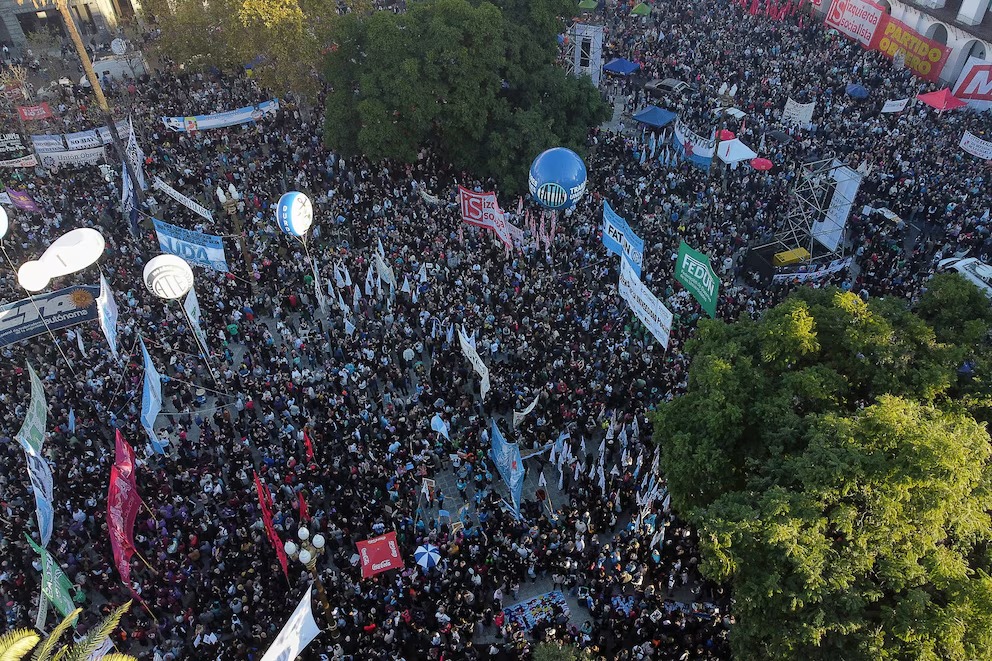
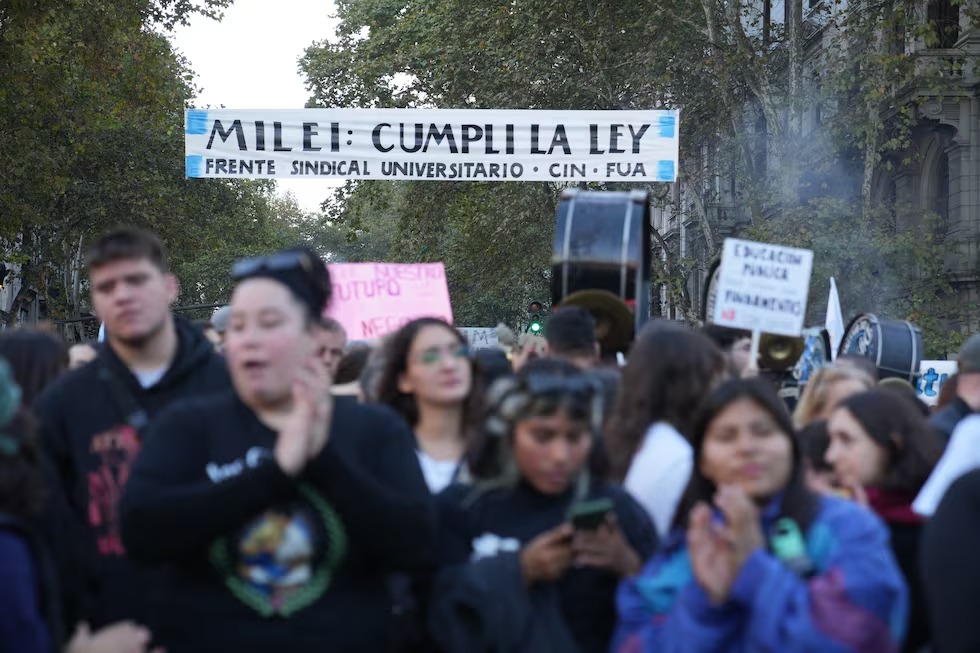
The Argentine university community carried out this Tuesday (12) one of the biggest mobilizations against Javier Milei’s government since the beginning of his mandate.
Events in Buenos Aires, Córdoba, Rosario, La Plata and several other cities in the country brought together around 1.5 million people to denounce the defunding of public universities, the deterioration of teachers’ salaries and the non-compliance, by Casa Rosada, with the University Financing Law approved by the Argentine Congress.
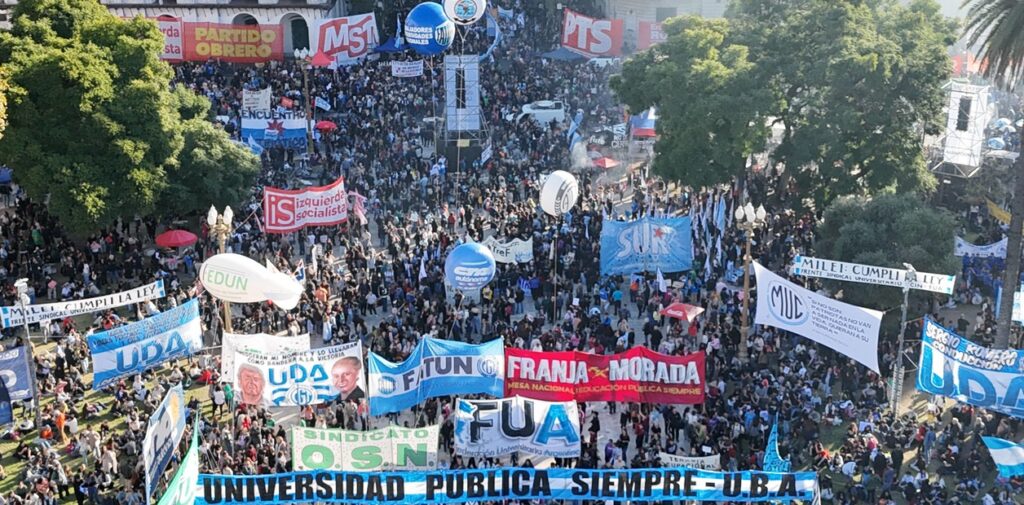
From the historic Plaza de Mayo to the main university cities in the Argentine interior, students, professors, technical-administrative workers, researchers and rectors transformed the fourth Federal University March into a broad national protest against Milei’s adjustment policy.
The central axis of the demonstrations was the accusation that the ultra-liberal government has been ignoring legislation for more than 200 days that guarantees minimum resources for the operation of public universities, deepening a crisis that already threatens salaries, research, infrastructure works and even the permanence of teachers in the institutions.
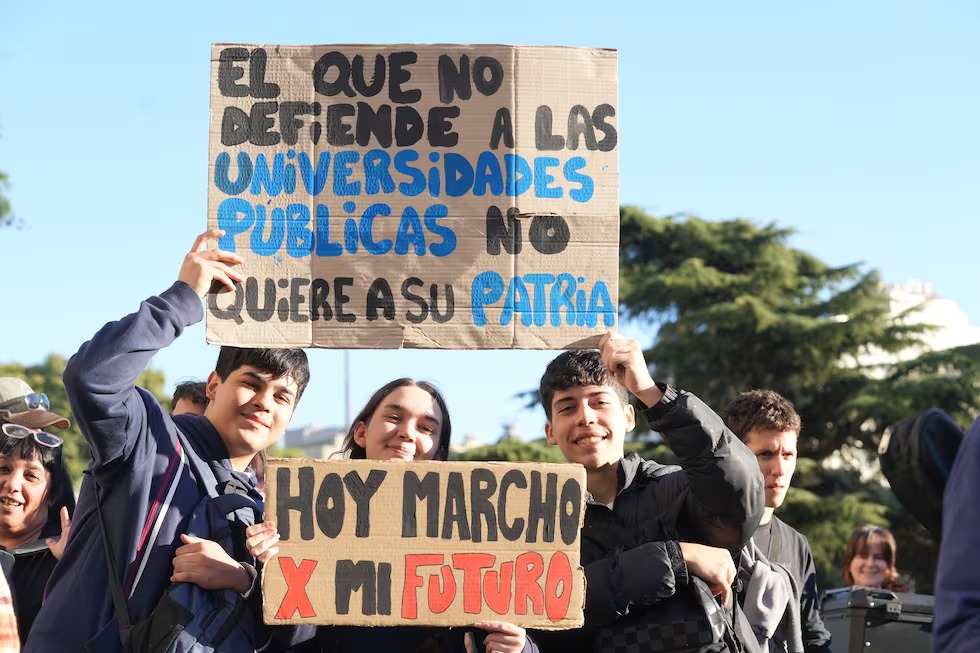
The march also incorporated criticism of what organizers called the “rupture of the democratic pact”.
In a joint document read during the central act, university entities stated that the government ignores Legislative decisions and disrespects court sentences that require the application of the law.
“When the government decides which laws to comply with and which court decisions to follow, what breaks is not just the university budget, but the Rule of Law itself,” stated the organizers.
The mobilization brought together everything from teaching unions and student organizations to university rectors and provincial governors.
Leaders linked to the National Interuniversity Council (CIN), the Argentine University Federation (FUA) and the country’s main teaching federations participated. The governor of the province of Buenos Aires, Axel Kicillof, was present in one of the columns of the march and declared that “the defense of the public university is a fight for the entire Argentine people”.
Universities denounce budget collapse and historic salary losses
University entities claim that the public higher education system is in a “critical” situation as a result of the fiscal adjustment promoted by the Milei government.
Data presented by the organizers indicate that federal transfers to universities suffered an accumulated real drop of 45.6% between 2023 and 2026.
In addition to the budget reduction, teachers and technical-administrative workers report a sharp deterioration in salaries.
According to the unions, teaching and non-teaching staff have lost around 37% of their purchasing power since the beginning of the Milei government, equivalent to almost 11 salaries over the period.
The entities claim that current salaries are among the lowest since the return of Argentine democracy.
During the march, workers reported that they had to work more than one job to make ends meet for the month.
In interviews with the Argentine press, professors stated that low salaries have caused mass resignations within universities and directly affected the quality of teaching.
An assistant professor at the University of Buenos Aires (UBA) reported to the newspaper Page 12 receive around 211 thousand pesos for a ten-hour weekly workload — the equivalent of around R$740 in an Argentina still experiencing inflation and rising costs of living.
The crisis also affects strategic areas of scientific and technological research. Deans warned that the combination of budget cuts, outdated salaries and the stoppage of infrastructure works threatens to dismantle an important part of the Argentine university system, historically recognized in Latin America for its free tuition and strong public presence.
Government tries to delegitimize protests and increases confrontation with universities
Hours before the demonstration, members of the Argentine government tried to discredit the protests on social media and in press interviews.
Undersecretary for University Policies, Alejandro Álvarez, called the march an “emotional lie” and accused universities of manipulating funding data. The old tactic of attacking the messenger, not the message.
The government also once again attacked the presence of foreign students in public universities, especially in Medicine courses.
Álvarez stated that foreigners would represent around 40% of UBA medical students and more than half at the University of La Plata.
However, official data from the Argentine Ministry of Education indicate that foreign students represent only 4.1% of the total number enrolled in the country’s university system.
Another argument used by the government was the supposed “high cost” per student trained at national universities.
Researchers and academic entities refuted the far-right narrative. Conicet researcher Rodrigo Quiroga stated that the Argentine university system continues to be “efficient and cheap” compared to countries in the Organization for Economic Cooperation and Development (OECD).
While criticizing universities, the Milei government also announced a new cut of more than 5 billion pesos in educational infrastructure works — around R$18 million at current exchange rates — within a general adjustment of more than 78 billion pesos in the Education sector, equivalent to approximately R$275 million
March reinforces Milei’s political wear and tear and increases opposition unity
The new Federal University March takes place at a time of increasing political wear and tear on the Argentine government, which is already facing criticism for the economic recession, high inflation and the deterioration of social conditions in the country.
Since last year, the public university has become one of the main centers of resistance to the austerity policies implemented by Casa Rosada.
During the event, union leaders and students stated that the defense of public universities goes beyond the academic environment and has become a national cause. “Messaging the dreams of thousands is very heavy,” declared the president of the Argentine University Federation (FUA), Joaquín Carvalho, while speaking in front of a packed Plaza de Mayo.
The demonstration also had support from sectors of the Peronist opposition and social movements.
Deputy Máximo Kirchner criticized the sectors that “celebrated the beginning of Milei” and now demonstrate “a cynical concern for public education”.
Former minister and former presidential candidate Sergio Massa stated on social media that “the country we dream of is built with more education and more science”.
At the end of the mobilization, university representatives promised to maintain pressure on the streets if the government continues to refuse to apply the University Financing Law.
For the organizers, the Milei government’s objective is to financially asphyxiate public universities until they cause their gradual emptying.
Source: vermelho.org.br