Published 10/17/2025 16:30 | Edited 10/17/2025 17:20
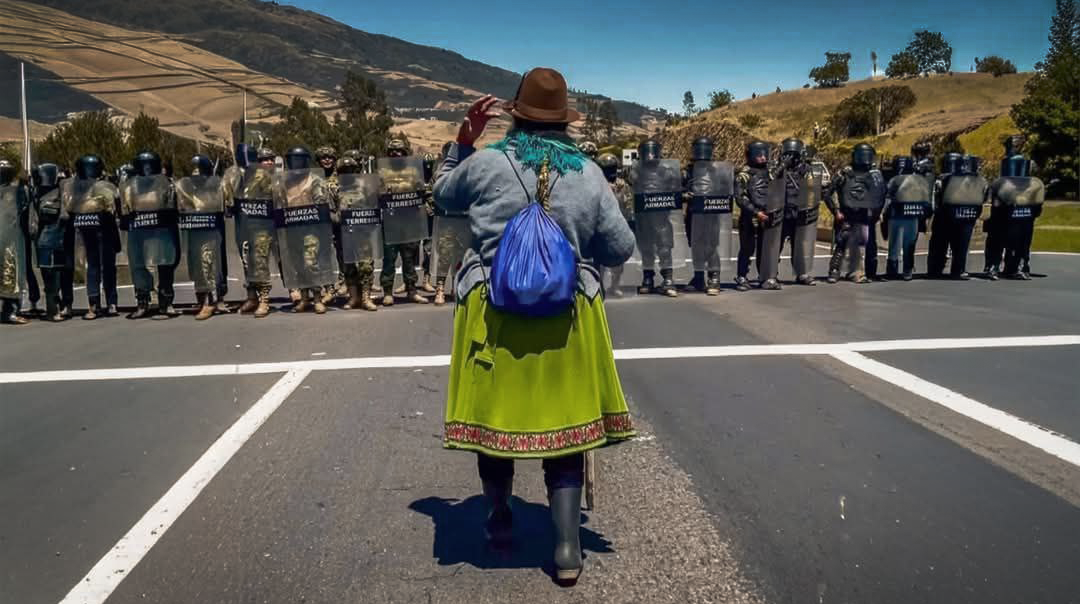
Two days after the announcement of an agreement between the government of Ecuador and indigenous leaders in the province of Imbabura, roads in the region remain blocked with mounds of dirt and groups of protesters. According to the Integrated Security System (ECU 911), 12 roads remain closed — especially on the Pan-American highway E-35, the main connection axis for the north of the country — after 27 days of national shutdown.
The demonstrations, called by the Confederation of Indigenous Nationalities of Ecuador (Conaie), began as a protest against the end of the diesel subsidy, decreed by President Daniel Noboa, but soon expanded. The new agendas include the reduction of VAT from 15% to 12%, the rejection of the referendum and popular consultation scheduled for November 16th and the release of protesters arrested in the first days of the strike.
Noboa’s government seeks a popular consultation to convene a Constituent Assembly and draft a new Constitution suited to the needs of its neoliberal government.
Indigenous assembly maintains mobilization in Imbabura
In Otavalo, the epicenter of the protests, local leaders held a large community assembly this Friday (17) to discuss the movement’s next steps. The participants decided not to accept the partial truce signed between some representatives and the government, maintaining the blockades as a form of pressure.
“Let the strike continue. It is a call for dialogue and the unity of the people”, declared Santiago Castro, indigenous leader of Otavalo, during the meeting, which was attended by Mayor Anabel Hermosa, mediator between the communities and the Executive.
Mobilizations spread across several provinces
The demonstrations spread to other regions. In Sucumbíos, indigenous communities marched through the streets of Lago Agrio demanding the release of Gregorio, a member of the Kichwa ethnic group arrested during the protests. Before the march, participants performed an ancestral ceremony, symbolizing the defense of “life and territory”.
In Cuenca, University students blocked Avenida Loja, and in the province of Loja, the Kichwa Saraguro People maintained blockades on the road that connects the city to Cuenca. Governor Alexandra Jara arrived at the scene, but the protesters demanded the presence of President Noboa himself.
“We are here for the needs of our people,” said a representative of the Interprovincial Federation of Saraguros Indigenous People.
Noboa reaffirms “tough measures” and says the government is “strong”
As tensions persisted, President Daniel Noboa attended an event in Los Ríos, where he handed over property titles and agricultural credits. In his speech, Noboa defended the economic measures, stating that cutting subsidies is “necessary” to stabilize public accounts.
“We had to do what five previous governments were unable to do,” he stated, referring to the end of the diesel subsidy. According to him, the country resisted “attacks by organized crime and the opposition”, but the Executive “remains firm”. Indigenous leaders also criticize the government’s criminalization of the movement.
Since January 2024, with the so-called “internal armed conflict” that Daniel Noboa’s government declared through decree 111, the country has embarked on a tortuous path. The direction adopted combines a policy of militarization of security with growing authoritarianism that has resulted in serious violations of human rights and increased inequality.
In 2019, Lenin Moreno’s government and, in 2022, Guillermo Lasso’s government have already tried to eliminate the diesel subsidy; however, on both occasions, strong protests forced both governments to back down on the measure.
Noboa implemented a policy of controlling the protest with state of emergency decrees in seven provinces, the militarization of the streets, the blocking of bank accounts of organizations and social, indigenous, environmental and human rights leaders, and the judicialization of the protest with the use of crimes such as “terrorism”.
Terrorism arrests and charges
The government also faces criticism for its police response. Twelve protesters arrested in Otavalo — accused of setting fire to a police headquarters — remain detained on terrorism charges. Conaie denounces judicial abuse and claims that infiltrators were responsible for the attacks.
On Friday (17), an appeal hearing was held in Quito, but there was no immediate decision.
Noboa’s political and economic dilemma
The new mobilizations place President Daniel Noboa facing one of the biggest tests of his government. Since announcing the end of diesel subsidies, a measure that makes transport more expensive and directly affects food prices, Noboa has faced simultaneous pressure: on the one hand, the IMF and the business community, who defend fiscal adjustment; on the other, the indigenous movement and popular sectors, which denounce the social impact of economic policy.
The return of indigenous strikes, two years after the truce that ended the 2022 protests, reopens a historic wound in Ecuadorian politics. Since the 1990s, indigenous communities have been the main street counterweight to neoliberal governments, being decisive in the fall of presidents such as Jamil Mahuad (2000) and Lucio Gutiérrez (2005).
“The government underestimated Conaie’s mobilization capacity and believed that the agreement would be enough to contain dissatisfaction”, assesses Ecuadorian sociologist Fernando Guerrero, heard by the Primicias.ec.
In addition to political tensions, the impasse threatens to paralyze the economy of key provinces and erode the international image of Noboa, who had been trying to project himself as a reformist and pro-market leader.
An impasse that exposes the country’s social abyss
The extension of the blockades shows that, despite dialogue efforts, Ecuador remains divided between the discourse of economic modernization and the reality of rural poverty.
While Noboa seeks credibility with investors and international organizations, a large part of the population — especially indigenous and peasant farmers — remains excluded from the promises of growth.
The persistence of mobilizations in Imbabura and other provinces indicates that the crisis goes beyond the diesel issue: it is a dispute over the State model, who it serves and who pays the price of the adjustments.
Source: vermelho.org.br