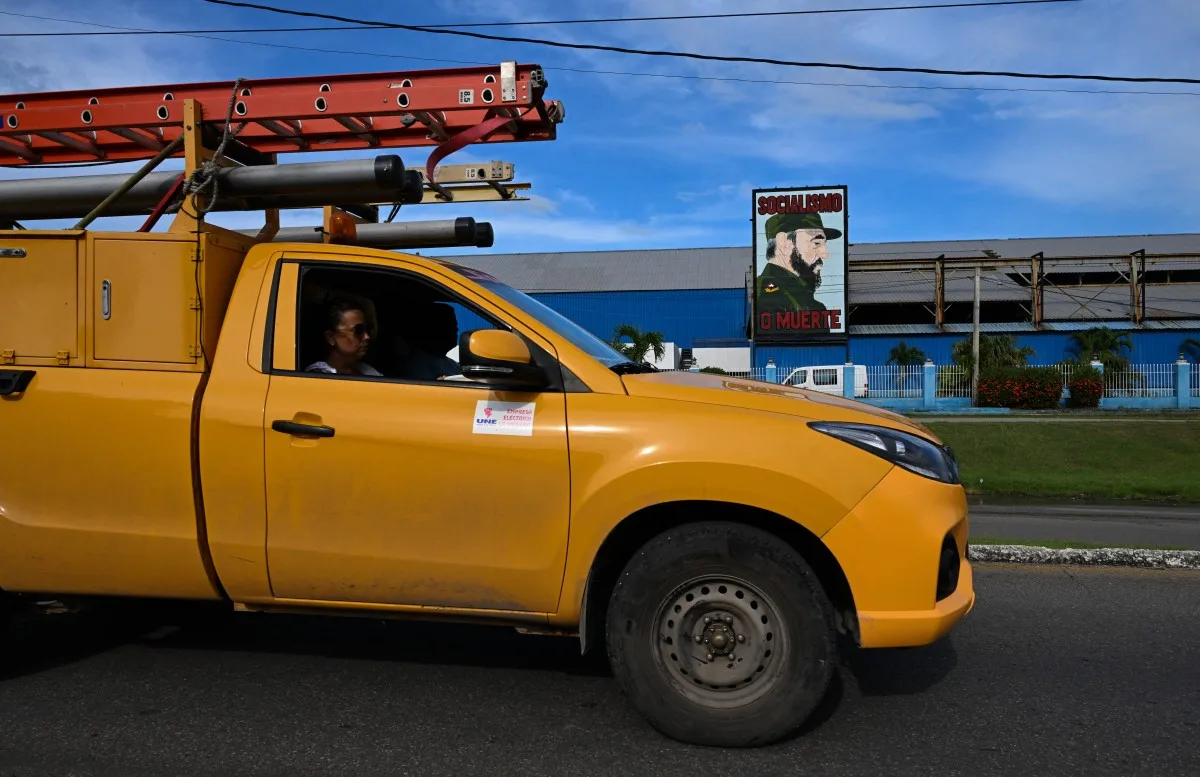
Cuban Foreign Minister Bruno Rodríguez criticized the United States by stating that the unilateral coercive measures applied by the US government against the island seek not only to “attack” state entities, but also the nascent Cuban private sector.
In a message published on social media, Rodríguez stated that “both the public sector and the private sector are being openly attacked, the one that some US officials say they want to help develop”, in reference to the new measures announced this Tuesday (29) by Washington.
Among the new provisions, which further tighten the blockade, the Office of Foreign Assets Control (OFAC), an agency of the United States Department of the Treasury, eliminated the general authorization that allowed American citizens to organize or participate in professional meetings and conferences in Cuba. The measure further restricts scientific, artistic and educational exchanges between the two countries.
The new measures also affect the Cuban private sector. Washington revoked the authorization that allowed US banks to open and maintain accounts in the name of Cuban “independent entrepreneurs” to carry out authorized operations, including those known as “U-Turn” transactions.
The measure changes the authorization approved in May 2024, when Joe Biden’s government allowed certain Cuban private businesspeople to open and maintain accounts in US banks to carry out operations linked to authorized activities. At the time, Washington had presented the measure as a way to facilitate the development of the island’s private sector. Now, Donald Trump’s government revokes this specific authorization, despite its rhetoric stating that it seeks to protect the private sector in Cuba.
According to the alert published by OFAC, banks that already maintain accounts for these people must block both the accounts and the funds and report them to this office.
“With these new blocking measures, the aim is to hinder the process of ongoing economic transformations”, stated the chancellor, in reference to the package of 176 economic and social reforms that the government has put in place and which seeks to increase the participation of the private sector in the island’s economy.
Rodríguez also recalled that, “less than 24 hours ago”, the US Secretary of State had stated that “Cuba has already fallen”. Faced with this statement, the chancellor quipped: “It turns out that now we need to apply additional measures.”
The new measures add to other decisions adopted by Washington throughout this year. On January 29, Trump signed an executive order that declared a “national emergency” in light of the supposed “unusual and extraordinary threat” that, according to the White House, Cuba poses to the security of the United States and the region.
Source: www.brasildefato.com.br