The advance of neoliberalism redefines the political scenario in Latin America. Currently, countries such as Argentina, Colombia, Honduras and Chile face far-right administrations that impose harsh attacks on the working class, such as the relaxation of labor standards and the reduction of budgets for social areas.
Voices of organized youth from these territories report how popular resistance is articulated against social setbacks.
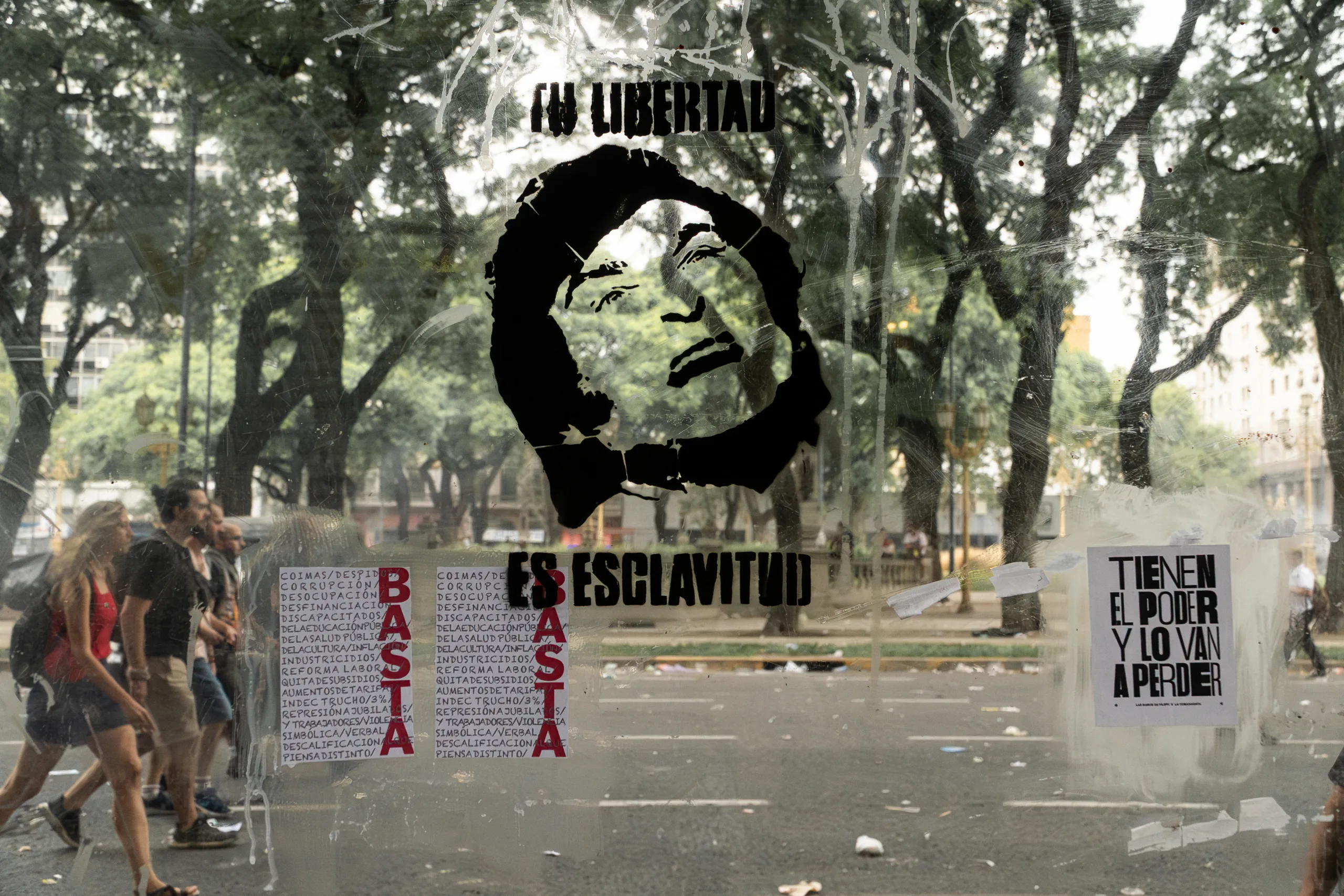
Valentina Cabrera is a member of the student movement in Argentina, governed by the far-right president Javier Milei, where, in recent years, the cut in subsidies, mass layoffs and the freezing of salaries, in the face of inflation levels above 33%, have increased poverty levels in the country.
“The government of Javier Milei, a government of systematic, systematic cruelty towards the working people. His mandate began, a prioriassigning himself extraordinary powers to repeal laws left and right that had to do with the rights of our people, eliminating the Ministry of the Environment, eliminating the Ministry of Women and Diversities, demonstrating in Davos against women, diversity and racialized bodies, with strong racism and misogyny against all our people”, says the young Argentine activist.
“It is necessary to demonstrate to the whole world, to Brazilians, but also to the whole world, that Milei’s model concretely fails. It is a model of economic failure, not only because it does not distribute wealth, but also because it hands over our land, our salary, our bodies concretely over to foreign capital, to the predatory international market”, analyzes Cabrera.
In Colombian territory, the rise to the presidency of Abelardo de la Espriella, a name with no history in public management, but associated with violent armed groups, raised the alarm among student organizations. For young Karen Arteaga, a member of the Congreso de los Pueblos, the challenge now is to resume the popular struggle after a period of progressive advances.
“We are really worried about the new government, led by Abelardo de la Espriella. He is a person who has no track record in politics, he has never held a political position in Colombia. And he is also a person who, within his background, had a great role in supporting paramilitarism, defending different armed groups and, in particular, defending people involved in drug trafficking and the victimization of women”, argues Arteaga.
“We realized that this entire trajectory that we had already been strengthening during the period of the left [de Gustavo Petro] it should lead us to mobilize again, to defend human rights again, to reestablish the dialogues, debates and critical thinking that really generate opposition to this government”, he adds.
The reactionary wave also reaches Central America. In Honduran territory, the recently inaugurated president, Nasry Asfura, suspended public health works and approved a new law that allows the confiscation of land that had been occupied by peasants, worsening conflicts and benefiting large companies in the agricultural sector, as explained by Sinia Rápalo, from the Lorenzo Zelaya Revolutionary Student Movement.
“In the year 2026, Nasry Asfura, better known as Tito Asfura, took office as president, who is a right-wing person who, instead of moving forward, is moving our country backwards. For example: work on the seven hospitals that were being built has been halted, peasants’ lands are being confiscated, among other things that show that, apparently, in these four years it will be even worse. Because it has only been a few months since he took office and we are already seeing the great negative impact that this new government has on our country”, says the Honduran activist.
Further south of the continent, the ultra-conservative Chilean administration of José Antonio Kast resorts to forceful measures to persecute popular movements, while granting tax exemptions to large foreign capital, according to Camila Jara, a young activist of the Mapuche people.
“In Chile, there are important setbacks in relation to the rights that we had previously achieved. There is also a criminalization of popular organization. Currently, there is a bill called the State Security Law, through which the Executive Branch, arbitrarily, can inspect your cell phone, prohibit you from meeting certain people, initiate an investigation against you and arrest you”, says the young woman.
“We also view with concern this mega-reform that we, in the social movements, call the mega-reform of the super-rich, in which the taxes of large international corporations are reduced”, says Jara.
Alert to Brazilians
With Brazil in the middle of the presidential race, young Latin American women are warning of the dangers of manipulation campaigns and electronic sabotage, calling on the working class to vote in droves.
For Colombian Karen Arteaga, the real trench against fascism is built on grassroots work in the territories, far from the illusions created by technologies at the service of capital, such as social networks and artificial intelligence.
“One of the things that played a very important role in our elections was the use of artificial intelligence. This generated a media show that undermined the capabilities that our left-wing government had to dialogue with the people, publishing a lot of fake news and opposing positions to make people fight among themselves”, assesses Arteaga.
“My fundamental message at this moment is that we demand unity and, above all, the union of collective interests, and not private interests or that apparent economic growth, which in reality works as a facilitation for all extractivism in its territory and, mainly, for the Yankee invasion”, adds the Colombian.
Chilean Camila Jara warns that no popular right is permanent or offered for free by the elites, requiring permanent mobilization against reactionary agendas that attack female dignity.
“The advice I could give is that we think that the rights we currently have were never given as a gift; they were always won by fighting in the streets, giving the lives of our comrades and companions. The extreme right is dangerous”, says the young Mapuche.
“My advice, in principle, is to continue organizing and, if not, start organizing, because the base of popular governments must also be in the organized community, which is also the key to carrying out processes that dignify our people. And, secondly, social networks and the super-information policy that they encourage us to pursue all the time are not real life”, recommends Cabrera.
“A piece of advice for all young people: they want to make us believe not only that we are defeated, but that we can’t do anything. Yes, it is possible to generate other processes, despite the circumstances being as adverse as they are now”, he adds.
Source: www.brasildefato.com.br