The unilateral coercive measures — the blockade — imposed by the United States government constitute a massive and multifaceted violation of the human rights of the Cuban people. This is what the report prepared by Belarusian jurist Alena Douhan, a specialist in international law, and supported this Wednesday (9) by the UN Human Rights Council, in Geneva, determines.
The document was prepared based on a field visit to Cuba carried out at the end of 2025 and details how unilateral sanctions against the island, the inclusion of Cuba by the White House on the list of “States Sponsors of Terrorism” and the energy siege cause a deterioration of basic human rights, such as health, food, energy and development.
During the Interactive Dialogue, an exchange between delegations, Cuba’s permanent representative to the United Nations Office in Geneva, Rodolfo Benítez Verson, stated that “the perverse and deliberate purpose of the United States is to cause extreme shortages and total asphyxiation to Cuban families” and declared that the report “unmasks the liar”, in reference to the United States’ position of denying the existence of a blockade.
“There can be no greater cynicism than suffocating a people and blaming others. The Rapporteur’s report proves that the United States lies when it intends to hold Cuba responsible for the consequences of its cruel acts”, he stated.
Likewise, he highlighted the rapporteur’s assessment that, despite Cuba’s efforts to protect the population, the actions of the United States are of such magnitude and persistence that they cause shortages of essential goods and services in Cuban homes. As she explained, the rapporteur’s legal analysis refutes Washington’s assertion that its policy towards Cuba is legal and demonstrates that the blockade violates international law and invades the sovereignty and jurisdiction of other States.
“The architects of this policy of genocide and collective punishment celebrate as successes the agony of a Cuban mother who loses a child due to lack of medicine. They rejoice in the prolonged electricity cuts and the difficulties in supplying water and other basic services”, he stated.
In line with the complaints that Havana has been presenting, Benítez Verson stated that the United States policy constitutes “genocide and collective punishment” and recalled that the so-called “secondary sanctions” — imposed against third countries — prevented more than 7 thousand containers with food and medicine from entering Cuba.
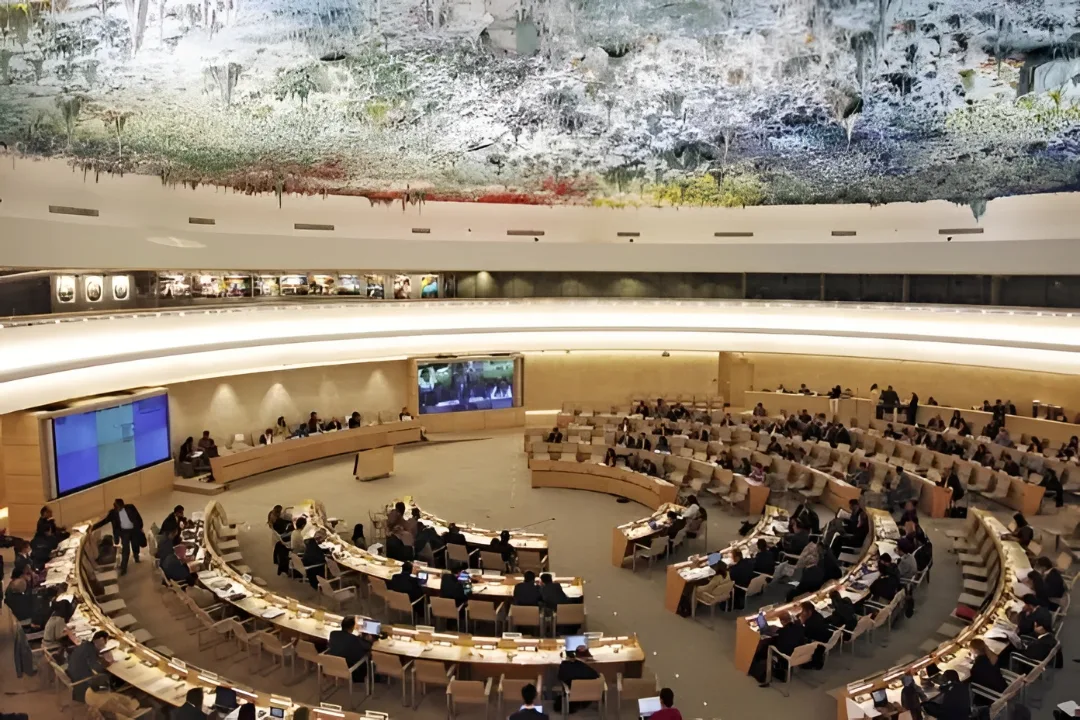
UN Human Rights Council
The debate was received in Havana as a new diplomatic victory. Through social media, Chancellor Bruno Rodríguez stated that “no nation defended the criminal conduct of the United States” and that the international community “raised its voice in a forceful way to demand the end of the blockade”.
Responsible for strengthening the promotion and protection of human rights around the world, the UN Human Rights Council (HRC) is the main intergovernmental body within the United Nations system. The Council is made up of 47 UN member states, elected directly by the General Assembly by secret vote and by absolute majority.
The Special Rapporteur’s report explicitly demands an immediate end to the energy and economic siege, urging both the United States and the international community to adopt concrete measures to end the blockade. It also demands the removal of Cuba from the list of State Sponsors of Terrorism, which seriously hampers the island’s access to the international financial system.
Furthermore, it calls for the revocation of extraterritorial and secondary sanctions that affect third countries, companies and banks that maintain commercial relations with Cuba, as well as the guarantee of the supply of food, medicine, fuel and technology through effective humanitarian exemptions that make it possible to overcome excessive banking rigor.
The Special Rapporteur also urges the abandonment of the policy of unilateral pressure and the move towards a bilateral dialogue based on international law, multilateralism and cooperation. Its recommendations thus point to the reversal of measures that, according to the report, worsen the Cuban people’s difficulties in accessing essential goods and services.
Source: www.brasildefato.com.br