Since Donald Trump returned to power, in 2025, in the United States, a familiar fear has hovered over Latin America: that Washington will once again become convinced that Latin countries are nothing more than a kind of US extension, and that practically any intervention would be justified in the eyes of the US.
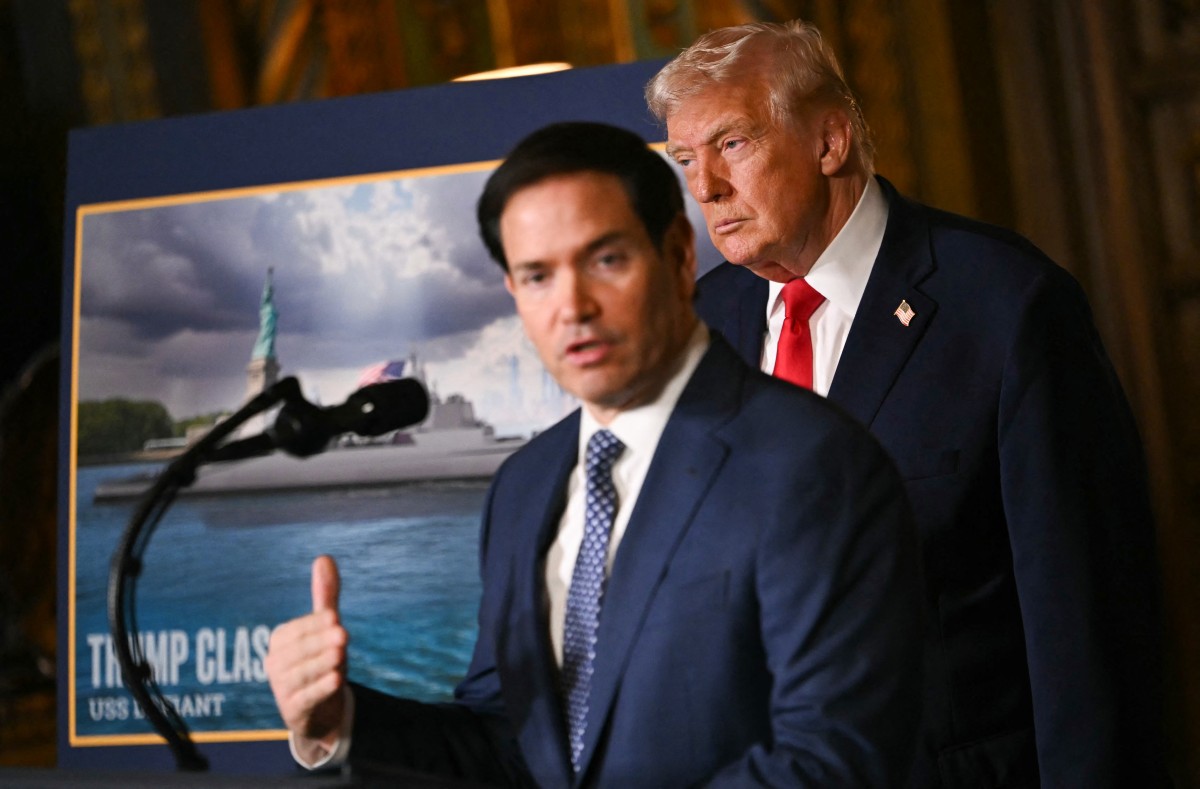
Understanding what the United States of Trump and Marco Rubio, his Secretary of State, want for Latin America is especially complex, both due to the structural and conceptual transformations of the current international order, with the USA in open descent, and due to Trump’s own personality. If the Republican’s first term (2017-2021) may have served as a rehearsal, the second, so far, has been the very confirmation, in the eyes of the main global leaders, of how Trump is accustomed to a way of exercising power more marked by intimidation and explicit threats than by leadership, influence and traditional diplomacy. Including against Brazil.
In conversation with the Brazil in factProfessor Ana Carolina Marson, PhD in International Relations from the University of São Paulo (USP), explains that, in the geopolitical game, there are two divergent forces. On the one hand, the American desire to impose itself. On the other, the stance of the Luiz Inácio Lula da Silva (PT) government of not accepting any violation of Brazilian sovereignty, whose integrity contributes to Brazilian actions in the international system being seen with legitimacy.
This is the case of the classification of criminal organizations, such as the Primeiro Comando da Capital (PCC) and the Comando Vermelho (CV). The Lula government defends coordinated actions to combat the groups’ activities, but the US wants to go a step further: they classify the groups as terrorists, in a rhetorical maneuver that opens the door for US forces to act directly against the organizations, which puts national sovereignty at risk.
“One of the main elements in the reissue of this strategy has been, on the one hand, using the concept of narcoterrorism as one of the main axes of action by the United States in the region. Secondly, having a more coercive stance towards recalcitrant states that refuse to cooperate with the United States, whether in the area of security policy or in other areas. Including, the United States itself National Security Strategy is very emphatic in saying that states that do not cooperate with the United States will suffer consequences”, he says, when Brazil in factprofessor João Estevam dos Santos Filho, from Anhembi Morumbi University and researcher at INCT-INEU.
For him, Washington’s actions follow the strategy of creating a regional framework for Brazil and involve aspects such as the regulation of media platforms big techs by the Brazilian Judiciary, the encouragement of international far-right networks and the interference in the electoral process itself.
Brazil resists: it refused to join the Shield of the Americas and to treat organized crime factions as terrorist groups, in addition to maintaining cooperation with China and Russia, which the US strategy sees as “enemies and intruders in the Western Hemisphere”, according to Estevam.
Why does the US act as it does? Uncertainty as a rule of conduct
The United States knows very well what it is like to make other nations give in. Throughout history, these achievements, depending on whether they were made by Republicans or Democrats, may differ in method, but the ends are generally the same. In the case of Trump, the diplomatic veneer seems to be a thing of the past, and the notion that “I command, I can” is not hidden.
“Trump is a person who likes to negotiate based on a relationship of inequality, which is not negotiation, because the very concept of negotiation indicates giving something up. Instead of negotiating, what Trump really wants is to point out what he wants and be met”, explains professor Ana Carolina Marson.
A major example of this practice, in the Brazilian case, has to do with tariffs. There was no small mobilization of the Brazilian diplomatic corps, as well as part of the country’s productive sector, in order to convince Washington of something elementary: that the USA does not have a deficit in trade with Brazil and that, if the balance of trade is indeed the guiding principle for import tariffs, Brazil should not be harmed. With back and forth, the argument practically did not prosper. Last month, Washington confirmed two new tariffs on Brazilian products, resulting in a total rate of 37.5%. After going to Washington and trying to negotiate through all diplomatic channels since last year, Lula decided to retaliate.
The fundamental difference is that Brazil and the United States have different views on commercial partnerships. For Brazil, China is the main source of trade whose business flow reached US$ 113.99 billion from January to July this year, with a surplus (for the Brazilian side) of US$ 24.06 billion. Furthermore, Brazil has been the main destination for Chinese investments, according to a survey published at the beginning of the year by the Brazil-China Business Council (CEBC). Also consider the many partnerships within the BRICS framework and the shared infrastructure projects.
As for Washington, China is no less than the greatest threat to American prosperity in the 21st century, according to a diagnosis made by Rubio, a regular critic of Beijing, just days before assuming the main chair of US diplomacy. “If we don’t change course, we will live in a world where much of what is important to us every day, from our safety to our health, will depend on whether the Chinese allow us to have it or not,” he said.
There, the idea that the new Trump administration would have its number one mission to contain China was already clear. Something, admittedly, has already been done by democratic governments. It is worth remembering that former president Joe Biden was the first in years not to visit Beijing. But taken to another level by Trump 2. The logic may seem precarious, but it prevails: China, for Washington, must distance itself from Latin America and, in particular, Brazil.
As for Latin America, Trump himself echoes the thesis that countries in the region must (if necessary, by force) be guided by Washington’s baton. A few days ago, the official profile of the Republican government published a video on social media in which it defends the idea that “the dominance of the Americas will never be questioned again”.
That the United States for a long time applied a strategic orientation known as the Monroe Doctrine, which functioned as a kind of message to European powers about the size of American influence over Latin countries, is no surprise. Nor that Washington was mainly responsible for encouraging the right-wing military coups carried out in the second half of the 20th century, under the explicit argument that it really wanted to contain the desires of the former Soviet Union. Now, the potential “enemy” (as the US calls it) is China, which is continually consolidating itself as the main trading partner of several countries in the region, including Brazil.
Brazil functions as the king in this chess game. It is the richest country in Latin America and the one that has high-value mineral resources in the context of the technological dispute between Washington and Beijing. There is also a determining political component: the Lula (PT) government, unlike the governments of leaders such as Javier Milei (Argentina), Abelardo de la Espriella (Colombia), Santiago Peña (Paraguay) and others, is far from acting as a kind of first-order subsidiary of the United States.
If these reasons are enough for Brazil to be a preferential target, the imbroglio gains even more strength due to the fact that the main opposition candidate to the PT member, senator Flávio Bolsonaro (PL), has already shown every sign that, if elected, he will be ready to act in the best American taste, even if national sovereignty remains in the background.
2026 elections: whoever decides is out?
This year’s presidential election, already underway, has been treated as the most important event in this geopolitical tangle for some time. Formally, the US says it will respect whichever candidate wins, but support for Flávio Bolsonaro’s political platform is more than known.
On this topic, doubts prevail over certainties. What would be the real capacity of the USA to directly influence the Brazilian election? Would all this load of tension be enough, in the end, to condition the vote of the Brazilian electorate? The answers, whatever they may be, are provisional.
So far, some of the main polls of voting intentions show that Trump, in a rush, has served as a kind of symbolic electoral cable for Lula. According to a Quaest survey released in June, 47% of those interviewed agreed with Lula when the PT member said that the son of former president Jair Bolsonaro (PL) acted to have Brazil taxed by the US, while 35% agree with the senator’s view, who has said that he asked Trump not to apply new tariffs on Brazilian products.
However, as time passes, the effects of Lula’s response to the trade war imposed by Trump diminish on the electorate. In early August, AtlasIntel/Bloomberg showed that 49.2% of voters do not see a threat to national sovereignty due to tariffs, while 47.7% do. Furthermore, 43% of voters poorly evaluate Lula’s response to Trump’s actions, compared to 36% recorded in May by the same institute.
Professor Ana Carolina Marson recalls that “there is still this notion in the popular imagination that the United States is the leader of the free world, which has never been true”. As the Brazilian vote has been quite crystallized in recent years, there may be a tendency for undecided voters and those who intend to vote blank/null to end up deciding this year’s election. They are, according to Marson, the most sensitive to the deterioration of the relationship with the USA. Lula, in fact, incorporated the conflict into the campaign, calling Rubio a “frustrated Latin American”. For the teacher, the risk of this strategy is the damage to the image of the PT pre-candidate.
For João Estevam, the pendulum in the Brazil-USA relationship is important in the public debate, but it will hardly be decisive in this year’s elections. “I understand that it is a secondary factor, that it may have a certain weight for some vectors, some niches of the Brazilian electorate. It is possible that it is a concern on the part of some niche, particularly those that are more conservative or that work in the area of Brazil-US relations, with trade, investment and finance”, asserts Estevam.
Faced with an election that is likely to be decided by a narrow margin of votes, in addition to the fact that Washington’s decisions, in the geopolitical field, are not usually preceded by warnings, uncertainty must remain. This doubt also points to the medium term: what could Trump’s relationship with the next Brazilian government be like, be it Lula, Flávio Bolsonaro or another candidate? It is also of no small importance that Trump himself will be involved, in this second half of the year, in the mid-term elections in the USA, which could make his government lose its majority in at least one of the Houses of the Legislature. Taking all this into account, predictability in relation to the USA should take time to become a reality again.
Source: www.brasildefato.com.br