Published 06/07/2026 16:48 | Edited 06/07/2026 16:49
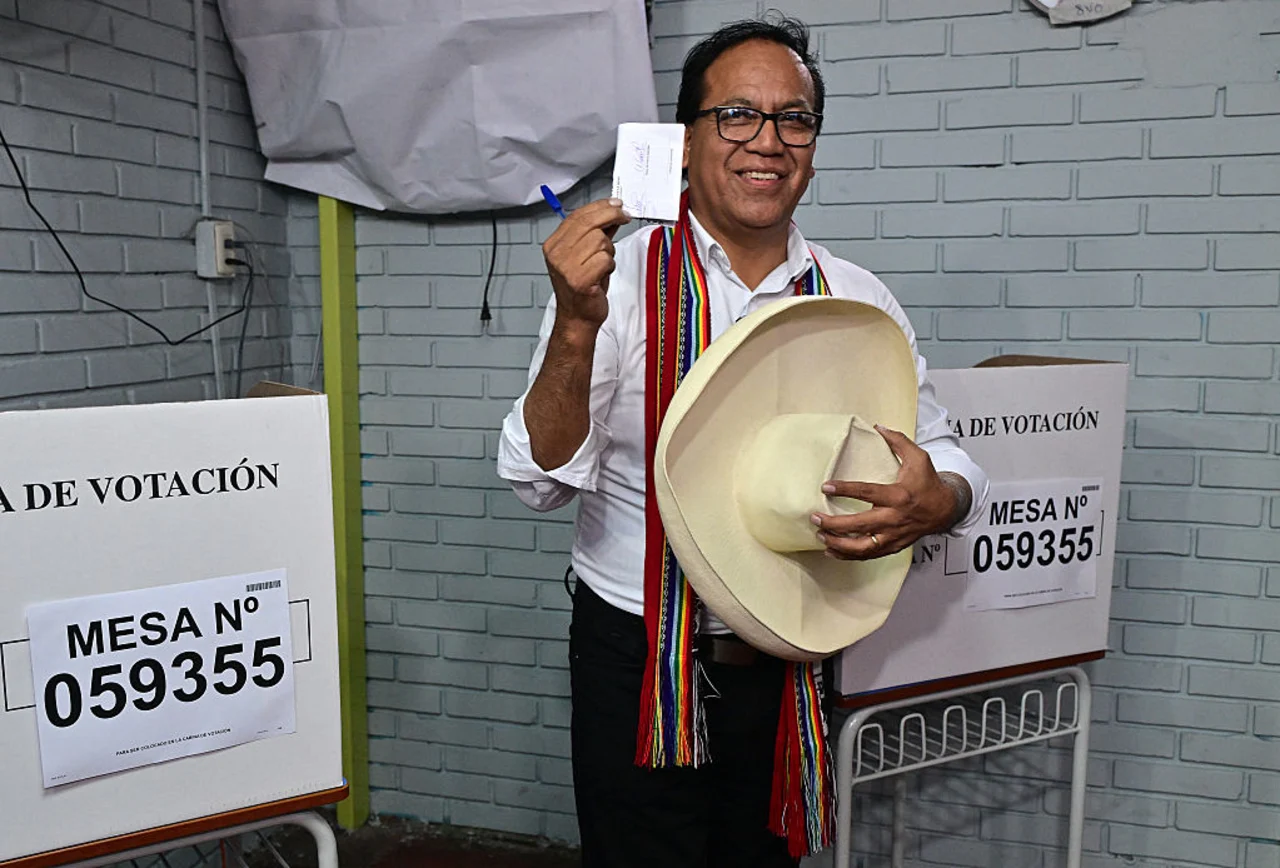
Peruvians went to the polls this Sunday (7) to choose their ninth president in just ten years, ending a campaign marked by polarization and the deep institutional crisis that has been going through the country since 2016. The dispute pits conservative leader Keiko Fujimori and left-wing candidate Roberto Sánchez Palomino face to face, in a confrontation that goes beyond the simple alternation of governments and takes on historic contours.
Daughter of former dictator Alberto Fujimori, Keiko represents the continuity of a political current that has profoundly marked Peru’s recent history. Although she inherits a consolidated electoral base, she also bears the brunt of allegations of human rights violations associated with her father’s government, including cases of forced sterilization of indigenous women, political repression and concentration of power.
On the other side, Roberto Sánchez emerges as a representative of popular, rural and indigenous sectors seeking structural reforms and a review of the political model consolidated during the Fujimori period. His candidacy recovers part of the agenda defended by former president Pedro Castillo and symbolizes the resistance of broad segments of society to the return of Fujimorism to the Government Palace.
Outlook for Sunday
According to polls released in the days leading up to the second round, the presidential race in Peru was practically tied between the right-wing Keiko Fujimori and the left-wing Roberto Sánchez.
The most recent survey by the Ipsos institute, released on June 5, showed:
- Roberto Sánchez: 43.8%
- Keiko Fujimori: 43,2%
- Undecided, blank and invalid votes completed the rest of the electorate.
The difference was within the margin of error, configuring a technical draw.
A previous survey by the same institute, released on May 20, showed a narrow advantage for Keiko Fujimori, indicating that Sánchez had grown during the final stretch of the campaign.
Other surveys also recorded an extremely close race. An IEP survey even showed Sánchez with 50.8% against Fujimori’s 49.2% in valid votes, reinforcing the scenario of balance.
The consensus among analysts and institutes was that the election would be decided by a minimal margin, with a strong weight from the so-called anti-fujimorist vote and rural voters, traditionally more difficult to capture in polls.
In the first round, held in April, Keiko Fujimori had obtained 17.1% of the votes and Roberto Sánchez 12.0%, but the majority of the electorate was distributed among several candidates, which made support and vote transfers for the second round decisive.
In short, on the eve of this Sunday’s vote, the picture was a technical draw, with a slight upward trend for Roberto Sánchez and no safe projection about the winner.
The weight of anti-fujimorism
Analysts point out that one of the main strengths of Sánchez’s candidacy is his ability to gather the so-called anti-fujimorista vote, a phenomenon that has already been decisive in other Peruvian elections.
Over the past few decades, Fujimorism has consolidated a loyal base, but has also produced persistent rejection among broad sectors of society. This rejection has been able to unify different political currents whenever the possibility of the Fujimori family’s return to power becomes concrete.
In this sense, the 2026 election repeats a recurring dynamic in Peruvian politics: more than a dispute between left and right, it is also a choice between preserving or overcoming a political legacy that continues to divide the country.
Permanent crisis and democratic fragility
The electoral context is marked by unprecedented instability. Since the end of the Ollanta Humala government, no elected president has managed to complete his term. Resignations, dismissals, arrests and permanent confrontations between the Executive and Congress transformed the political crisis into a structural element of national life.
The Peruvian Parliament has consolidated itself as one of the country’s main centers of power, frequently imposing limits or even overthrowing elected governments. The dismissal of Pedro Castillo, in 2022, and the succession of interim governments deepened the perception of exhaustion of political institutions.
For Sánchez, an eventual victory would mean governing under intense parliamentary pressure and facing a powerful opposition. Still, its supporters see the election as an opportunity to rebuild democratic legitimacy and expand the representation of historically marginalized sectors.
Impacts for Latin America
The election result also has regional relevance. A victory for Keiko Fujimori would strengthen the Latin American conservative bloc and expand Lima’s alignment with the agenda of the United States and the continent’s right-wing governments.
A victory for Roberto Sánchez would represent a brake on the advance of the extreme right in the region and could contribute to restoring spaces for dialogue between progressive South American governments. Even though the left-wing candidate has signaled pragmatism in foreign policy, his election would be interpreted as a major setback for conservative forces seeking to expand their influence on the continent.
Roberto Sánchez: political reform and social inclusion
The left-wing candidate sought to present himself as the political heir of the popular camp that led Pedro Castillo to the Presidency in 2021. Among his main axes were:
- Call for a Constituent Assembly to replace the 1993 Constitution, drawn up during the government of Alberto Fujimori;
- Expansion of social rights, especially for workers, peasants, indigenous peoples and historically excluded sectors;
- Greater presence of the State in the economy, especially in strategic areas;
- Decentralization of development, focusing on the interior regions of the country;
- Defense of policies aimed at reducing territorial and social inequalities.
Sánchez also sought to capitalize on the feeling of rejection of Fujimorism, presenting his candidacy as an opportunity to end a political cycle that began in the 1990s.
Keiko Fujimori: stability and market
Keiko focused her campaign on themes such as:
- Economic and institutional stability;
- Defense of the market economic model implemented after the reforms of the 1990s;
- Incentives for private investment and mining;
- Combating crime and strengthening public security;
- Maintenance of the current Constitution, with occasional occasional adjustments.
Its strategy consisted of presenting itself as an alternative to the political instability that has marked recent years and as a guarantee of predictability for businesspeople and investors.
The dispute over the Constitution and democracy
Perhaps the most profound difference between the two candidates was on the constitutional issue.
For Sánchez, the 1993 Constitution is one of the pillars of the Peruvian crisis because it consolidated a political and economic model that concentrates power in the elites and limits popular participation.
Fujimori defends the preservation of the current Charter, arguing that it guaranteed economic growth and legal security for the country.
Another central theme was the assessment of Alberto Fujimori’s legacy. Keiko’s candidacy inevitably reopened the debate about authoritarianism; human rights violations; forced sterilizations of indigenous women; concentration of power in the Executive; corruption during the 1990s.
Sánchez turned this discussion into one of the axes of the campaign, associating his candidacy with the tradition of anti-fujimorism, a political force that continues to mobilize broad sectors of Peruvian society.
Foreign policy and pragmatism
Differences also appeared on the regional scene. Keiko Fujimori tends to bring Peru closer to conservative governments in Latin America and strengthen alignment with the United States.
Roberto Sánchez defends greater regional autonomy and dialogue with progressive governments, although analysts estimate that, if elected, he would adopt a pragmatic stance due to the political fragility of any Peruvian government before Congress.
A choice that goes beyond Peru
The Peruvian election has become a symbol of the disputes that cross Latin America. On the one hand, there is the project associated with the legacy of Fujimorism and the conservative forces that have gained ground in recent years. On the other, the attempt to build an alternative capable of responding to the social and institutional crisis that marked the last decade.
In a country exhausted by political instability, the dispute between Roberto Sánchez and Keiko Fujimori puts at stake not only the presidency of the Republic, but also the paths of Peruvian democracy and the future political balance of the region.
Source: vermelho.org.br