Published 06/07/2026 17:25 | Edited 06/07/2026 17:30
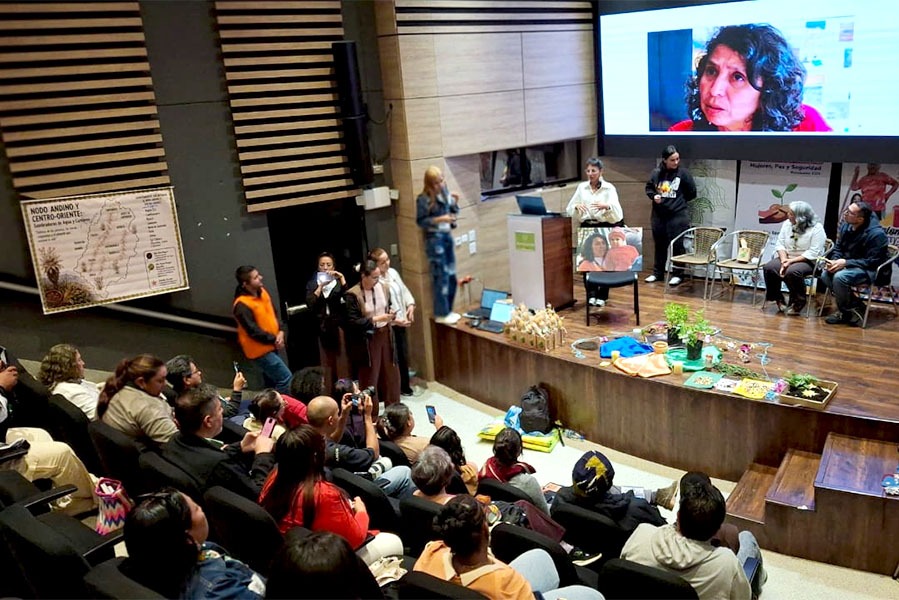
From Bogotá/Colombia: With the conviction that “the collective strength of Colombian women makes it flourish”, the II Meeting of Women Defenders of the Environment, Land and Territory concluded this Friday (5), in Bogotá, reinforcing the need to defend nature in the face of the risks and dangers of the candidacy of Abelardo de La Espriella and his chainsaw against the achievements of Gustavo Petro’s government.
Among other threats of degradation and devastation, the leaders warned, Donald Trump’s puppet proposes the rampant deforestation of the Amazon and the use of fracking – a drilling technique used to extract natural gas and oil – at “any cost”, without taking into account the environmental impact, the risks of contamination of water sources and the consequences for wildlife. The concern is even greater given the commodification by large transnationals of such forest wealth exactly at the time when it is necessary to tackle the emission of greenhouse gases to combat climate change.
As the leaders highlighted, placing a decision of such magnitude – which speaks to the present and future of new generations – in the hands of a criminal like Abelardo, defender of narco-terrorists and militiamen, without any identity with the nation, would be a complete aberration. After all, they described, Colombia has 37 of the 78 paramos – high mountain ecosystems, above the forest line and below the perpetual snow – on the planet, which function as a “living sponge”, absorbing and releasing water slowly to the center of the country, and represents a vital reserve of biodiversity.
“We are all Gilma!”
Passed away in 2014, peasant leader Gilma Benitez was honored for having “dignified the protection of life, seeds and nature”. A precursor of defense movements led by women, she contributed to making women visible and recognizing their fundamental role in protecting biomes.
The recognition of her contribution was moving, with several of the interventions paused by the fervor of admiration and the memory of her legacy as a promoter of the National Commission of Peasant Women and the Peasant Association of Antioquia, always walking alongside communities hit by armed conflict and strong paramilitary repression. Her leadership transcended the country’s borders, being admired internationally as a “stubborn defender of land, food sovereignty and the rights of rural workers”.
The presentation of the brief video “Remain in the territory – Words by Gilma Benítez” infected the plenary, reverberating the certainty of the path to be followed. “To support this logic that Mother Earth has to fulfill the social function of producing food for the family, the community and society”, argued the leader, it is essential “to turn on this flame of peasant dignity again so that we can rise up today and defend our lands, our territories, our existence”. “Because we want to leave our children and future generations with a vision that the countryside is also a space of dignity for life”, he assured.
“We should raise the production has category of sacred, because it is production that feeds humanity”
In her statement Gilma explained that “peasant production is not a terrible, backward work, of which we should be ashamed, but a production that we should elevate to the category of sacred, because it is the production that feeds humanity”.
Visibly moved, Dora Isabel Diaz, professor at the National University of Colombia, drew a parallel between the collective trajectory, deeply identified with the Colombian people, and the exacerbated and unhealthy individualism of Ana Lucía Pineda, wife of Abelardo de la Espriella, who declared in an interview with Semana magazine that, “if they lose the elections, there is no problem, as they already have their life figured out abroad”.

For the professor, “we are living in a crucial, painful moment, which is not new, but with these nuances of a person who is related to drug trafficking, without national identity, who has a discourse of death, hate, contempt for women, for human rights”. “This is definitely a danger,” he warned.
In Dora Isabel’s understanding, Gilma’s trajectory should serve as an inspiration to “fight this monster that we are seeing from fascism, which represents a huge risk against everything we are celebrating and celebrating today, which is the fight for the rights of women, land, life, the right to think differently, the right to exist”. “It’s really something alarming. As Paulo Freire said, we have to maintain hope and maintain it. But hope is not waiting, but it is doing, acting, living and continuing the fight”, he asserted.
Environmental and women’s rights defender Magaly Belalcázar Ortega expressed her “recognition of a woman who fought her entire life for territory and above all the right to land for women, so that our sons and daughters do not go to war, that water, the Amazon, life and seeds continue to be a good for humanity and not a privilege of the big landowners of the ultra-right and the world’s richest”.
Magaly emphasized that women do not want to raise children for war and for this they need to mobilize, because on June 21st we will fight those who historically expelled peasants and denied their rights, carrying out massacres in bloodbaths, raping and banishing women from their territories.” “From there the various armed actors in this country were born”, he recalled.
Presiting the event, the Minister of Environment and Sustainable Development, Irene Vélez Torres, recalled that as a child she lived with Camilo, son of the outstanding leader. Based on everything he learned, he considers that this is “an excellent time to pay homage to Gilma, who left a rich heritage enjoyed by the agrarian, rural and union movements”. His contribution, he clarified, was essential for us to promote a vision of a fair energy transition to democratize access to energy and overcome extractivism.
“Right now, fascism is knocking on our door”, warned the minister
“At this time when fascism is knocking on our door”, warned the minister, it is necessary to value Gilma’s example, of how she organized and mobilized women “to take care of the land when others tried to exploit it, to build community when others planted division and hatred, to defend hope when surrender seemed easier”. “Therefore, honoring Gilma is also making a commitment that we will not surrender, that we will never be invisible again and that our voice will continue to speak loudly. Our work, which is inspired by her leadership and wisdom, today has a place to continue building a more just country”, he stated to applause.
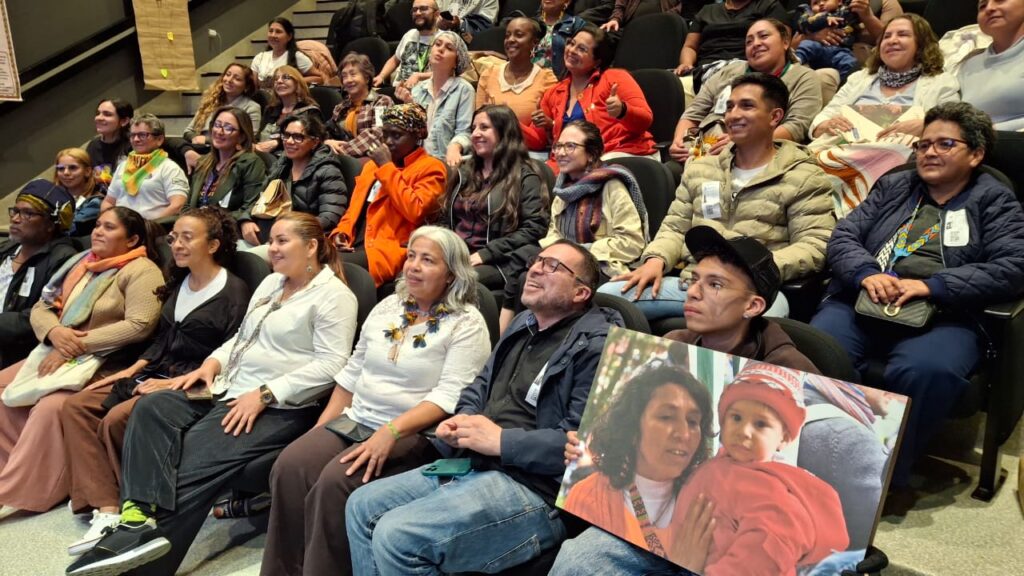
Thanking the minister for her enthusiastic words, Camilo Álvarez, Gilma’s son, reinforced that “there is a beautiful and painful fight” being waged for “the recognition of indigenous, Afro-descendant and peasant women who make up more than half of the country, who are more than half of the workforce, who are more than half of the caregivers and this requires a willingness to fight, which is what my mother taught”. “The other reflection is that of drug trafficking, financial speculation, neoliberalism, lies, privatization. We will always be fighting on the side of women, peasants, seeds, life, territory. The stage is for combat, that’s what we learned from my mother: fight!”, concluded Camilo, with his son Julián Álvarez Corzo at his side holding up a photo with his grandmother.
As the plenary taught: “May Iván Cepeda continue Petro’s work and may the harvest be abundant!”
This coverage by the ComunicaSul Collaborative Communication Agency was only possible thanks to the support of the São Paulo Bank Workers Union; Writers’ Union of the State of São Paulo; newspaper Hora do Povo; Red; Global South Dialogues; Citizenship Mail; Baron of Itararé; councilor Werner Tempel (PCdoB) of Santa Maria-RS; Professor Azuaite, from São Carlos-SP; Angelim Institute, the Public Services International (ISP) and the Colombian Workers’ Unitary Center, as well as several anonymous contributors.
YOU CAN ALSO CONTRIBUTE THROUGH PAPIRO PRODUÇÕES PIX: 10.511.324/0001-48
Source: vermelho.org.br